Berliner Boersenzeitung - Oil slicks blamed on Turkish strikes blight northeast Syria river

EUR -
AED 4.065832
AFN 71.961529
ALL 90.556523
AMD 399.120966
ANG 1.981473
AOA 1016.318588
ARS 1709.433358
AUD 1.6254
AWG 1.992782
AZN 1.863345
BAM 1.952653
BBD 2.230566
BDT 137.752368
BGN 1.935025
BHD 0.417838
BIF 3348.494661
BMD 1.107101
BND 1.423245
BOB 12.963461
BRL 6.218915
BSD 1.107445
BTN 104.099066
BWP 15.364656
BYN 3.336613
BYR 21699.177928
BZD 2.227371
CAD 1.579346
CDF 2562.93835
CHF 0.923494
CLF 0.027853
CLP 1096.233348
CNY 7.38475
CNH 7.385005
COP 3661.57021
CRC 500.00779
CUC 1.107101
CUP 26.580007
CVE 110.08958
CZK 24.387772
DJF 197.21664
DKK 7.475688
DOP 67.193539
DZD 151.514502
EGP 59.162476
ERN 16.606514
ETB 180.83259
FJD 2.512788
FKP 0.833681
GBP 0.835977
GEL 2.879274
GGP 0.833681
GHS 12.968453
GIP 0.833681
GMD 81.925143
GNF 9812.187729
GTQ 8.462592
GYD 231.701846
HKD 8.68488
HNL 29.780547
HRK 7.493977
HTG 145.110088
HUF 365.227045
IDR 20205.920214
ILS 3.542999
IMP 0.833681
INR 104.102083
IQD 1678.939896
IRR 2110217.375651
ISK 136.517008
JEP 0.833681
JMD 175.437284
JOD 0.784941
JPY 176.983917
KES 143.85645
KGS 96.814756
KHR 4563.769186
KMF 489.338985
KPW 996.39078
KRW 1477.575598
KWD 0.342857
KYD 0.922938
KZT 491.890651
LAK 24922.512892
LBP 99176.165766
LKR 368.296473
LRD 188.271703
LSL 18.459386
LTL 3.268981
LVL 0.669674
LYD 7.141492
MAD 10.908718
MDL 20.200994
MGA 5054.990897
MKD 61.518377
MMK 2324.606812
MNT 3990.992247
MOP 8.947524
MRU 44.790237
MUR 52.432271
MVR 17.045646
MWK 1920.457237
MXN 20.61998
MYR 4.516084
MZN 70.746329
NAD 18.459386
NGN 1488.906971
NIO 40.755427
NOK 10.593495
NPR 166.558106
NZD 1.995001
OMR 0.42566
PAB 1.107545
PEN 3.776117
PGK 5.05195
PHP 70.628648
PKR 306.250179
PLN 4.405016
PYG 6865.153889
QAR 4.037222
RON 5.346855
RSD 117.590726
RUB 91.838563
RWF 1636.007917
SAR 4.179134
SBD 8.957274
SCR 15.337414
SDG 665.927775
SEK 11.069775
SGD 1.424357
SHP 0.829569
SLE 25.372586
SLL 23215.3575
SOS 632.897241
SRD 41.520731
STD 22914.753706
STN 24.461244
SVC 9.690384
SYP 14394.525744
SZL 18.446773
THB 37.487518
TJS 10.216567
TMT 3.874853
TND 3.333528
TOP 2.665633
TRY 55.64046
TTD 7.52308
TWD 36.528774
TZS 2944.416818
UAH 50.325111
UGX 4557.778678
USD 1.107101
UYU 44.889081
UZS 13257.055459
VES 996.933862
VND 28429.797939
VUV 132.789958
WST 3.086375
XAF 655.957
XAG 0.022151
XAU 0.000286173155
XCD 2.991996
XCG 1.995938
XDR 0.782778
XOF 655.957
XPF 119.331742
YER 261.8274
ZAR 18.534586
ZMK 9965.242343
ZMW 22.620161
ZWL 356.486043
SSP 6406.265475
MXV 2.316252
  • CMSD

    -0.1200

    19.81

    -0.61%

  • JRI

    0.0000

    10.77

    0%

  • BCC

    -1.8200

    74.15

    -2.45%

  • CMSC

    -0.2228

    19.53

    -1.14%

  • BCE

    0.2000

    20.34

    +0.98%

  • RIO

    0.0100

    94.17

    +0.01%

  • AZN

    -2.7400

    161.47

    -1.7%

  • GSK

    -1.1800

    48.17

    -2.45%

  • RBGPF

    0.0000

    65

    0%

  • NGG

    0.8800

    75.82

    +1.16%

  • RYCEF

    -0.7300

    19.08

    -3.83%

  • BTI

    -0.4500

    54.4

    -0.83%

  • BP

    0.4700

    43.99

    +1.07%

  • RELX

    -0.0600

    33.18

    -0.18%

  • VOD

    -0.1800

    16.15

    -1.11%

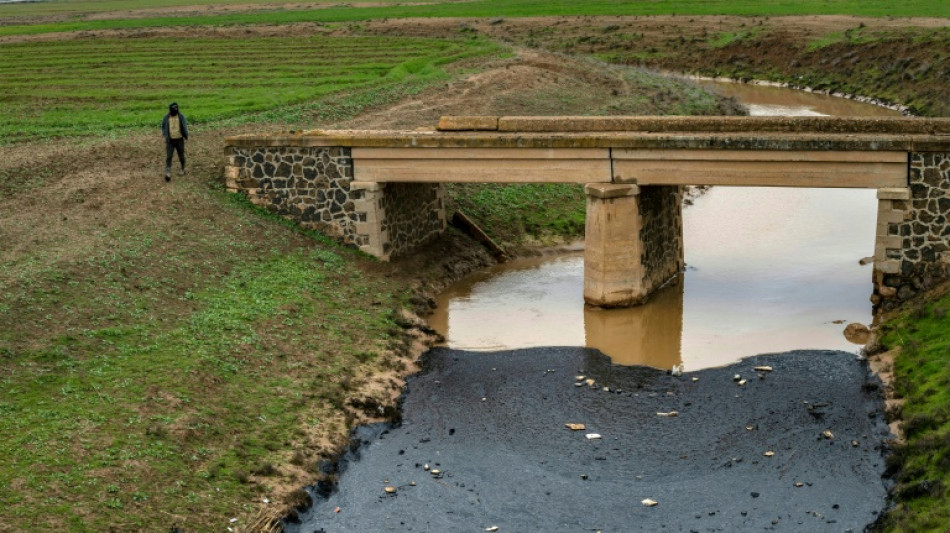
Oil slicks blamed on Turkish strikes blight northeast Syria river
Oil slicks blamed on Turkish strikes blight northeast Syria river / Photo: Delil souleiman - AFP

Oil slicks blamed on Turkish strikes blight northeast Syria river

Farmer Nizar al-Awwad has stopped irrigating his land in northeast Syria from a local river polluted by an oil spill that residents and officials in the Kurdish-held area blame on Turkish strikes.

Text size:

"All the farmers in the area have stopped using the river for irrigation," said Awwad, 30, from a village near Tal Brak, in Hasakeh province.

"We'd be killing our land with our own hands if we used the polluted water," he said.

"Farmers already suffer from a lack of fuel and drought -- the polluted river has only added to our woes," Awwad added, standing near his wheat crops.

Oil pollution has been a growing concern in Syria since the 2011 onset of civil war, which has taken a toll on infrastructure and seen rival powers compete over the control of energy resources.

Hasakeh province residents told AFP they noticed the oil slicks in the waterway, which feeds into the area's lifeline Khabour River, after Turkey bombed Kurdish-affiliated oil facilities, including stations and refineries, last month.

The spill has heaped more misery on farmers already struggling to make ends meet after 12 years of war, the growing effects of climate change and a gruelling economic crisis that has triggered long power cuts and fuel shortages.

Turkey said it hit dozens of targets in northern Syria and Iraq belonging to the Kurdistan Workers' Party (PKK) and the People's Protection Units (YPG) after nine Turkish soldiers were killed in clashes with suspected Kurdish militants in Iraq.

- 'Turkish bombardment' -

Turkey and many of its Western allies have blacklisted the PKK as a "terrorist" organisation, and Ankara views the YPG as an offshoot of the group.

But the YPG dominates the US-backed Syrian Democratic Forces, the Kurds' de facto army in Syria's northeast who spearheaded the fight against the Islamic State jihadist group in the country.

Mohammed al-Aswad, who co-chairs the semi-autonomous Kurdish administration's water authority, said "Turkish bombardment" in northeast Syria, particularly on Rmeilan and Qahtaniyah in the far northeast corner of Hasakeh province, "damaged oil installations and pipelines" and caused the pollution.

Rudimentary traps set up by the administration have failed to limit the current spill.

AFP correspondents saw oil slicks on water, plants and riverbanks across a 55-kilometre (34-mile) stretch between Tal Brak and the outskirts of Hasakeh city.

While repairs to oil infrastructure were expected, authorities were advising farmers against letting livestock drink the polluted water, which could "threaten marine life and biodiversity" if it reached a dam along the Khabour river, Aswad said.

But farmer Ibrahim al-Mufdi, 50, said he had already stopped irrigating his crops with the river before the warning.

"The sheep can't be drinking from the river," he said, expressing concern over possible fish contamination.

"I just hope that the rain will keep falling so we don't have to irrigate from the river," Mufdi said.

(G.Gruner--BBZ)



