Berliner Boersenzeitung - 'Robust' US has helped improve global economic outlook: IMF chief

EUR -
AED 4.058102
AFN 70.719765
ALL 90.384417
AMD 398.36238
ANG 1.978414
AOA 1014.386836
ARS 1707.478719
AUD 1.623787
AWG 1.990652
AZN 1.873528
BAM 1.948942
BBD 2.226327
BDT 137.490566
BGN 1.955791
BHD 0.416803
BIF 3317.753008
BMD 1.104997
BND 1.42054
BOB 12.938823
BRL 6.234618
BSD 1.105341
BTN 103.901223
BWP 15.335455
BYN 3.330272
BYR 21657.938036
BZD 2.223138
CAD 1.576488
CDF 2558.068126
CHF 0.923893
CLF 0.027928
CLP 1099.151358
CNY 7.371047
CNH 7.373528
COP 3664.843565
CRC 499.057511
CUC 1.104997
CUP 26.529491
CVE 110.748314
CZK 24.380606
DJF 196.380167
DKK 7.475337
DOP 67.039992
DZD 151.339209
EGP 59.045067
ERN 16.574953
ETB 178.017447
FJD 2.511987
FKP 0.832097
GBP 0.835206
GEL 2.869029
GGP 0.832097
GHS 12.956105
GIP 0.832097
GMD 81.769846
GNF 9790.271815
GTQ 8.446509
GYD 231.26149
HKD 8.668513
HNL 29.723948
HRK 7.534575
HTG 144.834303
HUF 365.316416
IDR 20152.932342
ILS 3.527702
IMP 0.832097
INR 103.919041
IQD 1675.749024
IRR 2114411.450856
ISK 136.574282
JEP 0.832097
JMD 175.103861
JOD 0.783425
JPY 176.6354
KES 143.649934
KGS 96.630762
KHR 4508.386701
KMF 492.82867
KPW 994.497559
KRW 1476.242652
KWD 0.34224
KYD 0.921184
KZT 490.955799
LAK 24903.866285
LBP 98952.467328
LKR 367.596515
LRD 187.849372
LSL 18.424304
LTL 3.262768
LVL 0.668401
LYD 7.121693
MAD 10.887985
MDL 20.162601
MGA 5075.250477
MKD 61.522532
MMK 2320.188832
MNT 3983.407256
MOP 8.930519
MRU 44.705112
MUR 52.531559
MVR 17.017367
MWK 1916.807354
MXN 20.541779
MYR 4.508282
MZN 70.608675
NAD 18.424304
NGN 1485.944306
NIO 40.67797
NOK 10.572997
NPR 166.241558
NZD 1.994193
OMR 0.424871
PAB 1.10544
PEN 3.768941
PGK 5.042349
PHP 70.553663
PKR 305.644129
PLN 4.40529
PYG 6852.106473
QAR 4.029549
RON 5.346637
RSD 117.598211
RUB 91.495028
RWF 1632.080331
SAR 4.171191
SBD 8.947489
SCR 15.36386
SDG 664.654391
SEK 11.088477
SGD 1.422247
SHP 0.827992
SLE 25.29583
SLL 23171.190835
SOS 631.694402
SRD 41.441795
STD 22871.203579
STN 24.414754
SVC 9.671967
SYP 14367.168628
SZL 18.411714
THB 37.437547
TJS 10.19715
TMT 3.867489
TND 3.327193
TOP 2.660568
TRY 55.653392
TTD 7.508783
TWD 36.404894
TZS 2942.202134
UAH 50.229466
UGX 4549.116492
USD 1.104997
UYU 44.803768
UZS 13259.961874
VES 995.039155
VND 28375.766316
VUV 132.537587
WST 3.080509
XAF 655.957
XAG 0.022007
XAU 0.000284373768
XCD 2.98631
XCG 1.992144
XDR 0.78129
XOF 655.957
XPF 119.331742
YER 261.328911
ZAR 18.52441
ZMK 9946.302328
ZMW 22.57717
ZWL 355.808531
SSP 6394.090189
MXV 2.307468
  • CMSD

    -0.1200

    19.81

    -0.61%

  • JRI

    0.0000

    10.77

    0%

  • BCC

    -1.8200

    74.15

    -2.45%

  • CMSC

    -0.2228

    19.53

    -1.14%

  • BCE

    0.2000

    20.34

    +0.98%

  • RIO

    0.0100

    94.17

    +0.01%

  • AZN

    -2.7400

    161.47

    -1.7%

  • GSK

    -1.1800

    48.17

    -2.45%

  • RBGPF

    0.0000

    65

    0%

  • NGG

    0.8800

    75.82

    +1.16%

  • RYCEF

    -0.7300

    19.08

    -3.83%

  • BTI

    -0.4500

    54.4

    -0.83%

  • BP

    0.4700

    43.99

    +1.07%

  • RELX

    -0.0600

    33.18

    -0.18%

  • VOD

    -0.1800

    16.15

    -1.11%

'Robust' US has helped improve global economic outlook: IMF chief
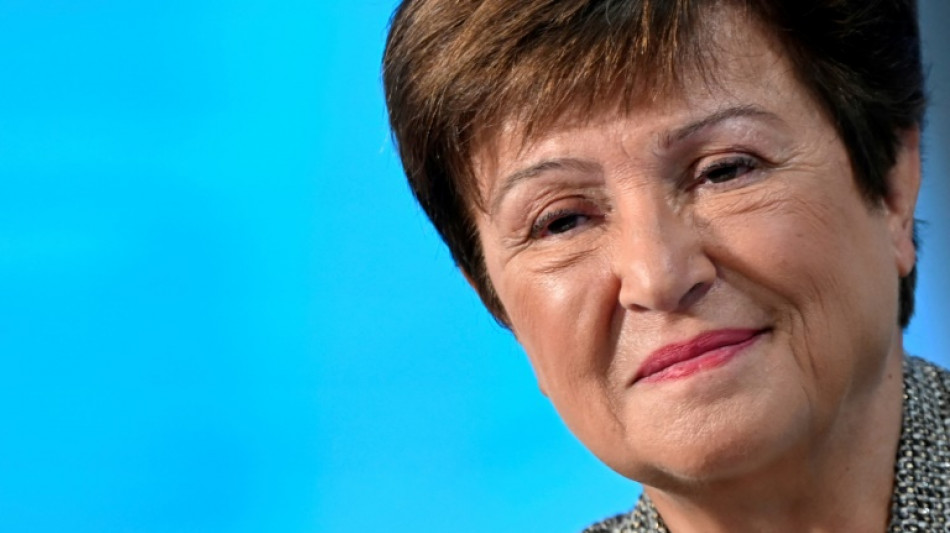
'Robust' US has helped improve global economic outlook: IMF chief / Photo: OLIVIER DOULIERY - AFP

'Robust' US has helped improve global economic outlook: IMF chief

Strong growth in the United States has helped to lift the outlook for the world economy, but more needs to be done to stem a slide in productivity, the head of the IMF said Thursday.

Text size:

"Global growth is marginally stronger on account of robust activity in the United States and in a number of emerging markets economies," International Monetary Fund managing director Kristalina Georgieva said in a speech in Washington.

The US economy grew by a robust 2.5 percent last year, according to the Commerce Department, far outstripping most other advanced economies.

"Sustained household consumption and business investment, and an easing of supply chain problems helped," Georgieva added. "And inflation is going down."

She spoke days before the IMF-World Bank spring meetings of world financial leaders in Washington, one of two such gatherings hosted annually by the international institutions.

Her remarks suggest the IMF now expects the world economy to grow faster than it predicted in January, when it forecast global growth to rise by 3.1 percent in 2024, and 3.2 percent in 2025.

"It is tempting to breathe a sigh of relief. We have avoided a global recession and a period of stagflation," Georgieva said.

"But there are still plenty of things to worry about."

- Geopolitical tension -

A challenge Georgieva mentioned was rising geopolitical tension, which increases the risk of fragmentation in the global economy.

"We have to buckle up for more to come," she told a question-and-answer session when asked if volatility is the new normal in international affairs.

Georgieva also noted that while China, the world's second biggest economy, has taken steps to address problems in its struggling property sector, "they can do more."

This includes being more decisive in dealing with failing companies and directing support towards uncompleted construction, given the key role real estate has in boosting people's confidence.

Beijing also needs to improve domestic demand and deal with issues like local government debt, she said, stressing that China contributes a third of global growth and is important for the world.

Georgieva also broadly highlighted the challenges of growing public debt and a "broad-based slowdown in productivity."

Because of this, the IMF expects growth to remain at just above three percent over the medium term -- below its historical average.

To help the global economy to heal and fix the productivity challenge, Georgieva laid out steps to bring global inflation and public debt back down to sustainable levels, and also called for moves to eliminate "constraints to economic activity."

"In short, if there is a market failure that needs to be addressed -- such as accelerating innovation to address the existential threat of climate change -- there is a case for government intervention, including through industrial policy," she said.

"If there is no market failure, there is a need for caution," she added.

(F.Schuster--BBZ)