Berliner Boersenzeitung - OPEC+ expected to extend oil supply cuts

EUR -
AED 4.068977
AFN 72.017668
ALL 90.66125
AMD 404.582645
ANG 1.983009
AOA 1017.106924
ARS 1711.217854
AUD 1.620961
AWG 1.994327
AZN 1.879515
BAM 1.952644
BBD 2.255947
BDT 139.634328
BGN 1.936526
BHD 0.422557
BIF 3350.702262
BMD 1.107959
BND 1.431921
BOB 13.28403
BRL 6.187177
BSD 1.120086
BTN 105.264376
BWP 15.366483
BYN 3.353683
BYR 21716.003406
BZD 2.252663
CAD 1.579778
CDF 2564.925957
CHF 0.922836
CLF 0.02769
CLP 1089.800121
CNY 7.390477
CNH 7.387818
COP 3635.103856
CRC 506.629217
CUC 1.107959
CUP 26.879558
CVE 110.097002
CZK 24.389544
DJF 199.454751
DKK 7.475441
DOP 67.936642
DZD 151.643051
EGP 59.351062
ERN 16.61939
ETB 182.305242
FJD 2.514178
FKP 0.834328
GBP 0.835684
GEL 2.878618
GGP 0.834328
GHS 13.116282
GIP 0.834328
GMD 81.988419
GNF 9922.903356
GTQ 8.55894
GYD 234.707155
HKD 8.68931
HNL 30.108194
HRK 7.499788
HTG 146.816634
HUF 364.88443
IDR 20218.042354
ILS 3.52125
IMP 0.834328
INR 103.834292
IQD 1697.855989
IRR 2111853.631941
ISK 136.58921
JEP 0.834328
JMD 177.768741
JOD 0.78558
JPY 177.019734
KES 143.956848
KGS 96.890603
KHR 4568.050196
KMF 489.718201
KPW 997.163379
KRW 1471.597164
KWD 0.344863
KYD 0.933292
KZT 500.021883
LAK 25211.870367
LBP 100302.447826
LKR 372.243671
LRD 190.409453
LSL 18.362928
LTL 3.271516
LVL 0.670193
LYD 7.180012
MAD 10.926274
MDL 20.12756
MGA 5068.243462
MKD 61.549131
MMK 2326.409305
MNT 3994.086851
MOP 9.049275
MRU 45.184257
MUR 52.484026
MVR 17.06754
MWK 1942.227577
MXN 20.641058
MYR 4.523238
MZN 70.799652
NAD 18.361026
NGN 1491.002605
NIO 41.217292
NOK 10.602729
NPR 168.423761
NZD 1.995396
OMR 0.426008
PAB 1.120116
PEN 3.816931
PGK 5.030347
PHP 70.490566
PKR 307.540734
PLN 4.411122
PYG 6914.41804
QAR 4.08297
RON 5.344688
RSD 117.594372
RUB 92.0462
RWF 1657.171311
SAR 4.179459
SBD 8.964219
SCR 15.406306
SDG 666.435918
SEK 11.060259
SGD 1.423872
SHP 0.830212
SLE 25.386812
SLL 23233.358618
SOS 640.123232
SRD 41.710258
STD 22932.521738
STN 24.462782
SVC 9.800161
SYP 14405.687216
SZL 18.367889
THB 37.40246
TJS 10.293493
TMT 3.877858
TND 3.338206
TOP 2.6677
TRY 55.680388
TTD 7.595724
TWD 36.548214
TZS 2945.935408
UAH 50.944234
UGX 4570.129529
USD 1.107959
UYU 45.320845
UZS 13411.325117
VES 997.706879
VND 28462.921913
VUV 132.892923
WST 3.088768
XAF 655.957
XAG 0.021513
XAU 0.000278478306
XCD 2.994315
XCG 2.018438
XDR 0.783385
XOF 655.957
XPF 119.331742
YER 261.973167
ZAR 18.412922
ZMK 9972.967302
ZMW 22.821177
ZWL 356.762461
SSP 6411.232874
MXV 2.31862
  • CMSD

    -0.1200

    19.81

    -0.61%

  • JRI

    0.0000

    10.77

    0%

  • BCC

    -1.8200

    74.15

    -2.45%

  • CMSC

    -0.2228

    19.53

    -1.14%

  • BCE

    0.2000

    20.34

    +0.98%

  • RIO

    0.0100

    94.17

    +0.01%

  • AZN

    -2.7400

    161.47

    -1.7%

  • GSK

    -1.1800

    48.17

    -2.45%

  • RBGPF

    0.0000

    65

    0%

  • NGG

    0.8800

    75.82

    +1.16%

  • RYCEF

    -0.7300

    19.08

    -3.83%

  • BTI

    -0.4500

    54.4

    -0.83%

  • BP

    0.4700

    43.99

    +1.07%

  • RELX

    -0.0600

    33.18

    -0.18%

  • VOD

    -0.1800

    16.15

    -1.11%

OPEC+ expected to extend oil supply cuts
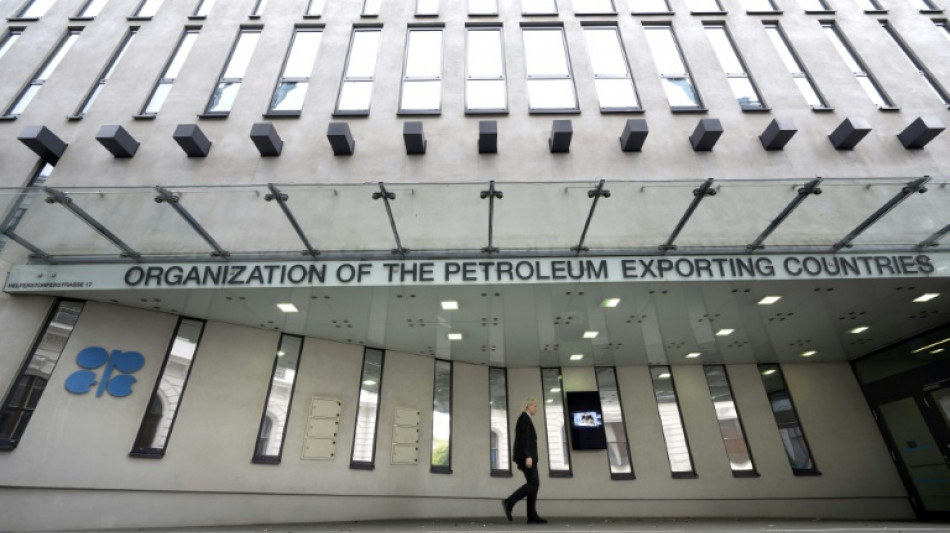
OPEC+ expected to extend oil supply cuts / Photo: JOE KLAMAR - AFP/File

OPEC+ expected to extend oil supply cuts

The OPEC oil cartel and its allies are expected Thursday to extend their supply cuts to avoid a sharp drop in prices in a global market awash in crude.

Text size:

However, dissension that caused a delay in the meeting originally scheduled for Sunday has created some doubts about it being able to maintain the cuts that have propped up prices.

"OPEC+ is expected to decide on Thursday to postpone the production increase for a further three months until the end of the first quarter," said Commerzbank analyst Carsten Fritsch.

"Nevertheless, there are still uncertainties," he added, as certain countries want to boost output.

The virtual meeting is set to get underway around 1130 GMT, said a source close to the Vienna-based OPEC organisation.

Without a new agreement, the eight countries which have been making voluntary additional production cuts of 2.2 million barrels per day are currently set to begin increasing production beginning in January to gradually return it to 2022 levels.

Algeria, Iraq, Kazakhstan, Kuwait, Oman, Russia, Saudi Arabia and the United Arab Emirates have already twice pushed back the production increases that were set to have begun in October and then in December.

- Disgruntled countries -

The supply cuts are only having a muted impact on the market, with US president-elect Donald Trump expected to adopt policies to boost US oil output while China's demand outlook is lacklustre as its economy languishes.

"Our current balances suggest that even if the OPEC+ cuts remain in place, global supply exceeds demand by more than 1 million barrels per day next year," the International Energy Agency said last month.

OPEC+ nations are currently holding back six million barrels of oil a day, including the 2.2 million barrels a day of output that they have been discussing putting back on the market.

Analysts at DNB bank said "there is no room for additional OPEC+ oil in 2025" on the market and a boost in output would push down crude prices.

That would displease Saudi Arabia, which relies on high oil prices to fund efforts to diversify its economy.

Saudi Arabia is highly dependent on strong prices, "for its Vision 2030 and needs a united OPEC with production cuts in place," said Energy Intelligence analyst Amena Bakr.

With Saudi Arabia and Russia holding sway in OPEC+, many analysts expect they will ultimately convince other countries to agree on a further postponement of the supply increases.

However Rystad Energy analyst Jorge Leon said "other countries would like to increase production", in particular Kazakhstan and the UAE, and "have a lot of spare capacity".

Production limits are only effective if they are respected, and earlier in the year the cartel called out Iraq and Kazakhstan for exceeding their quotas.

In June the UAE won an additional quota of 300,000 barrels per day in 2025, raising tensions with other nations that want to expand output.

(T.Renner--BBZ)