In Guyana, remote dirt road seen as future economic lifeline
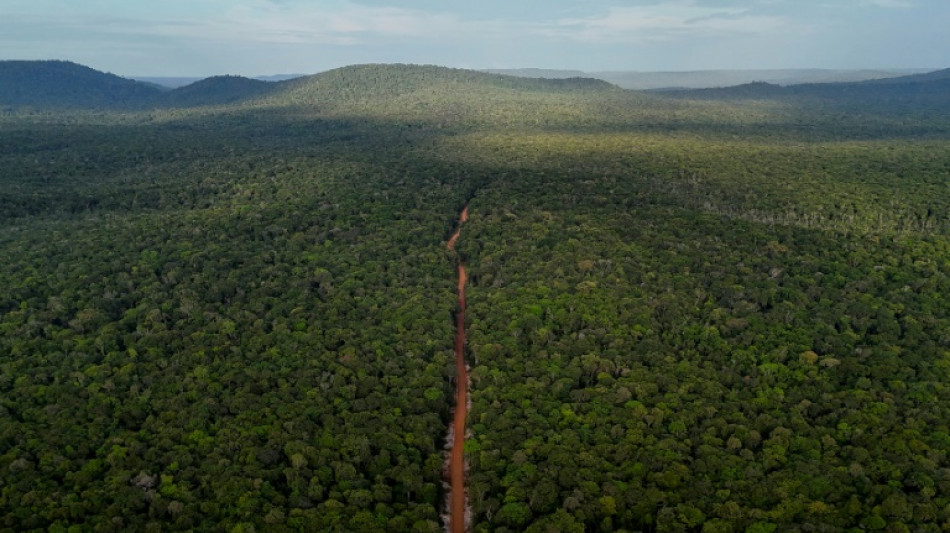
/ Photo: Joaquin Sarmiento - AFP

Through the vast interior of Guyana, a historic red dirt road known as "The Trail" winds through rainforest, plains and hills, linking the capital Georgetown to Lethem in the south on the border with Brazil.
Now, that nearly 500-kilometer (310-mile) link is being upgraded into a major highway, and authorities in the South American country -- which possesses the world's largest oil reserves per capita -- hope the project will help transform its economy.
They also hope it can help open up Essequibo, the disputed oil-rich region administered by Guyana for decades but claimed by neighboring Venezuela.
The renovation is no small undertaking for Guyana, which goes to the polls to elect new leaders on Monday. It will cost almost $1 billion to build the four sections of highway and about 50 bridges. The most optimistic completion date is 2030.
So for the time being, truckers and others tackle The Trail, also called the Linden-Lethem road, as it is.
It takes 15 hours to make the journey end to end, and some don't succeed. One rusty truck appears to have been abandoned on the side of the road for some time.
"It's a very tough job," says 27-year-old Ramdial Metleash, who is shirtless and dripping in sweat as he drives his logging truck.
Metleash explains how life on The Trail can be hard -- in the rainy season, vehicles get stuck in mud. When it's dry, there are nasty dust clouds.
He has been working this route since he was 15, earning about 60,000 Guyana dollars ($290) per trip -- enough to take care of his sister and her son.
And while the oil industry hasn't changed his bottom line, Metleash admits the completion of the road would help, especially at spots like Kurupukari, where a bridge will be built. For now, trucks cross a river on a barge.
- 'Game changer' -
Juan Edghill, Guyana's minister of public works, tells AFP that the finished highway will be "a game changer in terms of where Guyana is going."
"This road, when completed, will connect us with the Takutu Bridge, which carries you into northern Brazil. That's a market of 20 million people," says Edghill.
That is more than 20 times English-speaking Guyana's population of more than 800,000.
The minister also notes that the route would link to the Palmyra deepwater port, now under construction and located not far from the border with Suriname.
For now, Brazilians need to travel "21 days down the Amazon to get goods to water for shipping," Edghill says.
With the new road, that could be whittled down to 48 hours.
Of course, as one observer notes, the road could also easily be used to move troops and military equipment through the country, and into Essequibo, which also has valuable mineral deposits.
That region has long been neglected by the government in Georgetown, as Caracas has pressed its claims over the territory.
"Essequibo is part of Guyana," Edghill says. "It's the home of our Indigenous brothers and sisters. (...) Essequibo is also the home for all the large-scale mines, the home of our major forestry activity."
The new highway would allow more people to travel for work without leaving their families for months at a time, he says, adding: "It's a great opportunity."
- 'You can't fight progress' -
Michelle Fredericks, 53, owns a popular snack stall near the barge dock in Kurupukari.
The bridge will pass directly over where her business currently stands. It will be relocated, but will no longer receive heavy foot traffic as it does now.
Fredericks is nevertheless sanguine about the future.
"I can't just only think about this business here," she tells AFP.
"A lot of development is going to happen," she predicts, noting that she plans to shift into offering services to tourists.
Already, Fredericks welcomes local and foreign tourists who want to go fishing or for hikes in the rainforest.
She expects the number of weekend visitors to increase once the new road cuts the drive time from Georgetown in half to about four hours.
"You can't fight progress. That's life," Fredericks says.
(F.Schuster--BBZ)