UK's largest lake 'dying' as algae blooms worsen / Photo: Paul Faith - AFP

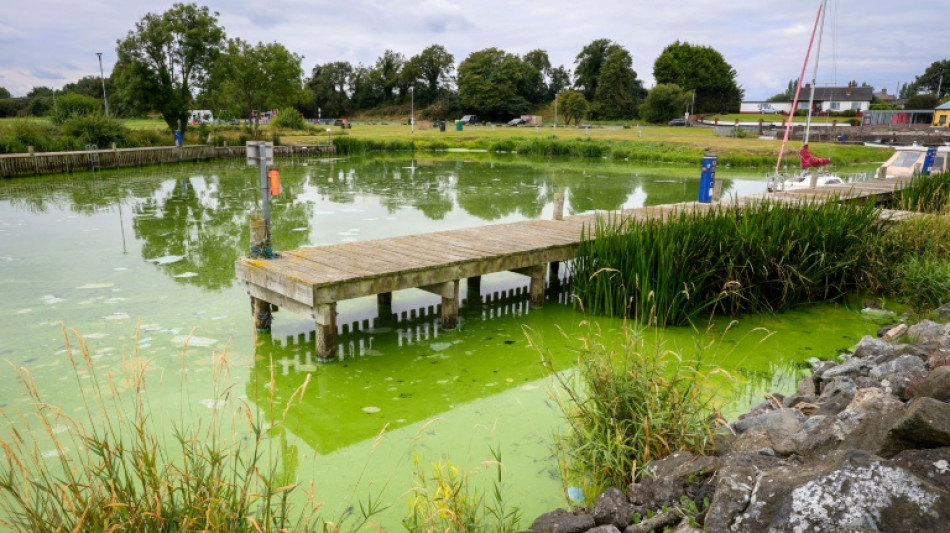
For the third year running toxic blue-green algae blooms that look like pea soup and smell like rotten eggs have covered much of Lough Neagh, the largest lake in the UK and Ireland.
But this summer, the thick green veneer -- so widespread it is visible from space -- has been worse than ever, according to locals living near the Northern Ireland landmark.
"The lake is dying," Mary O'Hagan, an open water swimmer, told AFP at Ballyronan, on its western shore, as ducks struggled over slick green-coated stones.
The algae growth -- fuelled by industrial, agricultural and sewage pollution, as well as climate change, according to experts -- has ravaged fishing and watersports, and prompted concerns about drinking water safety.
Signs banning bathing dot the lake's 78-mile-long shoreline, including at Ballyronan, 34 miles (54 kilometres) west of the Northern Irish capital Belfast.
Nutrient-rich fertiliser and slurry run-off from farms supplying mega-firms like chicken processor Moy Park are being blamed for contributing to the pollution.
Untreated sewage spills and septic tank effluent are also suspected.
Moy Park deny polluting the lake and say the poultry sector is "highly regulated with strict limits set for wastewater quality" at all its local sites.
The algae growth is a "complex issue not specifically linked to any one sector," a spokesperson told AFP.
- 'Heartbreaking' -
Lough Neagh was O'Hagan's "training ground" during the Covid years, but she has hardly dipped a toe in the water since.
The 48-year-old told AFP she suffers from chronic health problems and swimming is her only exercise. Now she must rely on local swimming pools.
"Swimming here with its spectacular sunrises helped me when I was in a bad place in my life. It's heartbreaking to see it now," she said as green-tinted waves lapped the shore.
O'Hagan has joined a campaign group, "Save Lough Neagh", and at a recent protest urged Northern Ireland's regional government to act faster.
"Fine the polluters!" she said, calling in addition for the creation of an independent environmental agency able to punish factory farms and agri-food giants guilty of pollution.
The invasive zebra mussel species, a recent arrival in the lake's waters, filter water but any benefit is far outweighed by the molluscs also stimulating algal photosynthesis, worsening the green water effect.
Meanwhile the algae has decimated the Lough Neagh fly, a staple for fish and birds, local fisherman Mick Hagan told AFP while casting a line in a nearby tributary river.
"This river used to be full of trout, but no longer," said the 38-year-old wading back to dry land without a catch.
Europe's largest eel fishery -- also on the lough -- suspended operations this year due to quality concerns.
Hagan's is the first of many generations in his family not to fish for eels in Lough Neagh.
Now he runs a pizza truck at a campervan site near Ballyronan, but the powerful stench from the lough kept most tourists away this summer.
- 'Doctor Sludge' -
According to Gavin Knox, whose paddleboard small business also fell victim to the sludge, the foul smell can reach miles inland.
The 48-year-old launched his venture in 2022 to help people safely have fun on the water.
Working with people with learning disabilities and brain injuries as well as families, Knox said bookings gradually dried up after the algae appeared.
"Doing business became impossible," he told AFP. "Even if there are safe places to paddle, nobody wants to do it when the fish are dying and the birds are covered in green slime."
Forced to repay a large start-up loan, he is angry that no compensation was ever offered by the government to affected small businesses.
"It's not fair that the people most impacted haven't been responded to in a meaningful manner," said Knox.
Last July the regional government launched an action plan to kickstart a fix.
But less than half the planned measures have been delivered.
The remaining steps have "delivery timelines extending into 2026 and beyond," said a government statement sent to AFP. It did not provide further details.
With around 40 percent of Northern Ireland's drinking water supplied by Lough Neagh, the risk of a health emergency might force swifter action by authorities, said Les Gornall, a local slurry expert whose nickname is "Doctor Sludge".
"If Belfast suddenly cannot guarantee a clean water supply, then there would be a property and tourism crash," he predicted.
"Maybe that prospect will jolt them into fixing the lake."
(U.Gruber--BBZ)