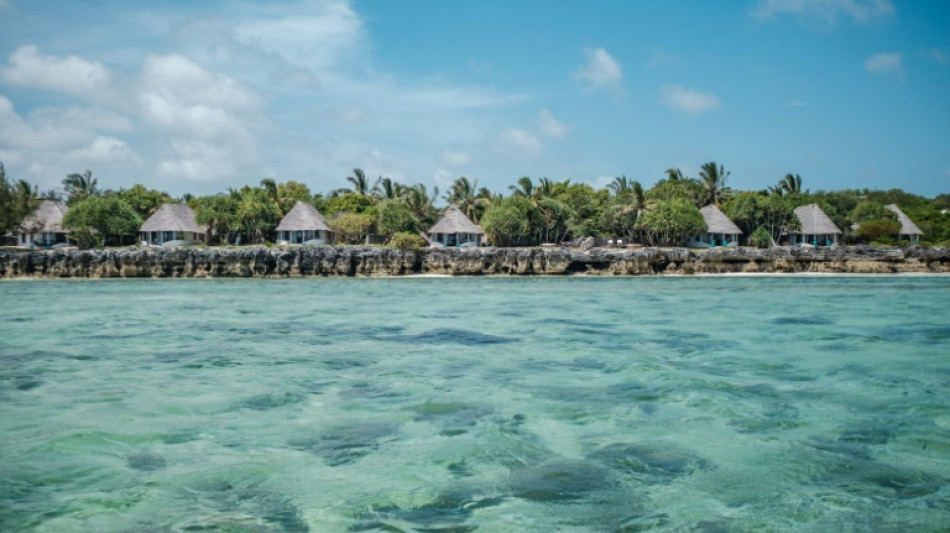
Tanzania tourism suffers after election killings / Photo: Sumy Sadurni - AFP

Tanzania's white beaches and safari lodges are emptier than usual as the country counts the cost to its crucial tourism sector from the mass killing of protesters during recent election unrest.
The election on October 29 erupted into days of violent protests over allegations that President Samia Suluhu Hassan had rigged the vote.
Police responded by shooting dead more than 1,000 people, according to the opposition, though the government has still not given a final body count.
With fresh protests called for December 9, there are fears of more disruption to come.
"The current situation is very disturbing," said a hotel manager in Arusha, one of the cities serving as a gateway to the Serengeti safari park.
"In my hotel, 150 bookings and four international events that were planned for December have been cancelled so far," the manager said, adding the hotel was below 30 percent full, compared to two-thirds or higher for that period normally.
The government has insisted there is nothing for tourists to fear.
"Our nation remains peaceful, calm, and open to all," spokesman Gerson Msigwa told reporters.
Beyond the internet blackout and cancelled flights at the height of the unrest, tourists have indeed been largely unaffected.
"I don't think it's having a real impact on us foreigners," said French tourist Jeremy Fuzel, shopping for handicrafts with his wife and young daughter on the island of Zanzibar.
But business has been noticeably slow, said shopkeepers in the island's capital, Stone Town.
"Sometimes there are a few slow days, but not two weeks in a row like this," said Nazir Adam, a jeweller. "It's the topic everyone is talking about here right now."
- 'Fear to speak' -
That is a problem in the east African country where tourism has become the biggest revenue source, attracting a record 2.14 million international visitors last year and projected to make nearly $4 billion this year.
"Many people may fear to speak about the real situation but almost half of the tourism business is disrupted," said a tour operator in Arusha, speaking on condition of anonymity for fear of violent reprisals by the police.
Activists say tourists should stay away to punish the government for its violence.
"If you go snorkelling or swimming you might find body parts as we received solid information that bodies were dumped into the Indian Ocean," said exiled activist Maria Sarungi Tsehai on X.
But others say tourism's real problems stem from recent counter-productive government policies.
Nora Suleiman, founder of the Nakupenda Tours agency on Zanzibar, blamed a new $44 insurance fee and $90 passenger tax on plane tickets for putting off tourists.
Patrice Caradec, head of French tour operators union SETO, said the biggest problem was a ban on Tanzanian airlines flying in the European Union this year over a lack of safety personnel.
"Tanzania has been a hit with the French for several years," but it dropped by 15-18 percent this summer, he said, largely because of the airline ban.
- 'Rebuilding confidence' -
The most frustrating aspect, Caradec said, was that SETO sent a team to help Tanzania deal with the paperwork to get the ban removed, but it was ignored by the Tanzanian government.
"Between the blacklisted airlines... and the riots, I can confirm that quite a few of our compatriots have decided not to go," he said.
Mabrian, a consultancy using artificial intelligence to measure global sentiment about countries and industries, made a more direct link to the election unrest.
It found there was a 14 percent drop in its perception-of-security index for Tanzania in November among international travellers year-on-year. Hotel prices were also down 14 percent.
"Even once the political situation stabilises, rebuilding confidence in travellers' safety and security will remain a crucial and urgent challenge for Tanzania," said Mabrian analyst Carlos Cendra.
(Y.Berger--BBZ)