How Latin American countries are responding to Cuba's oil crisis / Photo: YAMIL LAGE - AFP

The US oil embargo on Cuba has drawn varied responses across Latin America, ranging from offers of aid and political support to silence about Havana's economic crisis.
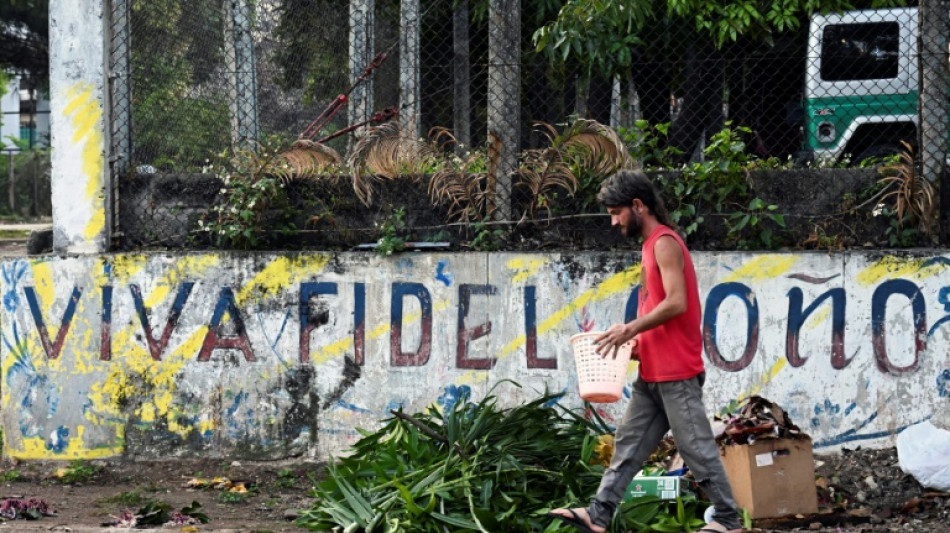
The Caribbean island, under communist rule for more than six decades, has been grappling with a severe fuel shortage for years.
But the crisis deepened last month when US President Donald Trump cut off critical supplies of Venezuelan oil to Cuba after he ousted leader Nicolas Maduro and threatened tariffs on any country that sells hydrocarbons to Havana.
Here is a look at how governments in the region have responded to Cuba's plight.
- Offering aid -
Mexico, a long-standing ally of Cuba, has hit pause on oil shipments but is still leading the way in providing material support.
Two Mexican navy ships arrived in Havana on Thursday with 814 tons of food supplies. More than 1,500 tons of other humanitarian aid are expected to be delivered to the island, according to President Claudia Sheinbaum.
Sheinbaum's leftist government sent oil to Cuba until early January. Some of that crude oil was part of a "humanitarian aid" scheme, the president said, adding that she halted those shipments but expressed her disagreement with Washington's threat of tariffs.
"We will continue sending humanitarian aid, food and some other items requested by the Cuban government," Sheinbaum said Tuesday.
Her administration also opened a collection center in Mexico City last week for aid for Cuba.
In Chile, the leftist President Gabriel Boric, who leaves office next month, announced a contribution of $1 million to Cuba -- an initiative criticized by the president-elect, the far-right politician Jose Antonio Kast, who was endorsed by Trump and has been a critic of Maduro.
- Political support -
In Brazil, the government of leftist leader Luiz Inacio Lula da Silva, another important ally of Havana, criticized the US pressure on Cuba but has not announced any aid.
In 2025, Lula defended the Mais Medicos (More Doctors) program, which has brought Cuban healthcare professionals to Brazil through an agreement with the Pan American Health Organization.
The deployment of medical brigades abroad is Cuba's main source of foreign currency, generating $7 billion in 2025, according to official figures.
In Venezuela, the interim government of Delcy Rodriguez has criticized Trump's pressure and reiterated Caracas's "solidarity" with the island.
Her government retains some 13,000 Cuban healthcare professionals in the country.
Venezuela and Cuba have been strong allies since the presidency of the late Hugo Chavez (1999-2013) -- a relationship sustained by his successor Maduro until his January 3 capture by US special forces. Until then, Venezuela, which has the world's largest oil reserves, was Cuba's main supplier.
Nicaragua, Cuba's only partner in Central America, has not announced any aid shipments but it has rejected the US sanctions.
However, the leftist government of Daniel Ortega has ended a visa waiver for Cubans in place since 2021. That waiver made it easy for islanders to leave Cuba, which in turn eased some pressure on the government, including after anti-government protests in July of that year when thousands departed.
- No help -
The leftist governments of Colombia and Uruguay have not announced any aid, although Uruguay has said it is studying the situation.
El Salvador, governed by right-wing Nayib Bukele, Washington's closest ally in Central America, has shown no signs of support for Havana. Neither have Panama and Costa Rica, also led by right-wing governments.
Under pressure from Trump, Guatemala has just ended a 27-year agreement under which thousands of Cuban doctors worked in the country. The 412 Cuban healthcare professionals currently there will leave in the coming months.
Honduras, whose new president Nasry Asfura is a Trump ally, also plans to end the Cuban medical brigades.
In Ecuador, the government of Daniel Noboa, another close ally of the US president, has not announced any humanitarian aid programs for Cuba.
Last year at the UN, Quito abstained for the first time in more than three decades from voting in favor of lifting the trade and financial embargo that the United States has imposed on Cuba since 1962.
Amid the energy crisis, the Argentine government of right-wing Javier Milei, another supporter of Trump's policies toward Cuba, warned its citizens to avoid traveling to the island.
(A.Lehmann--BBZ)