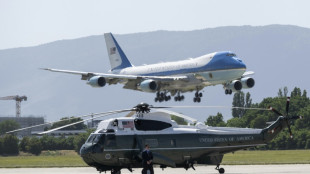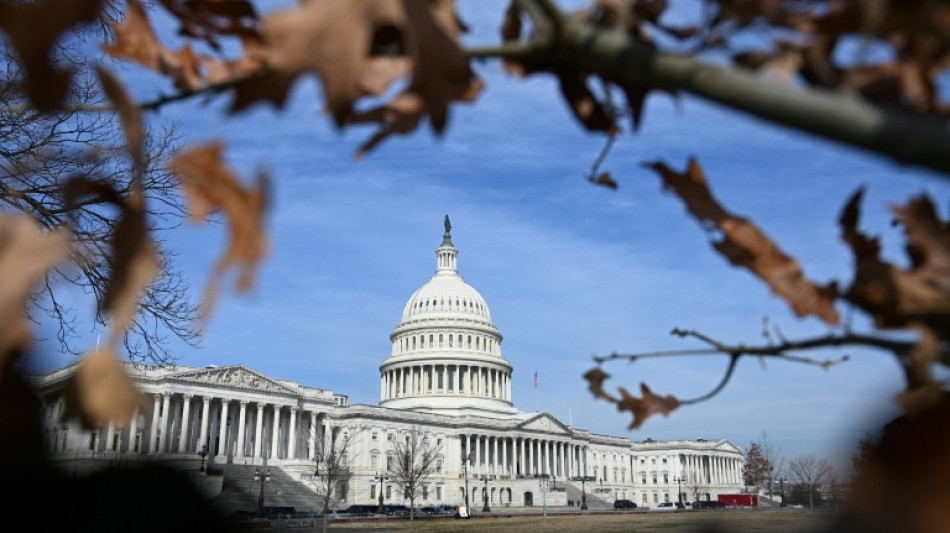
US Congress to debate Trump's war powers / Photo: Alex WROBLEWSKI - AFP

The US Congress is scheduled to vote this week on motions seeking to curb President Donald Trump as he wages war against Iran but the Republican majority will probably shield him.
Trump has sought to expand executive power dramatically since returning to the White House in 2025, overshadowing the legislature. So some lawmakers now want to reassert the role of Congress, which under the US constitution is the only body that can declare war.
"Trump has launched an unnecessary, idiotic, and illegal war against Iran," Senator Tim Kaine wrote on X shortly after the United States and Israel began it overnight Friday into Saturday.
In late January, as a huge US military buildup in the Middle East rumbled on, Kaine introduced a bill designed to force Trump to obtain authorization from Congress to engage in any military conflict with Iran. On Saturday he urged Congress to return immediately from recess to vote on his resolution.
In an opinion piece published Sunday in The Wall Street Journal, Kaine said that as a member of key legislative committees with access to classified information, "I can state plainly that there was no imminent threat from Iran to America sufficient to warrant committing our sons and daughters to another war in the Middle East."
- Is the war legal? -
This issue of whether there was an imminent threat from Iran is at the heart of the debate over the war that Trump has now begun with Israel.
Although only Congress can declare war, a law dating back to 1973 allows the president to launch a limited military intervention in response to an emergency situation created by an attack on the United States.
At a news conference Monday, Pentagon chief Pete Hegseth used the word "war" to describe the conflict with Iran, not just a limited military intervention.
In a video broadcast in the middle of the night from Friday into Saturday to announce the start of major combat operations, Trump asserted that Iran posed an "imminent" threat to the United States.
Daniel Shapiro, an analyst with the Atlantic Council, a think tank in Washington, said Trump failed to explain "the urgency or the imminent threat that required a war now."
"Typically, before launching such major operations, presidents and their senior advisers have explained to the American people the reason major military operations are required, and the strategic objective they are intended to achieve," Shapiro wrote.
"They also customarily brief Congress, so the people’s representatives can express their view," Shapiro wrote.
But Trump did not do any of this, he said, except for a briefing with eight congressional leaders a few days before the bombs started falling on Iran.
- Sixty days -
The White House said Sunday that right before the attack started it gave these same eight leaders formal notice of hostilities.
The 1973 War Powers Act states that Trump must now obtain permission from Congress if he wants to keep fighting beyond a 60-day time limit.
Republican congressman Thomas Massie, one of few in Trump's camp that speaks out regularly to challenge him, condemned the Iran war on Saturday.
This conservative lawmaker said he would present a bill in the House of Representatives along with Democratic colleague Ro Khanna to force a vote by Congress on the war with Iran.
"The Constitution requires a vote, and your Representative needs to be on record as opposing or supporting this war," Massie wrote on X.
A vote in the Senate on Kaine's bill is expected this week, as is a possible vote in the House on the other bill to curb Trump.
But most Republicans, who are against tying Trump's hands, are expected to vote against these bills.
And even if they pass, they would probably not survive a veto by Trump because overriding him requires a two-thirds majority in both chambers.
(A.Lehmann--BBZ)