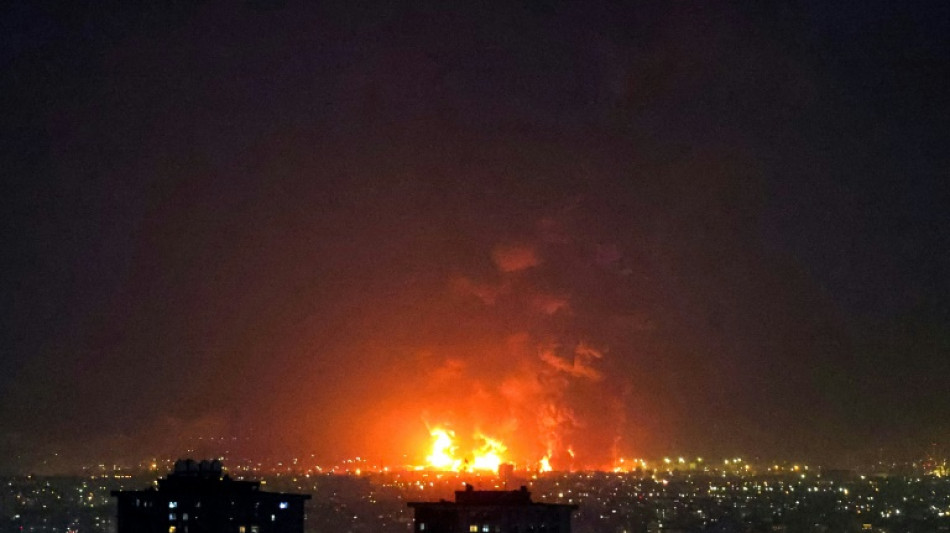
Tehran plunged into darkness by smoke from burning oil / Photo: ATTA KENARE - AFP

Residents of Tehran woke up on Sunday morning to find it was still dark outside, an apocalyptic sight created by thick black smoke billowing from oil depots hit by Israeli strikes.
With the Sun blotted out, disoriented people in the Iranian capital had to turn on their lights to see through the gloom.
"I thought my alarm clock was broken," a driver in his fifties told AFP on condition of anonymity.
By 10:30 am local time (0700 GMT), cars still needed their headlights to drive along Valiasr Street, a main thoroughfare that runs north-south through the city.
Black smoke from the burning fuel depots mingled in the sky with heavy grey rain clouds, compounding the murky atmosphere.
The smoke spread across the sprawling city, normally home to more than 10 million people.
The fuel depot strikes are the first time Iranian oil infrastructure has been targeted during the nine-day war.
The fighting began when the United States and Israel launched attacks on Iran last weekend and has since engulfed the Middle East.
Israel's military confirmed it had struck "fuel storage facilities in Tehran" that it said were used "to operate military infrastructure".
Four oil depots and a petroleum logistics site in and around Tehran were hit. Local authorities said six people were killed and 20 wounded at one of the sites. AFP could not independently verify these numbers.
At one of the depots, the oil was still smouldering on Sunday.
Flames were flaring up and crackling more than 12 hours after the strikes, an AFP reporter witnessed.
Israel also attacked fuel depots in Tehran during a 12-day war last June.
- Toxic fumes -
On the streets of Tehran, security forces directed traffic while wearing special coats and masks to protect themselves.
Authorities warned that the noxious fumes can cause breathing problems and irritate eyes, urging residents to stay indoors.
The Iranian Red Crescent Society said that "significant quantities of toxic hydrocarbons, sulfur and nitrogen oxides" were released into the air.
The windows of nearby buildings were blown out by the force of the explosions.
Dozens of kilometres away from the fuel depots, residents swept their balconies, which were covered by a mix of rain and puddles of fuel.
Tehran's governor Mohammad Sadegh Motamedian said on Sunday morning that fuel distribution in the Iranian capital has been "temporarily interrupted".
"The problem is being resolved," he added.
For now, each vehicle in Tehran is limited to 20 litres of fuel.
On Sunday morning, there were long lines at petrol stations, with AFP counting around 40 cars queuing at one.
Sunday is the first day back to work in Iran after a week-long holiday was declared following the death of supreme leader Ali Khamenei in US-Israeli air strikes last weekend.
During the 12-day war last June, around six million residents left Tehran, according to local media.
However this time around, the majority have stayed. The United Nations estimated on Tuesday that around 100,000 people had fled the capital.
In the first days after the new war broke out, Tehran had resembled a ghost town.
But this is no longer the case, with more pedestrians and cars now venturing onto the streets.
On Sunday, roughly half the shops in Tehran were open -- even in the darkness.
(O.Joost--BBZ)