Israel strikes Beirut after threatening to expand Lebanon operations / Photo: FADEL itani - AFP

Israel renewed its strikes on Beirut on Thursday, as it threatened to expand operations and seize territory in Lebanon if Hezbollah did not stop its attacks.
The Israeli military issued a call to evacuate ahead of the Beirut attack, after having also widened its evacuation warning for residents in southern Lebanon to include areas below the Zahrani river, around 40 kilometres north of Israel.
After Hezbollah announced a new operation against Israel on Wednesday night, Israeli Defence Minister Israel Katz said the following day that he had ordered troops to "prepare for expanding" attacks in Lebanon.
"I warned the President of Lebanon that if the Lebanese government does not know how to control the territory and prevent Hezbollah from threatening northern communities and firing toward Israel -- we will take the territory and do it ourselves," Katz said.
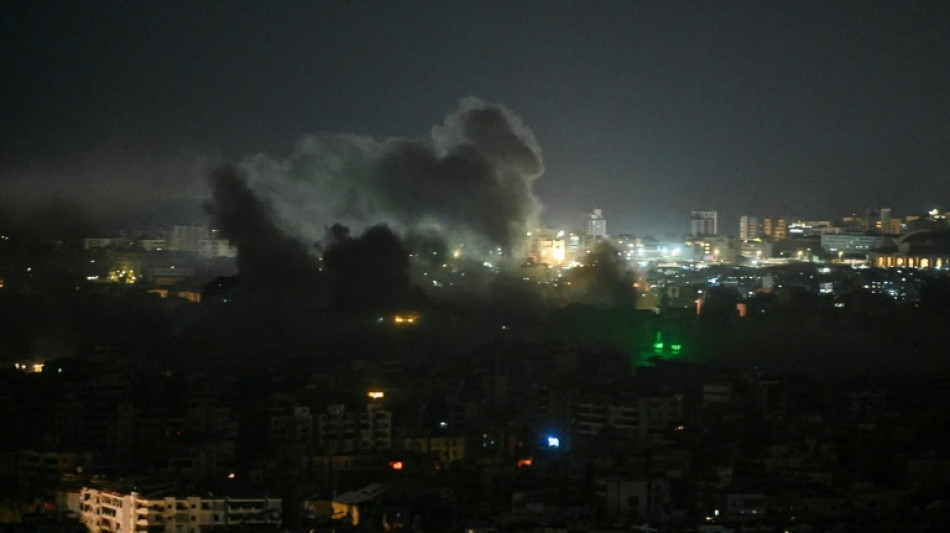
The Israeli military later announced "a wave of strikes targeting Hezbollah terrorist infrastructure across Beirut", with AFPTV footage showing dark smoke rising into the sky above Bashoura, in the heart of the Lebanese capital.
Bashoura is generally a busy part of town, adjacent to Beirut's commercial centre, where many large companies and government institutions are based.
The strike there was the fourth in central Beirut since the beginning of the latest round of fighting on March 2.
Both Israel and Iran said Hezbollah on Wednesday launched a coordinated attack with the Iranian military. Hezbollah had declared it was staging a new operation.
The Israeli military said the attack saw the Iran-backed group launch around 200 rockets and about 20 drones in its biggest barrage since the start of the war.
An Israeli strike hours later in Ramlet al-Bayda, on Beirut's seaside, killed 12 people and wounded 28, according to Lebanon's health ministry.
An AFP correspondent at the scene saw a damaged motorcycle and two damaged cars, with the area, usually bustling with crowds, now sealed off by security forces.
Blood stains were on the pavement, and there was a small hole in the ground.
- 'We won't leave' -
"We saw dead people on the ground," said Aseel Habbaj, a displaced woman who had been sheltering in a nearby tent after fleeing Israeli bombings in other areas of Lebanon.
"We were all asleep in my tent, when suddenly we heard a noise," Habbaj told AFP. "We jumped up and went to see what was happening," before a second strike wounded her husband.
Her 40-year-old neighbour Dalal al-Sayed said she had opted to pitch her tent at the seaside after fleeing attacks in southern Lebanon "because the last thing we expected was Israel to hit Beirut".
Her family could not afford to rent apartments, she said.
"We won't leave, we will stay here even if we die," she added.
The seaside attack was the third in the heart of the capital since the Middle East war began.
Displaced people have been sleeping rough or in tents on the streets of Beirut, including in Ramlet al-Bayda, where some shelters were hit by shrapnel from Thursday's strike, according to an AFP correspondent.
Israel has also repeatedly hit the southern suburbs of Beirut, a Hezbollah stronghold.
A strike on a nearby branch of Lebanese University branch, the country's only public institution of higher learning, killed the head of the faculty of sciences and another professor, according to Lebanon's state-run National News Agency (NNA).
Strikes on Aramoun, a residential area south of Beirut, also killed five people and wounded a child, according to the health ministry.
The NNA reported several Israeli strikes on the south of the country, where Hezbollah has long held sway.
- Hezbollah operation -
Hezbollah said on Thursday that it targeted Israel's air defence systems near the town of Caesarea in the country's centre, home to Prime Minister Benjamin Netanyahu's private residence.
It announced earlier in separate statements that it had fired missiles at an Israeli military intelligence base in the suburbs of Tel Aviv and another base south of Haifa, among other attacks.
Lebanon was drawn into the Middle East war last week when Hezbollah attacked Israel in retaliation for the killing of Iranian supreme leader Ayatollah Ali Khamenei in US-Israeli strikes.
Israel, which had kept up its strikes in Lebanon even before the war despite a 2024 ceasefire, has since launched air raids and sent ground troops into border areas.
The violence has killed more than 687 people, according to Lebanese authorities, while more than 800,000 people have registered as displaced.
After Iran's Revolutionary Guards announced their joint missile operation with Hezbollah, the Israeli military said it had launched "a wide-scale wave of strikes" targeting Hezbollah infrastructure across Lebanon.
It also said it hit "dozens of launchers" as well as Hezbollah intelligence and command sites in south Beirut.
(K.Müller--BBZ)