CMSD
0.0300

Iran said it was ready to take the Middle East war "as far as necessary" as it launched strikes across the region on Monday, while US allies pushed back against Donald Trump's call for help to reopen a vital shipping lane.
Global oil prices have surged by 40 to 50 percent as Iran attacks shipping in the Strait of Hormuz and launches waves of missile and drone strikes in the Gulf in retaliation for the war launched by the United States and Israel on February 28.
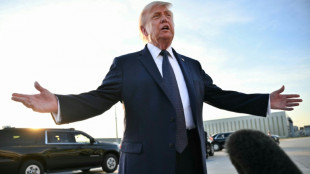
US President Trump said he would hold a news conference on Monday, after several European countries rejected the idea of a NATO mission to reopen the Strait of Hormuz.
"By now they have... understood what kind of nation they are dealing with, one that does not hesitate to defend itself and is ready to continue the war wherever it may lead, and take it as far as necessary," Foreign Minister Abbas Araghchi told reporters in Tehran.
A drone sparked a fuel tank fire near Dubai airport, disrupting travel, while a missile killed a civilian in their car in Abu Dhabi, and another drone sparked a blaze in an area housing oil infrastructure in the eastern emirate of Fujairah.
"It has been a difficult few weeks hearing explosions regularly, but the Iranian attacks followed me in my last hours before I could fly back home," a witness at Dubai airport told AFP, adding that passengers had been evacuated to a lower floor after the attack.
Explosions hit the Iranian capital on Monday as air defence systems were activated, an AFP journalist said, and Israel said it had also targeted the cities of Shiraz and Tabriz.
More than two weeks into the Middle East war, Israeli military spokesman Brigadier General Effie Defrin said they still had "thousands of targets in Iran, and we are identifying new targets every day".
- 'Very bad' -
Trump called this weekend for world powers to send warships to escort tankers through the Strait of Hormuz, which normally carries one fifth of global crude.
He told the Financial Times it would be "very bad for the future of NATO" if they refused, and he has threatened to delay a planned summit with Chinese leader Xi Jinping.
EU foreign ministers were set to discuss the issue on Monday and Britain's Prime Minister Keir Starmer said he was working with allies on a plan but ruled out a NATO mission.
Several European governments rejected the idea outright, with German Chancellor Friedrich Merz's spokesman saying the war had "nothing to do with NATO". Japan and Australia said they would not be deploying warships.
Meanwhile, a Pakistani oil tanker was able to transit the Strait of Hormuz on Monday with its location transmitter activated -- suggesting it may have negotiated safe passage.
The International Energy Agency said more strategic oil stocks could be released if necessary to limit the fallout from the Hormuz disruption.
- Lebanon ground assault -
On another key front in the wider war, Israel announced "limited ground operations" against Iran-backed Hezbollah in southern Lebanon "aimed at enhancing the forward defence area".
Lebanon was drawn into the Middle East war on March 2 when Hezbollah attacked Israel in response to the killing of Iranian supreme leader Ayatollah Ali Khamenei.
"We have identified Hezbollah is intending to expand their operations... and firing hundreds of rockets a day" toward Israel, military spokesman Lieutenant Colonel Nadav Shoshani said in a briefing.
The army's announcement echoed statements in 2024, when Israel and Hezbollah fought a major war in Lebanon, and during the start of operations in Gaza in 2023.
Israel has ordered evacuations on an unprecedented scale across vast areas of Lebanon since the war began, and Defence Minister Israel Katz said the displaced "will not return" until northern Israel is no longer threatened.
In Iraq, a strike on Monday near the border with Syria killed six fighters from the former paramilitary coalition Hashed al-Shaabi, the alliance said.
- Saudi, UAE call -
The war has engulfed much of the region, with Iran striking at least 10 countries that host US forces. Its Revolutionary Guards say it has fired some 700 missiles and 3,600 drones.
Saudi Arabia intercepted more than 60 drones overnight, its defence ministry said Monday, and Iraqi authorities said rockets wounded five people the day before at Baghdad's airport, which houses a US diplomatic facility.
Saudi Crown Prince Mohammed bin Salman and Emirati President Mohamed bin Zayed expressed solidarity against "the continued and blatant Iranian attacks" in a call on Monday, without mentioning US-Israeli strikes, according to a statement published by Emirati media.
Despite the violence and 17 days of internet blackout, some Iranians have sought to restore a sense of normalcy, with cafes and restaurants reopening and the popular Tajrish bazaar busy over the weekend ahead of the upcoming Persian new year.
There is little sign of a popular uprising within Iran, where security forces killed thousands during protests in January. Judiciary chief Gholam Hossein Mohseni said Monday there must be no leniency in issuing "final verdicts" against regime opponents during the war.
More than 1,200 Iranians have been killed by US and Israeli strikes, according to the last toll from Iran's health ministry on March 8, which could not be independently verified.
The UN refugee agency says up to 3.2 million people have been displaced in Iran.
(G.Gruner--BBZ)