Berliner Boersenzeitung - EU under pressure as fertiliser costs soar on Middle East war

EUR -
AED 4.264372
AFN 73.728611
ALL 94.808939
AMD 427.552608
ANG 2.078952
AOA 1065.371024
ARS 1668.309222
AUD 1.643747
AWG 2.090096
AZN 1.97555
BAM 1.956768
BBD 2.339857
BDT 142.611755
BGN 1.96339
BHD 0.437879
BIF 3473.042238
BMD 1.161164
BND 1.488336
BOB 8.056984
BRL 5.925763
BSD 1.161775
BTN 109.8003
BWP 15.566698
BYN 3.216391
BYR 22758.819078
BZD 2.336556
CAD 1.625508
CDF 2693.900975
CHF 0.920228
CLF 0.026133
CLP 1028.512689
CNY 7.846509
CNH 7.846068
COP 3988.204364
CRC 529.16169
CUC 1.161164
CUP 30.770852
CVE 110.717077
CZK 24.158254
DJF 206.361868
DKK 7.475593
DOP 67.992373
DZD 154.293899
EGP 58.313438
ERN 17.417464
ETB 183.899376
FJD 2.593689
FKP 0.864922
GBP 0.864894
GEL 3.071298
GGP 0.864922
GHS 13.115871
GIP 0.864922
GMD 84.765006
GNF 10192.118498
GTQ 8.855456
GYD 243.020182
HKD 9.095847
HNL 31.00059
HRK 7.534443
HTG 151.725034
HUF 349.496539
IDR 20604.859416
ILS 3.385604
IMP 0.864922
INR 109.694547
IQD 1521.125153
IRR 1596600.828515
ISK 144.425307
JEP 0.864922
JMD 183.740867
JOD 0.823246
JPY 186.164233
KES 150.324132
KGS 101.544143
KHR 4659.167711
KMF 493.494845
KPW 1045.048221
KRW 1757.712196
KWD 0.35779
KYD 0.968179
KZT 566.555303
LAK 25580.447916
LBP 103982.257771
LKR 389.205829
LRD 211.506254
LSL 18.804379
LTL 3.428616
LVL 0.702377
LYD 7.40241
MAD 10.734915
MDL 20.273026
MGA 4876.889386
MKD 61.64496
MMK 2437.749841
MNT 4152.978182
MOP 9.373436
MRU 46.539126
MUR 54.853365
MVR 17.951334
MWK 2015.780587
MXN 19.980211
MYR 4.724544
MZN 74.197347
NAD 18.798552
NGN 1578.485488
NIO 42.510342
NOK 10.999575
NPR 175.679367
NZD 1.992035
OMR 0.44647
PAB 1.161775
PEN 3.962484
PGK 5.094898
PHP 70.12391
PKR 323.149389
PLN 4.239237
PYG 7089.506023
QAR 4.227216
RON 5.230928
RSD 117.367057
RUB 84.18332
RWF 1727.812387
SAR 4.356565
SBD 9.360637
SCR 15.66199
SDG 697.277554
SEK 10.866372
SGD 1.488607
SHP 0.866926
SLE 28.738955
SLL 24349.037758
SOS 663.609929
SRD 43.348604
STD 24033.75536
STN 24.848915
SVC 10.165115
SYP 128.345919
SZL 18.812956
THB 37.798188
TJS 10.769526
TMT 4.075686
TND 3.381021
TOP 2.795805
TRY 53.781066
TTD 7.891903
TWD 36.632988
TZS 3042.247952
UAH 52.030479
UGX 4298.125582
USD 1.161164
UYU 46.9036
UZS 13939.776709
VES 692.096155
VND 30561.26218
VUV 138.024056
WST 3.183002
XAF 656.281556
XAG 0.016535
XAU 0.000268
XCD 3.138104
XCG 2.093817
XDR 0.817108
XOF 656.057671
XPF 119.331742
YER 277.082793
ZAR 18.80691
ZMK 10451.886472
ZMW 20.534155
ZWL 373.894411
  • CMSC

    0.0250

    22.365

    +0.11%

  • CMSD

    -0.0600

    22.26

    -0.27%

  • NGG

    0.7100

    82.28

    +0.86%

  • RBGPF

    0.0000

    62.87

    0%

  • GSK

    -0.0100

    52.22

    -0.02%

  • RIO

    -0.1500

    105.74

    -0.14%

  • BCE

    -0.2200

    23.82

    -0.92%

  • BP

    -0.4400

    41.15

    -1.07%

  • RYCEF

    0.4800

    18.59

    +2.58%

  • BCC

    -0.0300

    71.56

    -0.04%

  • BTI

    0.3200

    61.38

    +0.52%

  • AZN

    1.4400

    178.71

    +0.81%

  • JRI

    0.0300

    12.81

    +0.23%

  • RELX

    -0.0400

    32.8

    -0.12%

  • VOD

    -0.1100

    14.89

    -0.74%

EU under pressure as fertiliser costs soar on Middle East war
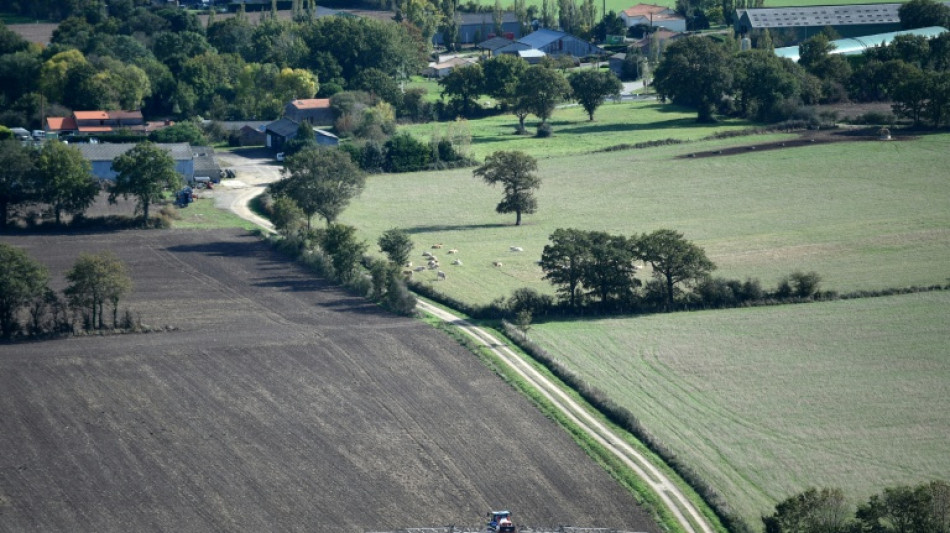
EU under pressure as fertiliser costs soar on Middle East war / Photo: JEAN-FRANCOIS MONIER - AFP

EU under pressure as fertiliser costs soar on Middle East war

With the war in the Middle East sending global fertiliser prices soaring, the EU is coming under pressure from farmers and some member states to take action.

Text size:

Agriculture sector representatives are due in Brussels for talks with the European Commission on April 13, as many complain the conflict risks plunging an already strained industry into a deeper crisis.

"The situation is very dire," lamented Amaury Poncelet, a cereal farmer in central Belgium.

This winter he bought fertilisers for 380 euros ($439) a tonne, up from 330 euros last summer, he noted. "And since things flared up in Iran, prices are going further up," he told AFP.

About a third of fertilisers shipped by sea reach the global market through the Strait of Hormuz that Iran has effectively closed in retaliation against US-Israeli strikes.

That sent prices up, with the UN expressing concern in particular about the impact on developing countries.

In Europe, the price of nitrogen fertilisers, which are derived from gas, has risen by around 20 percent over the past month, and is approaching 500 euro per tonne -- a one-two punch for farmers already facing higher costs because of the war in Ukraine.

Cereal producers, who need vast amounts of the stuff, have been hit particularly hard, said Luc Vernet of Farm Europe, an agriculture sector think tank.

"They haven't been able to make a living for the past three years," he said.

In France alone, about 300,000 hectares of land once used for cereal farming has been left fallow or abandoned since 2022, he said.

- 'Strategically important' -

Brussels, which has slapped high tariffs on fertilisers from Russia -- a major producer -- with plans to end imports by 2022 in a bid to hit Moscow's war coffers, has found itself again the target of requests for help.

France and farmers groups are pushing for a pause in the application of the EU's carbon border tax on fertilisers.

But the commission, which has promised an action plan for May, has so far ruled that out.

Supporters point out that the levy targets carbon-intensive imports to level the playing field for European industries subject to strict emissions rules, noting their development is key if Europe wants to avoid a similar crisis in the future.

The crisis sparked by the Iran war has made it "clear that maintaining strong domestic fertiliser production is strategically important for Europe", said Fertilizers Europe, an industry group.

A commission spokeswoman said the EU executive was continuously monitoring prices and has already "taken several measures to help farmers with affordability of fertilisers".

These included suspending duties on all imports with the exception of those from Russia and Belarus and adjusting the carbon border tax to soften its impact, she said.

Its May plan will be addressing "structural vulnerabilities and market imbalances" and look to boost domestic production, including low-carbon alternatives.

But there is a long way to go before these can become a competitive reality.

Some such green projects have been abandoned as too costly and others are in the initial stages, said Vernet.

(G.Gruner--BBZ)