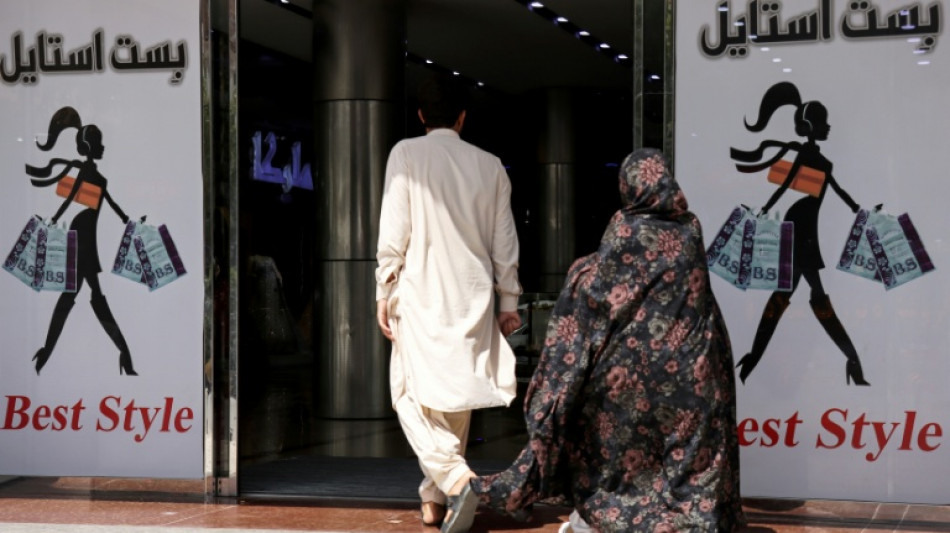
Taliban says 'no oppression' of Afghan women after dress crackdown / Photo: Mohsen KARIMI - AFP

Afghanistan's minister in charge of vice and virtue defended on Monday the crackdown on women's dress code in the western city of Herat, saying it protected "dignity" and dismissing criticism as propaganda.
"Everything is fine in Herat," Propagation of Virtue and Prevention of Vice (PVPV) Minister Mohammad Khalid Hanafi told a press conference in Herat.
"There is no oppression or barbarism here, and the rights of our sisters are protected."
Dozens of women were detained by the Taliban government's morality police in early June on accusations they were violating official dress codes by not wearing the body-cloaking chador or burqa.
That included a hospital worker employed by Doctors Without Borders (MSF), which strongly condemned the detention.
A rare protest against the restrictions was violently dispersed with at least two people killed, according to the United Nations.
Across Afghanistan, women must be almost entirely covered when they leave home, with many wearing a flowing abaya robe, a Muslim headscarf and a face covering -- not necessarily the burqa or chador.
Hanafi said that "enemies" will portray this as the Taliban's law and order but "it is God's order".
The recent crackdown on women's dress code also impacted businesses as they suffered from a downturn in female customers opting to stay home, according to shopkeepers, drivers and residents.
Women in Herat told AFP that they no longer go out unless absolutely necessary, fearing they could be stopped by the PVPV officers over alleged dress-code violations.
A 27-year-old woman said she used to take private transport to attend language classes every weekday. Since June, she has barely left the house.
"I've been gripped by fear and terror. I truly gave up everything out of fear," she told AFP.
Since returning to power in 2021, Taliban authorities have imposed a series of rules on women's access to public life, barring them from studying beyond primary school, working in certain professions and visiting parks.
Hanafi defined Herat as "the centre of religion" and its people as "the promotors of religion and sharia".
(G.Gruner--BBZ)