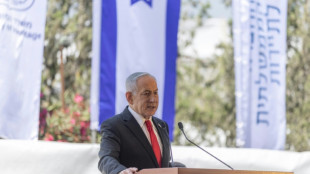
Once its saviour, US puts Kuwait in Iran's crosshairs / Photo: YASSER AL-ZAYYAT - AFP

Like many Kuwaitis, Salem Al-Ghanem still vividly remembers Iraqi tanks rolling through his hometown when his small Gulf state faced extinction had US troops not liberated it from invasion.
Now, decades later and six months into the US-Iran war, some are seeing those same American troops as more of a liability than an asset, as their presence has put Kuwait in Tehran's line of fire.
Since the Middle East conflict first erupted in late February with US-Israeli strikes on Iran, the Islamic republic and its allies have hammered Kuwait with recurrent barrages.
They have targeted civilian infrastructure, including water desalination plants and energy installations, along with bases hosting American troops.
Iran's closure of the Strait of Hormuz has put Kuwait, which is locked into the waterway and relies on oil exports for revenue, in a difficult economic position.
Yet Al-Ghanem continues to stand by the United States, even as talks to end the war have stalled, weighing on Gulf economies.
"The aim (of Iran) is to use Gulf states as a theatre to pressure the US side into halting its attacks," Al-Ghanem, a political analyst, told AFP.
"However, the reality is that the US president is unconcerned. He does not consider stopping or backing down simply because Kuwait is targeted," he added.
On his walls, portraits of Kuwait's emir and crown prince hang alongside a plaque reading: "There is no place like the homeland, and no homeland like Kuwait."
- 'We're paying the price' -
In private, many Kuwaitis are more scathing in their criticism.
Freedom of expression is limited in Kuwait, including open criticism of diplomatic partners.
According to Human Rights Watch, "several penal code provisions, as well as the cybercrime law, criminalise speech deemed insulting to religion, the emir or foreign leaders".
In a country where pro-American sentiment has long been a given, some are voicing once unthinkable positions: questioning the presence of foreign troops and President Donald Trump's decision to continue the war.
"Of course we are paying the price for the presence of US forces," said a Kuwaiti woman who declined to give her name.
But she was reluctant to consider an alternative.
"Just imagine if the American forces weren't in Kuwait," she told AFP, while purchasing strawberry pastries for her children at Dunkin' -- the US donut franchise that remains popular across the Gulf.
Although Gulf states are strengthening regional alliances, with Saudi Arabia, Pakistan and Turkey signing a military pact, analysts agree that Kuwait, like many in the region, cannot afford to drop the US as Iran grows emboldened.
Positive sentiment towards the US had already taken a hit across the region due to Washington's support for Israel's deadly bombing campaign of Gaza after Hamas's October 7, 2023 attacks.
Boycott campaigns of companies seen as supporting illegal Israeli settlements or the Israeli government, including many American firms like Starbucks and McDonald's, had become popular in Kuwait and elsewhere in the Middle East.
- Dilemma -
After the US-led coalition liberated Kuwait in 1991, American troops dug in.
Kuwait hosts one of the region's largest concentrations of American troops, with US forces active in airfields, bases and training grounds.
Their large presence has proven to be an enticing target for Iran.
Iranian attacks on Kuwait have killed at least 15 people, including six US troops, four Kuwaiti soldiers and five foreign residents.
The situation puts Kuwait in a delicate balancing act.
"Kuwait recognises America's key role in liberating it from Saddam Hussein, but it also recognises that it is now coming under Iranian attack because it hosts American forces," a senior foreign diplomat based in Kuwait told AFP.
"The dilemma is that it faces challenges because of its geographical position and regional power dynamics, making it difficult to find alternatives to the United States."
In restaurants, cafes and public spaces, conversations about the war dominate.
Televisions broadcast nonstop coverage of Middle East developments, while breaking news alerts about Iran command attention amid concern the conflict could spiral out of control.
A US government spokesman told AFP that security cooperation with Kuwait remains robust.
But for Nasser Al-Shammari, a 50-year-old Kuwaiti national, that relationship is now a source of unease.
"What Kuwait has recently witnessed was difficult, given the presence of US forces," he said.
"Targeting locations where the Americans are stationed has created fear and anxiety among residents."
(T.Burkhard--BBZ)