US midterm political advertising crosses $10 billion

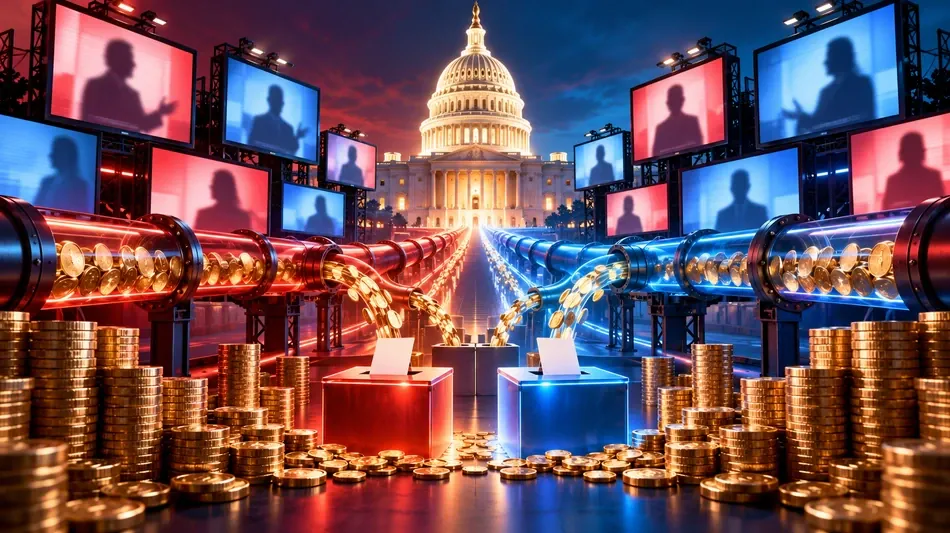
US political advertising for the 2026 midterms has exceeded $10 billion and is projected to reach a record $11.6 billion by Election Day.
US political advertising for the 2026 midterms has exceeded $10 billion and is projected to reach a record $11.6 billion by Election Day.
The total is expected to reach $11.6 billion by Election Day, according to media tracking firm AdImpact, as reported by TIME magazine.
The projected spending is higher than the $8.9 billion spent during the 2022 midterms but short of the $11.2 billion recorded during the 2024 presidential election cycle.
The surge comes as Republicans and Democrats compete for control of Congress, with wealthy donors and political groups spending heavily to influence key races, TIME reported on October 19.
Republicans have spent more than Democrats on television advertising in several closely contested Senate races. Across nine of the tightest Senate contests, Republicans spent $233 million on broadcast television ads last month, compared with $121 million for Democrats, according to AdImpact data cited by TIME.
Across Senate races classified as toss-ups by the Cook Political Report, Republicans have spent or reserved $947 million for advertising, compared with $625 million for Democrats. These figures include ads booked for future broadcasts as well as those already aired.
The gap is smaller in House races. Republicans have outspent Democrats by $14 million across 21 toss-up contests.
Texas has become one of the most expensive Senate races this election cycle. Combined advertising spending and reservations for future airtime have crossed $500 million, according to AdImpact.
Democrat James Talarico is challenging Republican Ken Paxton in a contest that could affect the balance of power in the Senate. Talarico raised about $50 million more than Paxton between July and September. However, Republican-aligned outside groups have spent heavily on advertising supporting Paxton.
The world's richest person, Elon Musk, described by TIME as the biggest individual donor to federal elections in the current cycle, contributed $158 million to the Senate Leadership Fund last month. The group transferred a matching amount to Texas PAC, which supports Paxton. Musk also donated $10 million to Lone Star Liberty PAC in August.
The money did not go directly to Paxton's campaign. Instead, it was channelled through outside political groups that can fund advertising independently of candidates.
Ohio's Senate race has drawn more than $450 million in combined advertising spending, according to AdImpact. Republicans have spent nearly $270 million supporting Jon Husted, while Democrats have spent more than $180 million backing Sherrod Brown.
Husted was appointed to replace JD Vance after Vance became vice-president in 2025. The winner of the special election will need to contest the seat again in 2028 to secure a full six-year term.
Maine has also seen heavy spending, with around $200 million committed to advertising. Republican Senator Susan Collins is seeking a sixth term against Democratic challenger Troy Jackson. Republican groups have spent or reserved nearly $114 million for advertising since January, compared with about $81 million for Democrats.
How PACs and super PACs work
Political action committees (PACs) collect contributions to support or oppose candidates. For the 2025–26 election cycle, individuals can contribute up to $3,500 per election to a federal candidate's campaign and up to $5,000 annually to a traditional federal PAC. Separate limits apply to donations to national party committees.
Super PACs operate under different rules. They cannot donate directly to candidates or coordinate their advertising with campaigns, but they can raise unlimited amounts from eligible donors to fund independent political advertising.
This allows wealthy donors to spend large sums supporting or opposing candidates through outside groups, even when direct contributions to candidates are capped.
The projected $11.6 billion covers political advertising, not the full cost of running campaigns. Staffing, travel and voter outreach add to election expenses.
Research published in the American Political Science Review in 2021 estimated that a Senate candidate with a $2 million advantage in television advertising could gain about 10,000 votes. In a close contest, that number could matter.
(A.Lehmann--BBZ)