Berliner Boersenzeitung - Key dates in Ivory Coast crisis

EUR -
AED 4.246478
AFN 76.888523
ALL 93.48757
AMD 423.347546
AOA 1061.345207
ARS 1733.058686
AUD 1.635994
AWG 2.082513
AZN 1.970043
BAM 1.961414
BBD 2.328364
BDT 143.103908
BHD 0.435989
BIF 3453.99514
BMD 1.156149
BND 1.48134
BOB 13.739681
BRL 5.892665
BSD 1.156009
BTN 110.002458
BWP 15.603659
BYN 3.442252
BYR 22660.520413
BZD 2.324924
CAD 1.611493
CDF 2615.791646
CHF 0.933942
CLF 0.026753
CLP 1056.362238
CNY 7.801236
CNH 7.796982
COP 3648.921861
CRC 525.515435
CUC 1.156149
CUP 30.637949
CVE 110.647961
CZK 24.266354
DJF 205.471255
DKK 7.476127
DOP 67.346134
DZD 153.688915
EGP 57.556612
ERN 17.342235
ETB 186.583498
FJD 2.553413
FKP 0.859298
GBP 0.856793
GEL 3.023376
GGP 0.859298
GHS 13.596763
GIP 0.859298
GMD 84.981404
GNF 10145.207892
GTQ 8.820244
GYD 241.852202
HKD 9.070596
HNL 30.984681
HRK 7.533703
HTG 151.152612
HUF 363.337748
IDR 20582.920659
ILS 3.468274
IMP 0.859298
INR 110.065674
IQD 1514.334158
IRR 1590340.758301
ISK 142.611425
JEP 0.859298
JMD 183.585438
JOD 0.819755
JPY 182.105612
KES 147.605987
KGS 101.105674
KHR 4685.298214
KMF 492.519879
KRW 1629.419037
KWD 0.356776
KYD 0.963357
KZT 541.790653
LAK 26108.739178
LBP 103533.143415
LKR 387.749774
LRD 209.899292
LSL 18.780552
LTL 3.413808
LVL 0.699343
LYD 7.358934
MAD 10.774363
MDL 20.102535
MGA 4933.054837
MKD 61.708483
MMK 2427.395773
MNT 4157.558143
MOP 9.341598
MRU 46.473418
MUR 54.420371
MVR 17.874501
MWK 2004.537163
MXN 19.809677
MYR 4.729001
MZN 73.883747
NAD 18.780552
NGN 1577.519501
NIO 42.541205
NOK 10.981266
NPR 176.003933
NZD 1.961655
OMR 0.444533
PAB 1.155994
PEN 3.915024
PGK 5.108776
PHP 70.28003
PKR 320.93685
PLN 4.299776
PYG 6873.88175
QAR 4.225923
RON 5.25054
RSD 117.323733
RUB 95.127146
RWF 1699.865164
SAR 4.370505
SBD 9.328213
SCR 16.756231
SDG 694.271725
SEK 10.952356
SGD 1.478142
SLE 28.445505
SOS 660.690956
SRD 43.779321
STD 23929.950059
STN 24.570322
SVC 10.115257
SZL 18.776741
THB 38.118659
TJS 10.664222
TMT 4.052302
TND 3.39612
TRY 55.147195
TTD 7.835596
TWD 37.302111
TZS 3060.902211
UAH 51.776356
UGX 4306.455826
USD 1.156149
UYU 46.534595
UZS 13825.989758
VES 871.980583
VND 30296.306488
VUV 137.59374
WST 3.154455
XAF 657.839796
XAG 0.018249
XAU 0.000266
XCD 3.124551
XCG 2.083463
XDR 0.818777
XOF 656.693016
XPF 119.331742
YER 273.834311
ZAR 18.677755
ZMK 10406.732529
ZMW 21.819165
ZWL 372.279507
  • CMSC

    0.0240

    21.744

    +0.11%

  • BCC

    2.3400

    86.6

    +2.7%

  • RBGPF

    0.6500

    70.6

    +0.92%

  • GSK

    0.7900

    52.96

    +1.49%

  • BCE

    -0.0200

    22.75

    -0.09%

  • CMSD

    -0.1600

    21.82

    -0.73%

  • NGG

    0.4700

    80.88

    +0.58%

  • AZN

    1.4100

    161.42

    +0.87%

  • RIO

    1.4500

    101.1

    +1.43%

  • JRI

    0.1500

    12.81

    +1.17%

  • RELX

    0.0485

    35.52

    +0.14%

  • BTI

    0.6000

    59.33

    +1.01%

  • RYCEF

    0.0500

    21

    +0.24%

  • VOD

    0.1900

    16.19

    +1.17%

  • BP

    -0.6000

    41.63

    -1.44%

Key dates in Ivory Coast crisis


Key dates in Ivory Coast crisis

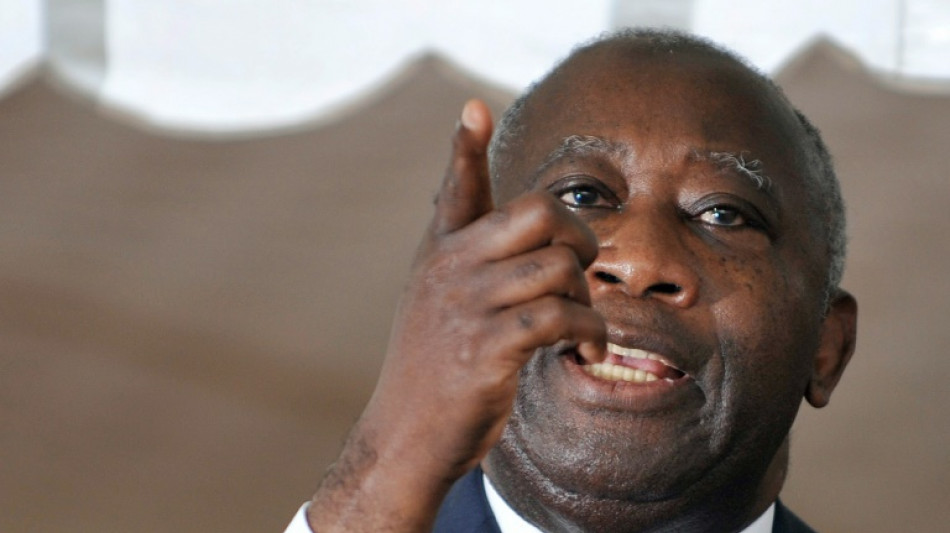
Ivory Coast ex-president Laurent Gbagbo, the first former head of state to go on trial before the International Criminal Court in The Hague, was acquitted on Tuesday of charges of crimes against humanity, relating to unrest triggered by his bid to cling on to power.

Text size:

Following are key dates in the Ivory Coast crisis:

- Post-election upheaval -

After being delayed six times since 2005, presidential elections finally take place in October 2010, with incumbent Gbagbo facing off against old rival Alassane Ouattara in a final round on November 28.

On December 3, the constitutional council declares Gbagbo the victor -- but the electoral commission says Ouattara won.

The UN too recognises Ouattara as the winner, with the EU, UN and former colonial power France urging Gbagbo to concede defeat.

But a day later Gbagbo's allies hang the chain of office around his neck and Ouattara swears himself in as president in a handwritten letter.

On December 7, west Africa's regional ECOWAS bloc suspends Ivory Coast over the crisis and calls on Gbagbo to yield. The African Union follows suit.

Gbagbo digs in, holing up at the presidential palace and retaining the support of the army. Ouattara sets up his government headquarters at the Golf Hotel in Abidjan.

In March 2011, after months of tension, unrest and unsuccessful mediation efforts, forces loyal to Ouattara based in the north launch an offensive against the army and win control of much of the country in four days.

French and UN soldiers deploy in Abidjan to prevent the use of heavy weapons in what has become a civil war.

After 10 days of fighting in the capital, Gbagbo is arrested by Ouattara's troops. More than 3,000 people are killed during the crisis.

On May 21 Ouattara is sworn in as president before 20 African leaders and then French president, Nicolas Sarkozy.

- Trials and reconciliation -

On November 30 2011, Gbagbo is transferred to the International Criminal Court in The Hague.

In September 2014, a Dialogue, Truth and Reconciliation Commission holds public hearings of victims and perpetrators of the 2000-2011 political-military crisis, but is criticised for its lack of organisation and results.

On March 10 2015, former first lady Simone Gbagbo is sentenced in the main city Abidjan to 20 years in prison for her role in the post-election crisis.

In August 2018, the 69-year-old is granted an amnesty by Ouattara after spending seven years in detention.

- Acquittal -

Gbagbo and his former right-hand man Charles Ble Goude go on trial in January 2016 facing charges of crimes against humanity, with Ble Goude also accused of commanding men who murdered, raped and burned people alive.

On January 15 2019, both are acquitted.

The ICC says that by a majority, the court "decides that the prosecution has failed to satisfy the burden of proof to the requisite standard."

(A.Lehmann--BBZ)