Berliner Boersenzeitung - Back on the menu? Europeans once ate seaweed, research shows

EUR -
AED 4.272323
AFN 76.901107
ALL 96.34399
AMD 443.867208
ANG 2.08242
AOA 1066.771894
ARS 1668.20484
AUD 1.756258
AWG 2.09399
AZN 1.976567
BAM 1.953034
BBD 2.343182
BDT 142.218617
BGN 1.952761
BHD 0.438569
BIF 3436.648432
BMD 1.163328
BND 1.50867
BOB 8.067611
BRL 6.323501
BSD 1.163353
BTN 104.720165
BWP 15.477151
BYN 3.36455
BYR 22801.223172
BZD 2.339797
CAD 1.608062
CDF 2596.547997
CHF 0.938672
CLF 0.02742
CLP 1075.670733
CNY 8.224839
CNH 8.22457
COP 4457.231965
CRC 568.095569
CUC 1.163328
CUP 30.828184
CVE 110.109084
CZK 24.283648
DJF 207.167538
DKK 7.468866
DOP 74.584388
DZD 151.309343
EGP 55.258182
ERN 17.449916
ETB 180.850491
FJD 2.626099
FKP 0.87253
GBP 0.87349
GEL 3.135191
GGP 0.87253
GHS 13.291237
GIP 0.87253
GMD 84.92322
GNF 10112.680313
GTQ 8.911381
GYD 243.396394
HKD 9.050992
HNL 30.640612
HRK 7.528124
HTG 152.324307
HUF 383.718951
IDR 19418.266183
ILS 3.747236
IMP 0.87253
INR 104.815303
IQD 1524.041937
IRR 48990.628525
ISK 148.78808
JEP 0.87253
JMD 186.505905
JOD 0.824836
JPY 181.307536
KES 150.3603
KGS 101.733296
KHR 4657.425043
KMF 490.924645
KPW 1046.994789
KRW 1708.078917
KWD 0.357293
KYD 0.969531
KZT 594.478211
LAK 25230.381892
LBP 104180.926226
LKR 358.991663
LRD 205.340118
LSL 19.754527
LTL 3.435004
LVL 0.703685
LYD 6.322048
MAD 10.747082
MDL 19.725154
MGA 5187.676479
MKD 61.55284
MMK 2443.021959
MNT 4127.457164
MOP 9.323298
MRU 46.395304
MUR 53.652889
MVR 17.913837
MWK 2017.352074
MXN 21.202066
MYR 4.784783
MZN 74.34859
NAD 19.754527
NGN 1688.476823
NIO 42.809381
NOK 11.789849
NPR 167.552464
NZD 2.016495
OMR 0.447293
PAB 1.163358
PEN 3.913259
PGK 4.937009
PHP 68.818402
PKR 328.799615
PLN 4.234408
PYG 8000.670946
QAR 4.240495
RON 5.088162
RSD 117.389042
RUB 89.045059
RWF 1692.70311
SAR 4.366162
SBD 9.574876
SCR 17.313484
SDG 699.740757
SEK 10.956657
SGD 1.509627
SHP 0.872797
SLE 27.567156
SLL 24394.39831
SOS 663.663097
SRD 44.973043
STD 24078.534907
STN 24.465357
SVC 10.179586
SYP 12862.717918
SZL 19.749035
THB 37.12993
TJS 10.673985
TMT 4.08328
TND 3.417261
TOP 2.801014
TRY 49.504016
TTD 7.881873
TWD 36.263833
TZS 2850.153307
UAH 49.045052
UGX 4116.171448
USD 1.163328
UYU 45.445648
UZS 13949.247684
VES 296.12732
VND 30665.318511
VUV 141.743431
WST 3.244067
XAF 655.032281
XAG 0.020154
XAU 0.000278
XCD 3.143951
XCG 2.096731
XDR 0.814514
XOF 655.02947
XPF 119.331742
YER 277.511843
ZAR 19.815368
ZMK 10471.343142
ZMW 26.903021
ZWL 374.591049
  • RBGPF

    0.8500

    79.2

    +1.07%

  • CMSC

    -0.0300

    23.4

    -0.13%

  • RYCEF

    0.3100

    14.8

    +2.09%

  • NGG

    0.1200

    75.53

    +0.16%

  • RIO

    0.1000

    73.16

    +0.14%

  • RELX

    -0.8300

    39.49

    -2.1%

  • GSK

    0.1150

    48.525

    +0.24%

  • BTI

    0.5200

    57.53

    +0.9%

  • SCS

    0.0600

    16.2

    +0.37%

  • BCC

    -0.4850

    72.565

    -0.67%

  • BP

    0.1450

    35.975

    +0.4%

  • AZN

    0.2000

    90.38

    +0.22%

  • VOD

    0.0050

    12.475

    +0.04%

  • BCE

    -0.3000

    23.25

    -1.29%

  • CMSD

    0.0300

    23.28

    +0.13%

  • JRI

    -0.0800

    13.71

    -0.58%

Back on the menu? Europeans once ate seaweed, research shows
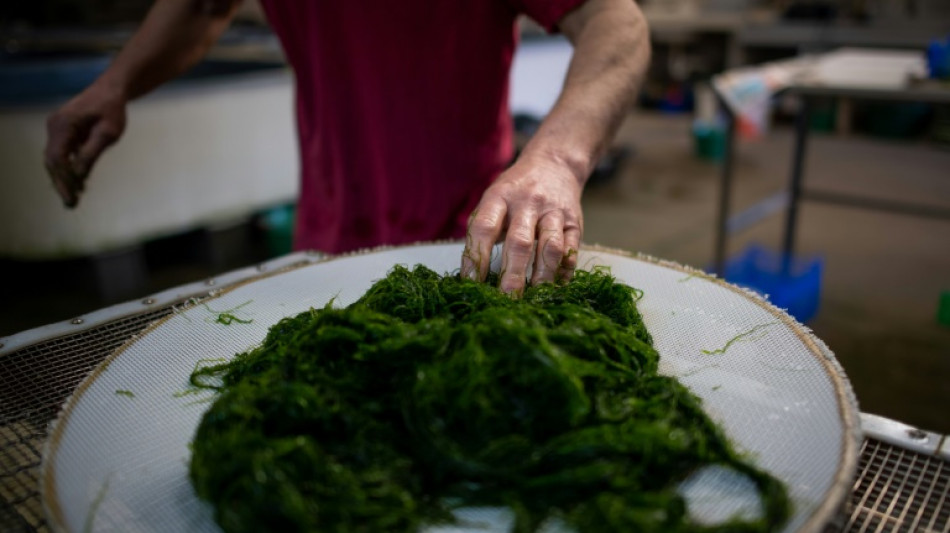
Back on the menu? Europeans once ate seaweed, research shows / Photo: LOIC VENANCE - AFP/File

Back on the menu? Europeans once ate seaweed, research shows

Europeans now rarely eat seaweed, but it was an important part of their diet until the late Middle Ages, archaeologists said Tuesday, calling for the eco-friendly aquatic plant to be put back on the menu.

Text size:

Seaweed, a healthy and sustainable source of protein, is a staple food in some Asian countries such as Japan. But it has long been shunned by traditional Western diets -- with a few exceptions, such as the Welsh dish laverbread.

It was previously thought that since the rise of farming, Europeans had mostly used seaweed as fuel, fertiliser or to feed livestock. It was only eaten to stave off hunger during famine, so the thinking went.

But a new study published in the journal Nature Communications found that Europeans were gobbling up seaweed millennia after that point, and suggested the continent re-embrace the nutritious food.

To find out about ancient seaweed consumption, a UK-led team of researchers analysed dental plaque extracted from the teeth of 74 different people who lived thousands of years ago at 28 sites ranging from Scotland to Spain.

Using a mass spectrometry technique to identify organic compounds, they found evidence that the teeth had chowed down on several different aquatic plants.

Red seaweed was eaten both in Scotland's northern Orkney islands around 5,000 years ago and at Casa Corona in southern Spain 8,000 years ago, the study found.

Freshwater aquatic plants, such as the pondweed Potamogeton, were commonly eaten in Portugal, Scotland and Lithuania, it added.

Karen Hardy, an archaeologist at Scotland's University of Glasgow and the study's lead author, told AFP that aquatic plants were "very likely eaten over a much more wide timescale than we found".

Europeans were previously believed to have turned their noses up at seaweed following the introduction of agriculture more than 10,000 years ago.

However, research in this field has focused on agricultural production, so may have missed out on seaweed, which is easy to find and eat.

The authors of the study said seaweed has the potential to be a locally sourced, low-emission option that does not require the mass farming of the meals normally seen on Europe's plates.

"It's very healthy, it's nutritious, it's available, it's renewable," Hardy said.

"People ate it in the past in Europe," she said, adding hopefully that maybe they will again.

(Y.Berger--BBZ)