Berliner Boersenzeitung - Private US spaceship poised to launch for the Moon

EUR -
AED 4.226703
AFN 74.809083
ALL 93.366242
AMD 421.567303
AOA 1055.381468
ARS 1719.449848
AUD 1.640637
AWG 2.074509
AZN 1.957249
BAM 1.956576
BBD 2.321601
BDT 142.336488
BHD 0.434667
BIF 3410.297857
BMD 1.150907
BND 1.478306
BOB 14.033569
BRL 5.874571
BSD 1.152657
BTN 109.839591
BWP 15.677085
BYN 3.369508
BYR 22557.772268
BZD 2.3183
CAD 1.616598
CDF 2603.351104
CHF 0.932579
CLF 0.026962
CLP 1064.60077
CNY 7.771607
CNH 7.778196
COP 3734.151472
CRC 523.600972
CUC 1.150907
CUP 30.499029
CVE 110.308777
CZK 24.207011
DJF 205.26146
DKK 7.475387
DOP 66.865665
DZD 153.041281
EGP 57.680572
ERN 17.263601
ETB 186.04661
FJD 2.550864
FKP 0.85368
GBP 0.857109
GEL 3.004299
GGP 0.85368
GHS 13.469345
GIP 0.85368
GMD 85.167178
GNF 10122.01702
GTQ 8.79449
GYD 241.535856
HKD 9.026072
HNL 30.895859
HRK 7.533949
HTG 150.711776
HUF 364.002457
IDR 20756.603207
ILS 3.50294
IMP 0.85368
INR 109.79449
IQD 1509.986133
IRR 1582784.505965
ISK 141.987624
JEP 0.85368
JMD 182.590083
JOD 0.815949
JPY 181.472098
KES 148.904491
KGS 100.64646
KHR 4657.909243
KMF 492.588362
KRW 1643.48298
KWD 0.356297
KYD 0.960573
KZT 546.782245
LAK 26070.346267
LBP 103225.869268
LKR 387.01359
LRD 208.062572
LSL 19.010244
LTL 3.398328
LVL 0.696172
LYD 7.346916
MAD 10.747665
MDL 20.125987
MGA 4909.884543
MKD 61.549426
MMK 2416.539498
MNT 4135.816267
MOP 9.310814
MRU 46.164719
MUR 54.023553
MVR 17.781718
MWK 1998.76718
MXN 19.920331
MYR 4.716391
MZN 73.540216
NAD 19.010079
NGN 1569.9408
NIO 42.416834
NOK 10.973378
NPR 175.741454
NZD 1.962146
OMR 0.442496
PAB 1.152657
PEN 3.893145
PGK 5.086953
PHP 70.231203
PKR 320.068341
PLN 4.313541
PYG 6875.728699
QAR 4.202068
RON 5.245859
RSD 117.369685
RUB 92.534153
RWF 1690.3488
SAR 4.309143
SBD 9.289148
SCR 16.688095
SDG 690.543907
SEK 11.007905
SGD 1.476441
SLE 28.139459
SOS 658.752847
SRD 43.511182
STD 23821.44602
STN 24.509407
SVC 10.085915
SZL 19.01338
THB 38.486074
TJS 10.645025
TMT 4.028174
TND 3.382442
TRY 54.726187
TTD 7.816034
TWD 37.251971
TZS 3048.749619
UAH 51.704646
UGX 4313.711938
USD 1.150907
UYU 46.358398
UZS 13820.364662
VES 860.707221
VND 30247.555708
VUV 137.015627
WST 3.147144
XAF 656.20887
XAG 0.019618
XAU 0.000284
XCD 3.110383
XCG 2.077406
XDR 0.816117
XOF 656.217426
XPF 119.331742
YER 274.383566
ZAR 19.003001
ZMK 10359.610349
ZMW 21.662409
ZWL 370.591503
  • RBGPF

    1.7800

    70.99

    +2.51%

  • CMSC

    -0.0800

    21.76

    -0.37%

  • GSK

    -0.1800

    51.51

    -0.35%

  • RYCEF

    0.6500

    20.2

    +3.22%

  • AZN

    -11.6700

    157.97

    -7.39%

  • BP

    -0.9600

    44.26

    -2.17%

  • RIO

    -0.9500

    95.9

    -0.99%

  • NGG

    -0.1100

    79.86

    -0.14%

  • BTI

    -1.0900

    59.56

    -1.83%

  • BCE

    0.1100

    21.79

    +0.5%

  • RELX

    0.7400

    36.16

    +2.05%

  • CMSD

    -0.0900

    22.02

    -0.41%

  • JRI

    -0.1400

    12.82

    -1.09%

  • VOD

    -0.1700

    15.61

    -1.09%

  • BCC

    6.6500

    83.03

    +8.01%

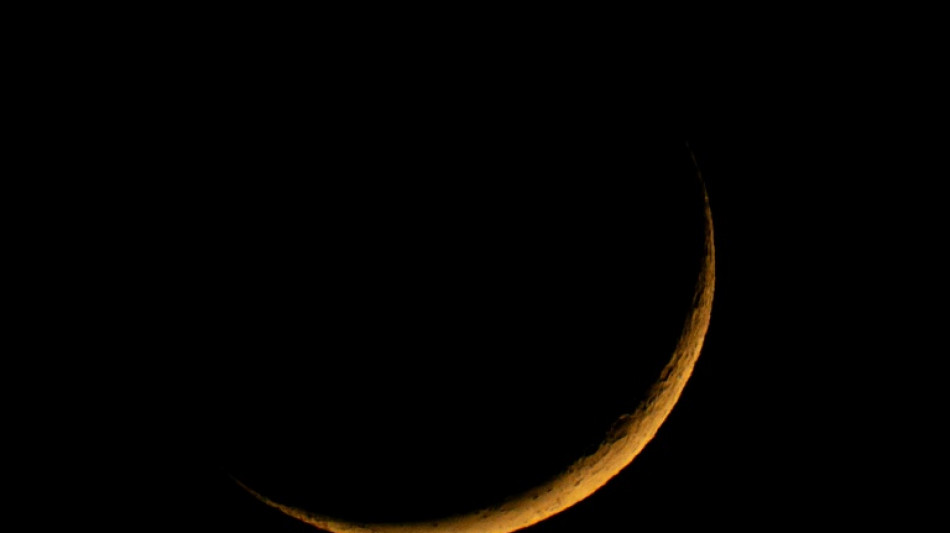
Private US spaceship poised to launch for the Moon
Private US spaceship poised to launch for the Moon / Photo: Luis ROBAYO - AFP

Private US spaceship poised to launch for the Moon

An American spaceship attempting a lunar landing will aim to launch early Thursday, the second private-led effort this year after the first ended in failure.

Text size:

Intuitive Machines, the Houston company leading mission "IM-1," hopes to become the first non-government entity to achieve a soft touchdown on the Moon and land the first US robot on the surface since the Apollo missions more than five decades ago.

Its hexagonal-shaped Nova-C lander named "Odysseus" is set to blast off on top of a SpaceX Falcon 9 rocket from the Kennedy Space Center in Florida at 01:05 am Thursday local time (0605 GMT).

IM-1 was supposed to blast off on Wednesday, but the launch was postponed after SpaceX discovered abnormal temperatures as it attempted to fuel up the lander.

The lander has a new type of supercooled liquid methane and oxygen engine giving it the power to reach its destination quickly, avoiding prolonged exposure to a region of high radiation surrounding the Earth known as the Van Allen belt.

Intuitive Machine's Trent Martin told reporters this week that the "opportunity to return the United States to the Moon for the first time since 1972 is a feat of engineering that demands a hunger to explore."

Despite the postponement, the craft is still due to reach its landing site Malapert A on February 22, an impact crater 300 kilometers (180 miles) from the south pole.

NASA hopes to eventually build a long-term presence and harvest ice there for both drinking water and rocket fuel under Artemis, its flagship Moon-to-Mars program.

NASA paid Intuitive Machines $118 million to ship science hardware to better understand and mitigate environmental risks for astronauts, the first of whom are scheduled to land no sooner than 2026.

There is more colorful cargo aboard as well, including a digital archive of human knowledge and 125 mini-sculptures of the Moon by the artist Jeff Koons.

After touchdown, the payloads are expected to run for roughly seven days before lunar night sets in on the south pole, rendering Odysseus inoperable.

IM-1 is the second mission under a NASA initiative called Commercial Lunar Payload Services (CLPS), which the space agency created to delegate trucking services to the private sector to achieve savings and to stimulate a wider lunar economy.

The first, by Pittsburgh-based Astrobotic, launched in January, but its Peregrine spacecraft experienced an engine anomaly that caused a fuel leak and was eventually brought back to burn up in Earth's atmosphere.

Soft landing a robot on the Moon is challenging because it has to navigate treacherous terrain amid a lag of several seconds in communications with Earth, and use its thrusters for a controlled descent in the absence of an atmosphere that would support parachutes.

Apart from Astrobotic's failed attempt, two other private initiatives got close: Beresheet, operated by an Israeli nonprofit, crash-landed in 2019, while Japanese company ispace also had a "hard landing" last year.

(T.Renner--BBZ)