Berliner Boersenzeitung - Seaweed and 3D printers: Chile's innovative approach to feeding kids

EUR -
AED 4.343054
AFN 77.464136
ALL 96.578481
AMD 443.001294
ANG 2.116924
AOA 1084.432259
ARS 1696.425045
AUD 1.722632
AWG 2.13043
AZN 2.015092
BAM 1.955364
BBD 2.363473
BDT 143.548016
BGN 1.986001
BHD 0.442401
BIF 3475.425631
BMD 1.182587
BND 1.500966
BOB 8.109193
BRL 6.256361
BSD 1.173439
BTN 107.717999
BWP 16.277373
BYN 3.32206
BYR 23178.695489
BZD 2.360074
CAD 1.622687
CDF 2578.039008
CHF 0.928842
CLF 0.026073
CLP 1029.489324
CNY 8.24689
CNH 8.21806
COP 4228.657801
CRC 580.770597
CUC 1.182587
CUP 31.338542
CVE 110.240437
CZK 24.267271
DJF 208.973438
DKK 7.466899
DOP 73.933527
DZD 153.154875
EGP 55.703589
ERN 17.738798
ETB 182.791072
FJD 2.661179
FKP 0.866817
GBP 0.872725
GEL 3.18162
GGP 0.866817
GHS 12.79115
GIP 0.866817
GMD 86.329235
GNF 10278.709772
GTQ 9.006993
GYD 245.515296
HKD 9.221278
HNL 30.954103
HRK 7.533317
HTG 153.905708
HUF 382.153287
IDR 19840.785951
ILS 3.707232
IMP 0.866817
INR 108.414214
IQD 1537.357457
IRR 49816.456691
ISK 145.777895
JEP 0.866817
JMD 184.718842
JOD 0.838501
JPY 184.146504
KES 151.256298
KGS 103.416722
KHR 4722.947667
KMF 496.686746
KPW 1064.451335
KRW 1710.44627
KWD 0.362349
KYD 0.977982
KZT 590.738376
LAK 25359.349612
LBP 105085.885516
LKR 363.548997
LRD 217.091629
LSL 18.94048
LTL 3.491871
LVL 0.715335
LYD 7.466336
MAD 10.748905
MDL 19.97255
MGA 5308.817127
MKD 61.616271
MMK 2482.599361
MNT 4215.258085
MOP 9.4253
MRU 46.916546
MUR 54.292994
MVR 18.271409
MWK 2034.84661
MXN 20.533372
MYR 4.736855
MZN 75.57955
NAD 18.94048
NGN 1680.526824
NIO 43.180379
NOK 11.555294
NPR 172.348599
NZD 2.007958
OMR 0.454249
PAB 1.173539
PEN 3.936823
PGK 5.018882
PHP 69.733624
PKR 328.342141
PLN 4.208885
PYG 7847.251532
QAR 4.278347
RON 5.101724
RSD 117.373848
RUB 88.840205
RWF 1711.518652
SAR 4.433442
SBD 9.606873
SCR 16.856244
SDG 711.330129
SEK 10.584272
SGD 1.505082
SHP 0.887246
SLE 28.859447
SLL 24798.24684
SOS 669.450838
SRD 45.081425
STD 24477.153012
STN 24.494542
SVC 10.267712
SYP 13078.904017
SZL 18.935781
THB 36.920787
TJS 10.972155
TMT 4.139053
TND 3.416239
TOP 2.847384
TRY 51.246799
TTD 7.971224
TWD 37.116428
TZS 3004.130641
UAH 50.599026
UGX 4148.075755
USD 1.182587
UYU 44.440098
UZS 14242.826515
VES 416.584326
VND 31036.982812
VUV 141.323792
WST 3.258724
XAF 655.810877
XAG 0.011483
XAU 0.000237
XCD 3.196
XCG 2.114929
XDR 0.815618
XOF 655.810877
XPF 119.331742
YER 281.814608
ZAR 19.0597
ZMK 10644.701884
ZMW 23.02187
ZWL 380.792372
  • RBGPF

    -0.8100

    83.23

    -0.97%

  • SCS

    0.0200

    16.14

    +0.12%

  • RELX

    0.0600

    39.9

    +0.15%

  • CMSC

    0.1000

    23.75

    +0.42%

  • GSK

    0.5000

    49.15

    +1.02%

  • VOD

    0.2300

    14.17

    +1.62%

  • NGG

    1.3200

    81.5

    +1.62%

  • RYCEF

    0.3000

    17.12

    +1.75%

  • AZN

    1.2600

    92.95

    +1.36%

  • BTI

    0.9400

    59.16

    +1.59%

  • RIO

    3.1300

    90.43

    +3.46%

  • BCE

    0.4900

    25.2

    +1.94%

  • BP

    1.1000

    36.53

    +3.01%

  • CMSD

    0.0900

    24.13

    +0.37%

  • JRI

    0.0100

    13.68

    +0.07%

  • BCC

    -1.1800

    84.33

    -1.4%

Seaweed and 3D printers: Chile's innovative approach to feeding kids
Seaweed and 3D printers: Chile's innovative approach to feeding kids / Photo: Martin BERNETTI - AFP

Seaweed and 3D printers: Chile's innovative approach to feeding kids

Some dehydrated "cochayuyo" seaweed, some instant mashed potatoes and hot water: these are the ingredients for a nutritious menu of 3D printed food that nutritional experts in Chile hope will revolutionize the food market, particularly for children.

Text size:

With a 3D food printer and a modern twist on the traditional use of cochayuyo, an algae typically found in Chile, New Zealand and the South Atlantic, Roberto Lemus, a professor at the University of Chile and several students, have managed to create nutritious and edible figures that they hope kids will love to eat.

Pokemon figures, or any type of animal imaginable, are all fed into the 3D printer, together with the gelatinous mixture, and the food is "printed" out seven minutes later.

"We looking for different figures, fun figures...visual, colors, taste, flavors, smells," Lemus told AFP.

But, he stressed, the main focus is on nutritional content. "The product has to be highly nutritious for people, but it also has to be tasty," he said.

3D food printers are expensive, costing from $4,000 to more than $10,000, but Lemus hopes that as technology advances, their cost will come down and reach more people.

The technology is developing in the culinary field in dozens of countries, and 3D food printers are used to design sweets, pasta and other foods.

NASA already tested it in 2013 with the idea of expanding the variety of foods that astronauts dine on in space.

- Superpower algae -

Chile is making progress with cochayuyo seaweed, one of the typical ingredients of the coastal nation's cuisine, and which is rich amino acids, minerals and iodine, according to Alonso Vasquez, a 25-year-old postgraduate student who is writing his thesis on the subject.

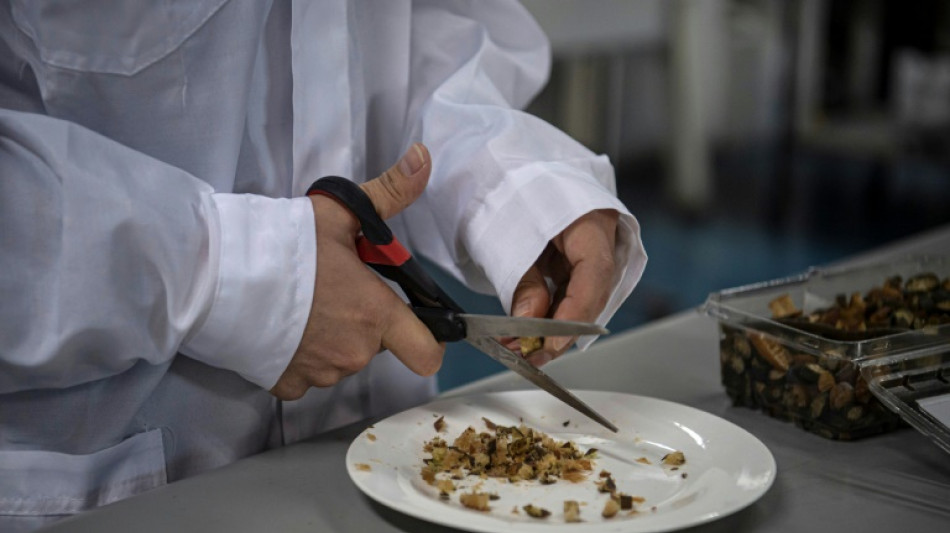
The young researcher takes dehydrated cochayuyo, cuts it and grinds it to create cochayuyo flour which he then mixes with instant mashed potato powder.

He then adds hot water to the mixture to create a gelatinous and slimy substance that he feeds into the printer.

"It occurred to me to use potatoes, rice flour, all of which have a lot of starch. The starch of these raw materials combined with the cochayuyo alginate is what generates stabilization within the 3D printing," he says, waiting for the printer to finish creating a Pikachu figure of about two centimeters (just under one inch) and a taste of mashed potatoes and the sea.

The project has been underway for two years and is still in its infancy, but the idea is to apply ingredients such as edible flowers or edible dyes to the menu to make them more attractive to children.

(T.Burkhard--BBZ)