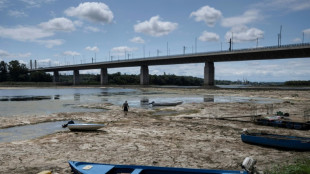
Extreme weather misinformation 'putting lives at risk,' study warns / Photo: Lionel BONAVENTURE - AFP

Major social media platforms are enabling and profiting from misinformation around extreme weather events, endangering lives and impeding emergency response efforts, a research group said Tuesday.
The report from the Center for Countering Digital Hate (CCDH) -- which analyzed 100 viral posts on each of three leading platforms during recent natural disasters including deadly Texas floods -- highlights how their algorithms amplify conspiracy theorists while sidelining life-saving information.
"The influence of high-profile conspiracy theorists during climate disasters is drowning out emergency response efforts," the report said, adding that the trend was "putting lives at risk."
Nearly all of the analyzed posts on Meta-owned Facebook and Instagram lacked fact-checks or Community Notes, a crowd-sourced verification system increasingly being adopted as an alternative to professional fact-checkers, the report said.
Elon Musk-owned X lacked fact-checks or Community Notes on 99 percent of the posts, while Google-owned YouTube "failed entirely," with zero fact-checks or Community Notes, CCDH said.
The report noted that well-known conspiracy theorist Alex Jones's false claims during the LA wildfires amassed more views on X throughout January than the combined reach of major emergency response agencies and news outlets, including the Los Angeles Times.
"The rapid spread of climate conspiracies online isn't accidental. It's baked into a business model that profits from outrage and division," said Imran Ahmed, CCDH's chief executive.
During the wildfires, online scammers placed social media advertisements impersonating federal emergency aid agencies to steal victims' personal information, Ahmed said, citing local officials.
"When distraught people can't distinguish real help from online deception, platforms become complicit in the suffering of innocent people," he said.
The tech platforms did not immediately respond to requests for comment.
- 'Dangerous' falsehoods -
Following natural disasters, misinformation tends to surge across social media -- fueled by accounts from across the political spectrum –- as many platforms scale back content moderation and reduce reliance on human fact-checkers, often accused by conservative advocates of a liberal bias.
During Hurricane Milton, which struck Florida last year, social media was flooded with baseless claims that the storm had been engineered by politicians using weather manipulation.
Similarly, the LA wildfires were falsely blamed on so-called "government lasers," a conspiracy theory amplified by viral posts.
Augustus Doricko, chief executive of cloud seeding company Rainmaker, said he received death threats online after conspiracy theorists blamed him for the devastating floods in Texas.
"I can confirm that we have received multiple threats since the flooding event," Doricko told AFP, highlighting the real-life consequences of such falsehoods.
The CCDH study found that the worst offenders spreading extreme weather misinformation were verified users with large followings, many of whom were attempting to monetize their posts.
Eighty eight percent of misleading extreme weather posts on X came from verified accounts, CCDH said. On YouTube, 73 percent of such posts originated from verified users, while on Meta, the figure was 64 percent.
"Climate disinformation costs lives," said Sam Bright of DeSmog, which reports on climate misinformation campaigns.
"As extreme weather events become more and more frequent, these falsehoods will only get more dangerous."
(K.Müller--BBZ)