Berliner Boersenzeitung - 'Pinprick of light': Artemis crew witnesses meteorite impacts on Moon

EUR -
AED 4.251055
AFN 74.082723
ALL 95.018841
AMD 426.494799
ANG 2.072456
AOA 1062.618368
ARS 1653.343639
AUD 1.642361
AWG 2.08533
AZN 1.972406
BAM 1.955776
BBD 2.331072
BDT 142.358264
BGN 1.957255
BHD 0.436195
BIF 3438.058076
BMD 1.157536
BND 1.485982
BOB 7.997902
BRL 5.858873
BSD 1.157386
BTN 110.026658
BWP 15.58081
BYN 3.202261
BYR 22687.703345
BZD 2.327772
CAD 1.619914
CDF 2656.545275
CHF 0.922472
CLF 0.026526
CLP 1047.457227
CNY 7.838259
CNH 7.828948
COP 4043.150698
CRC 526.49358
CUC 1.157536
CUP 30.674701
CVE 110.263655
CZK 24.163219
DJF 206.107487
DKK 7.47896
DOP 67.959171
DZD 154.092121
EGP 60.014268
ERN 17.363038
ETB 182.377176
FJD 2.564989
FKP 0.862967
GBP 0.863253
GEL 3.073304
GGP 0.862967
GHS 12.846843
GIP 0.862967
GMD 84.500531
GNF 10138.876366
GTQ 8.822892
GYD 242.147047
HKD 9.07051
HNL 30.948623
HRK 7.539962
HTG 151.328155
HUF 352.180742
IDR 20580.17776
ILS 3.380954
IMP 0.862967
INR 110.093821
IQD 1516.181512
IRR 1592627.583987
ISK 144.287295
JEP 0.862967
JMD 183.457763
JOD 0.820739
JPY 185.470863
KES 149.878172
KGS 101.226958
KHR 4649.943298
KMF 493.110692
KPW 1041.782702
KRW 1757.40615
KWD 0.357077
KYD 0.964588
KZT 565.963099
LAK 25485.689227
LBP 103649.83609
LKR 388.015269
LRD 210.647431
LSL 18.85217
LTL 3.417903
LVL 0.700182
LYD 7.37691
MAD 10.719669
MDL 20.213754
MGA 4829.941104
MKD 61.644248
MMK 2429.962366
MNT 4141.780268
MOP 9.341386
MRU 45.90344
MUR 54.694009
MVR 17.895943
MWK 2006.975527
MXN 19.936129
MYR 4.696822
MZN 73.97086
NAD 18.85217
NGN 1574.831883
NIO 42.589481
NOK 11.012222
NPR 176.042853
NZD 1.985142
OMR 0.444785
PAB 1.157386
PEN 3.936152
PGK 5.067938
PHP 70.344658
PKR 322.017173
PLN 4.248099
PYG 7086.913582
QAR 4.231048
RON 5.239128
RSD 117.358569
RUB 83.873777
RWF 1699.679274
SAR 4.345163
SBD 9.313039
SCR 16.281001
SDG 695.104554
SEK 10.971924
SGD 1.486859
SHP 0.864217
SLE 28.533689
SLL 24272.952982
SOS 661.491934
SRD 43.418597
STD 23958.655763
STN 24.499701
SVC 10.126877
SYP 127.94487
SZL 18.83677
THB 38.051721
TJS 10.786968
TMT 4.062951
TND 3.395559
TOP 2.787069
TRY 53.515782
TTD 7.861904
TWD 36.603025
TZS 3038.162953
UAH 51.861668
UGX 4339.947079
USD 1.157536
UYU 46.74943
UZS 13861.830968
VES 673.637084
VND 30454.769133
VUV 138.227647
WST 3.175673
XAF 655.949001
XAG 0.017014
XAU 0.000275
XCD 3.128299
XCG 2.085875
XDR 0.81579
XOF 655.949001
XPF 119.331742
YER 276.192216
ZAR 18.883861
ZMK 10419.216157
ZMW 20.219753
ZWL 372.726083
  • CMSC

    -0.0200

    22.33

    -0.09%

  • CMSD

    -0.0400

    22.26

    -0.18%

  • VOD

    0.2700

    15.53

    +1.74%

  • BCE

    0.0200

    24.59

    +0.08%

  • GSK

    0.1800

    53.04

    +0.34%

  • NGG

    0.3200

    81.84

    +0.39%

  • RBGPF

    0.0000

    60.72

    0%

  • RYCEF

    0.4600

    17.5

    +2.63%

  • RELX

    0.6300

    33.74

    +1.87%

  • RIO

    1.7100

    105.35

    +1.62%

  • JRI

    -0.0300

    12.8

    -0.23%

  • BTI

    0.9300

    62.32

    +1.49%

  • BCC

    0.4800

    71.14

    +0.67%

  • AZN

    -3.5300

    178.75

    -1.97%

  • BP

    0.1000

    42.78

    +0.23%

'Pinprick of light': Artemis crew witnesses meteorite impacts on Moon
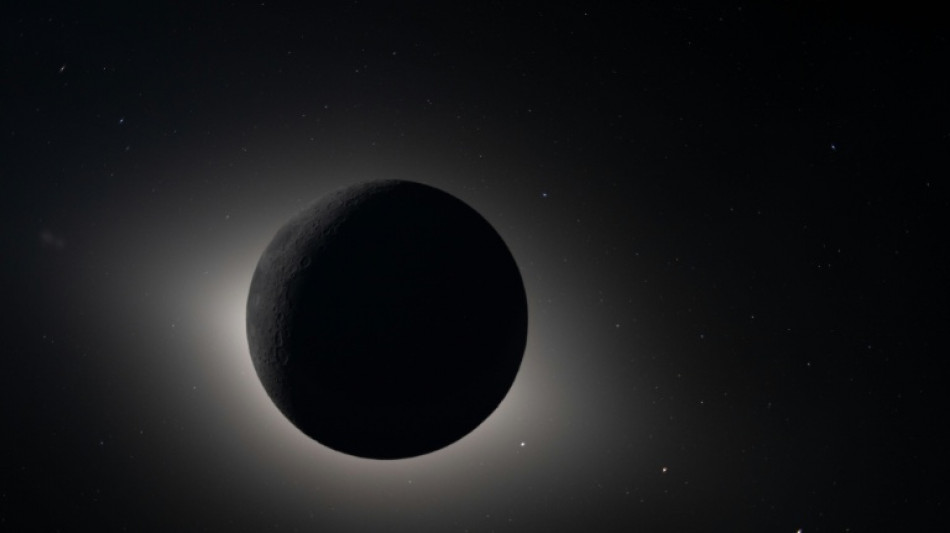
'Pinprick of light': Artemis crew witnesses meteorite impacts on Moon / Photo: Handout - NASA/AFP

'Pinprick of light': Artemis crew witnesses meteorite impacts on Moon

During their historic lunar flyby, astronauts on NASA's Artemis II mission witnessed meteorites striking the rugged surface of the Moon, a sight that has piqued scientists' curiosity.

Text size:

"That was definitely impact flashes on the moon. And Jeremy (Hansen) just saw another one," mission commander Reid Wiseman reported on Monday while flying around the Moon -- the first such journey by humans in more than half a century.

"Amazed," replied Kelsey Young, the mission's lunar science lead, as she followed the spacecraft from more than 250,000 miles (400,000 kilometers) away on Earth.

"I don't know if I expected to have the crew see any on this mission, so you probably saw the surprise and shock on my face," she said, recounting the strikes at a press briefing the next day.

Among NASA's team in Houston, there were "audible screams of delight" from scientists when the crew described flashes of light caused by meteorite impact, Young said.

The phenomenon is "something that we have not witnessed often," the mission's backup astronaut Jenni Gibbons told AFP.

"They were really high priority science for us, so the fact that they saw four or five was just outstanding."

- 'No doubt' -

As the astronauts hurtled towards home, NASA asked them on Tuesday about the meteorite strikes they saw during their nearly seven-hour observation period.

"Were they prolonged? And did you notice any color?" Young asked.

"It's a pinprick of light," replied Canadian crew member Hansen. "I would suspect there were a lot more of them."

"I would say they were a millisecond, like the fastest a camera shutter can open and close," added Wiseman, who said the flashes were "white to bluish white."

"To me there was no doubt we were seeing it, and we were all seeing it," he added.

According to NASA's tally, the team -- which broke the record for the furthest distance from Earth during their flyby -- reported a total of six meteorite impacts on the lunar surface.

Ground crews are now working to match these observations with data from a satellite orbiting the Moon, said Young, adding that the majority of the sightings took place during a solar eclipse, when the Moon passed in front of the Sun.

- 'Challenge' -

"I'm personally... surprised they would see that many, although they (had) been trained to look for them," said Bruce Betts, chief scientist at the Planetary Society.

According to Betts, the descriptions will allow scientists to "get some idea of the frequency of impact" as well as the size of the projectiles.

One question was what size an object needed to be to create a flash visible to the astronauts, Betts said.

"It's not a piece of dust, but it's not a meter-size boulder, either."

The observations raise questions and show that the "daily flux of meteors should be monitored more closely in the future before a lunar base is established," said Peter Schultz, Professor Emeritus of Geological Sciences at Brown University.

On Earth, smaller objects "burn up high in the... atmosphere due to friction" before they reach the ground, noted Betts, which is not the case on Earth's natural satellite.

"There is more of a challenge on the Moon," he said.

(P.Werner--BBZ)