Berliner Boersenzeitung - Tibetan Plateau water stores under threat: study

EUR -
AED 4.291906
AFN 74.188104
ALL 95.612363
AMD 433.156007
ANG 2.091768
AOA 1072.830672
ARS 1638.484029
AUD 1.630045
AWG 2.106512
AZN 2.010972
BAM 1.956061
BBD 2.354674
BDT 143.446706
BGN 1.949446
BHD 0.442057
BIF 3479.049841
BMD 1.168661
BND 1.492893
BOB 8.078044
BRL 5.785104
BSD 1.169136
BTN 111.336396
BWP 15.888054
BYN 3.309685
BYR 22905.757712
BZD 2.351274
CAD 1.590986
CDF 2706.619162
CHF 0.916447
CLF 0.027048
CLP 1064.499798
CNY 7.982247
CNH 7.98296
COP 4357.294507
CRC 531.861943
CUC 1.168661
CUP 30.969519
CVE 110.279259
CZK 24.381188
DJF 208.186919
DKK 7.472927
DOP 69.658113
DZD 154.76695
EGP 62.802792
ERN 17.529917
ETB 183.829569
FJD 2.568011
FKP 0.863475
GBP 0.863413
GEL 3.137805
GGP 0.863475
GHS 13.105695
GIP 0.863475
GMD 85.904498
GNF 10260.194951
GTQ 8.924039
GYD 244.591626
HKD 9.158166
HNL 31.077151
HRK 7.535554
HTG 153.00782
HUF 362.844148
IDR 20396.642314
ILS 3.43906
IMP 0.863475
INR 111.23761
IQD 1531.478363
IRR 1536789.356921
ISK 143.406371
JEP 0.863475
JMD 183.973001
JOD 0.828547
JPY 184.397214
KES 150.956306
KGS 102.16494
KHR 4689.606366
KMF 491.427992
KPW 1051.798729
KRW 1721.507961
KWD 0.360123
KYD 0.974226
KZT 543.250242
LAK 25673.319558
LBP 104693.036799
LKR 374.113571
LRD 214.527738
LSL 19.565079
LTL 3.450752
LVL 0.706912
LYD 7.416927
MAD 10.805343
MDL 20.178609
MGA 4869.629643
MKD 61.597109
MMK 2453.84549
MNT 4182.178877
MOP 9.43682
MRU 46.681437
MUR 54.868938
MVR 18.061679
MWK 2027.262125
MXN 20.373444
MYR 4.630822
MZN 74.689153
NAD 19.565414
NGN 1599.452824
NIO 43.025011
NOK 10.801864
NPR 178.138795
NZD 1.987606
OMR 0.449355
PAB 1.169151
PEN 4.098677
PGK 5.083679
PHP 72.064337
PKR 325.795044
PLN 4.2543
PYG 7083.91595
QAR 4.273153
RON 5.219126
RSD 117.37212
RUB 88.235831
RWF 1709.421028
SAR 4.385311
SBD 9.37952
SCR 15.61227
SDG 701.753321
SEK 10.839335
SGD 1.492357
SHP 0.872524
SLE 28.807603
SLL 24506.234619
SOS 668.186396
SRD 43.773389
STD 24188.925413
STN 24.502854
SVC 10.229191
SYP 129.17296
SZL 19.561613
THB 38.141008
TJS 10.931113
TMT 4.096157
TND 3.408455
TOP 2.813856
TRY 52.845214
TTD 7.924923
TWD 36.940799
TZS 3041.441932
UAH 51.378143
UGX 4413.514019
USD 1.168661
UYU 47.076288
UZS 14069.638616
VES 571.408376
VND 30762.66634
VUV 138.515007
WST 3.174003
XAF 656.041826
XAG 0.015872
XAU 0.000256
XCD 3.158365
XCG 2.106972
XDR 0.815298
XOF 656.041826
XPF 119.331742
YER 278.871774
ZAR 19.503961
ZMK 10519.353599
ZMW 22.066853
ZWL 376.3084
  • RYCEF

    -0.0200

    16.33

    -0.12%

  • CMSD

    0.0350

    23.285

    +0.15%

  • VOD

    -0.3400

    15.71

    -2.16%

  • NGG

    -0.1550

    87.345

    -0.18%

  • RELX

    0.0130

    36.373

    +0.04%

  • RIO

    1.2500

    99.88

    +1.25%

  • BCE

    0.1850

    24.115

    +0.77%

  • JRI

    0.0650

    12.995

    +0.5%

  • RBGPF

    1.6000

    64.7

    +2.47%

  • AZN

    -1.9200

    181.54

    -1.06%

  • CMSC

    -0.0202

    22.8499

    -0.09%

  • GSK

    -0.7000

    50.2

    -1.39%

  • BCC

    -0.3200

    74.01

    -0.43%

  • BP

    -0.4700

    46.47

    -1.01%

  • BTI

    0.1550

    58.505

    +0.26%

Tibetan Plateau water stores under threat: study
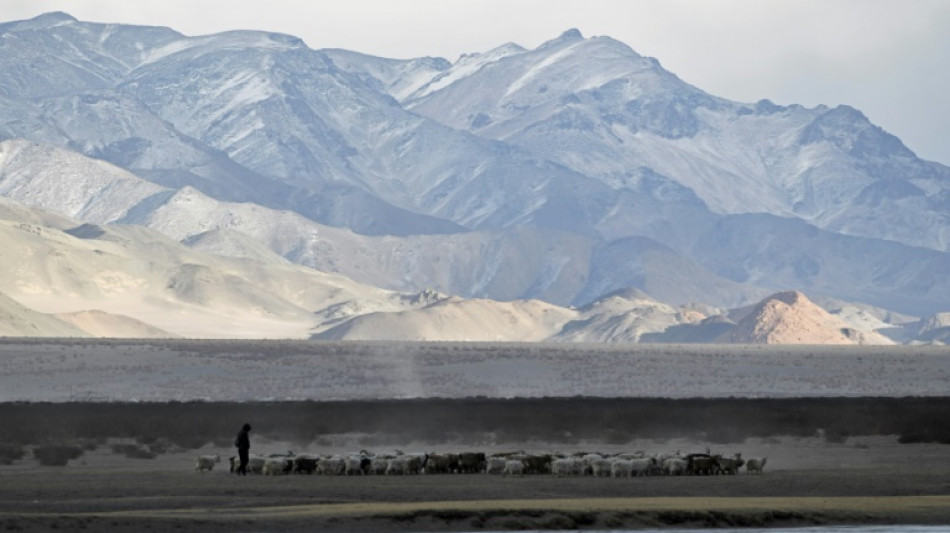
Tibetan Plateau water stores under threat: study / Photo: Parvaiz BUKHARI - AFP/File

Tibetan Plateau water stores under threat: study

The Tibetan Plateau will experience significant water loss this century due to global warming, according to research published Monday that warns of severe supply stress in a climate change "hotspot".

Text size:

The reservoirs of the Tibetan Plateau, which covers much of southern China and northern India, are fed by monsoons and currently supply most of the water demand for nearly two billion people.

But the plateau's complex terrain has made it difficult for scientists to predict how warming temperatures and altered weather patterns linked to climate change will affect the region's water stores.

Researchers based in China and the United States used satellite-based measurements to determine the net change in water and ice mass over the past two decades.

They added in direct measurements of glaciers, lakes and sub-surface water levels to estimate changes in the water mass, then used a machine learning technique to predict storage changes under scenarios such as higher air temperature and reduced cloud cover.

They found that due to an increasingly warm and wet climate, the Tibetan Plateau has lost just over 10 billion tonnes of water a year since 2002.

Writing in the journal Nature Climate Change, the team projected changes in water storage across the plateau under a middle-of-the-road emissions scenario, where levels of carbon pollution stay roughly at current levels before falling gradually after 2050.

They found two river basins were particularly vulnerable to water loss.

For the Amu Darya, central Asia's largest river, water loss could be equivalent to 119 percent of the current demand.

Communities reliant on the Indus basement for water supply could see a loss equivalent to 79 percent of current demand, the study showed.

The authors recommended that governments begin to explore alternative water supply options, including more groundwater extraction, to make up for the anticipated shortfall.

Michael Mann, director of the Penn Center for Science, Sustainability and the Media, said "substantial reductions in carbon emissions over the next decade" would limit global warming and the "predicted collapse of the Tibetan Plateau water towers".

"But even in a best-case scenario, further losses are likely unavoidable, which will require substantial adaptation to decreasing water resources in this vulnerable, highly populated region of the world. Just what that would look like is hard to say -- we're in unchartered waters," Mann, a study co-author, told AFP.

"Suffice it to say, some amount of suffering is locked in."

(B.Hartmann--BBZ)