Berliner Boersenzeitung - Australia's 'Black Summer' fires affected ozone layer: study

EUR -
AED 4.343084
AFN 77.459286
ALL 96.579317
AMD 443.005126
ANG 2.116942
AOA 1084.441581
ARS 1696.432015
AUD 1.709698
AWG 2.130448
AZN 2.007214
BAM 1.955381
BBD 2.363494
BDT 143.549257
BGN 1.986018
BHD 0.442405
BIF 3475.455694
BMD 1.182597
BND 1.500979
BOB 8.109263
BRL 6.25641
BSD 1.173449
BTN 107.718931
BWP 16.277514
BYN 3.322089
BYR 23178.895993
BZD 2.360095
CAD 1.622777
CDF 2578.061108
CHF 0.92885
CLF 0.026073
CLP 1029.497459
CNY 8.246959
CNH 8.220248
COP 4228.69438
CRC 580.775621
CUC 1.182597
CUP 31.338813
CVE 110.241391
CZK 24.243347
DJF 208.975246
DKK 7.466902
DOP 73.934166
DZD 153.1562
EGP 55.657722
ERN 17.738951
ETB 182.792653
FJD 2.661203
FKP 0.866824
GBP 0.867324
GEL 3.181352
GGP 0.866824
GHS 12.791261
GIP 0.866824
GMD 86.329097
GNF 10278.798686
GTQ 9.007071
GYD 245.51742
HKD 9.221356
HNL 30.954371
HRK 7.533375
HTG 153.907039
HUF 381.677781
IDR 19840.957581
ILS 3.707263
IMP 0.866824
INR 108.317628
IQD 1537.370756
IRR 49816.887621
ISK 145.778454
JEP 0.866824
JMD 184.72044
JOD 0.838427
JPY 184.148094
KES 151.257607
KGS 103.41761
KHR 4722.988522
KMF 496.691175
KPW 1064.460543
KRW 1710.401436
KWD 0.362346
KYD 0.977991
KZT 590.743486
LAK 25359.568979
LBP 105086.794547
LKR 363.552141
LRD 217.093507
LSL 18.940644
LTL 3.491901
LVL 0.715341
LYD 7.466401
MAD 10.748998
MDL 19.972723
MGA 5308.863051
MKD 61.616804
MMK 2482.620837
MNT 4215.294549
MOP 9.425381
MRU 46.916952
MUR 54.293134
MVR 18.271037
MWK 2034.864212
MXN 20.593728
MYR 4.736893
MZN 75.57967
NAD 18.940644
NGN 1680.541045
NIO 43.180752
NOK 11.543747
NPR 172.350089
NZD 1.990578
OMR 0.454253
PAB 1.173549
PEN 3.936857
PGK 5.018925
PHP 69.734175
PKR 328.344981
PLN 4.206148
PYG 7847.319413
QAR 4.278384
RON 5.10168
RSD 117.374863
RUB 88.771554
RWF 1711.533457
SAR 4.43348
SBD 9.606956
SCR 16.85639
SDG 711.331576
SEK 10.578186
SGD 1.50509
SHP 0.887254
SLE 28.85216
SLL 24798.461354
SOS 669.456629
SRD 45.081813
STD 24477.364748
STN 24.494754
SVC 10.267801
SYP 13079.017154
SZL 18.935945
THB 36.920482
TJS 10.97225
TMT 4.139089
TND 3.416268
TOP 2.847409
TRY 51.247241
TTD 7.971293
TWD 37.116742
TZS 3004.156628
UAH 50.599464
UGX 4148.111638
USD 1.182597
UYU 44.440483
UZS 14242.949721
VES 416.587929
VND 31037.251293
VUV 141.325014
WST 3.258752
XAF 655.81655
XAG 0.011483
XAU 0.000237
XCD 3.196027
XCG 2.114947
XDR 0.815625
XOF 655.81655
XPF 119.331742
YER 281.816102
ZAR 19.042528
ZMK 10644.788392
ZMW 23.02207
ZWL 380.795666
  • SCS

    0.0200

    16.14

    +0.12%

  • RBGPF

    -0.8100

    83.23

    -0.97%

  • GSK

    0.5000

    49.15

    +1.02%

  • BP

    1.1000

    36.53

    +3.01%

  • NGG

    1.3200

    81.5

    +1.62%

  • RELX

    0.0600

    39.9

    +0.15%

  • CMSC

    0.1000

    23.75

    +0.42%

  • RYCEF

    0.3000

    17.12

    +1.75%

  • BTI

    0.9400

    59.16

    +1.59%

  • RIO

    3.1300

    90.43

    +3.46%

  • BCE

    0.4900

    25.2

    +1.94%

  • CMSD

    0.0900

    24.13

    +0.37%

  • JRI

    0.0100

    13.68

    +0.07%

  • BCC

    -1.1800

    84.33

    -1.4%

  • VOD

    0.2300

    14.17

    +1.62%

  • AZN

    1.2600

    92.95

    +1.36%

Australia's 'Black Summer' fires affected ozone layer: study
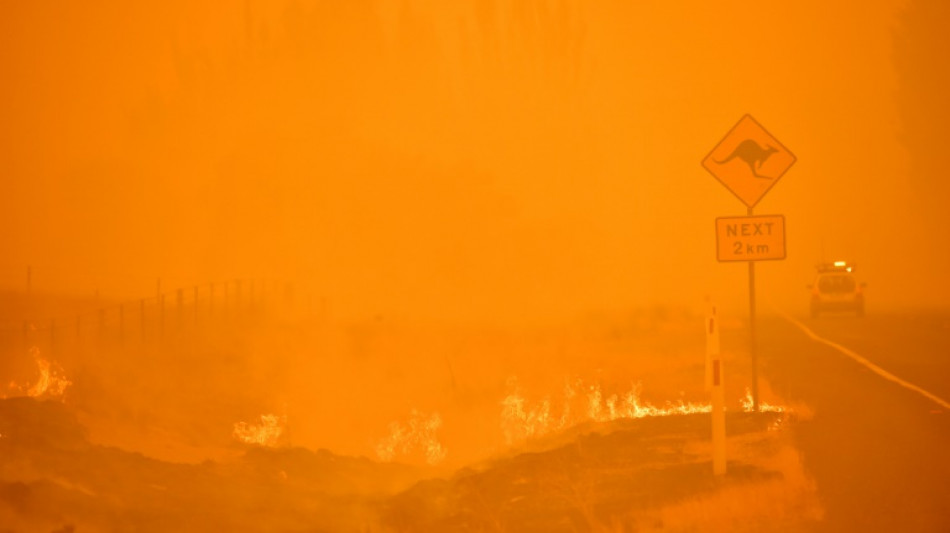
Australia's 'Black Summer' fires affected ozone layer: study / Photo: PETER PARKS - AFP

Australia's 'Black Summer' fires affected ozone layer: study

Australia's catastrophic "Black Summer" bushfires significantly affected the hole in the Earth's ozone layer, according to a new report published Friday.

Text size:

The report, which appeared in the Nature journal "Scientific Reports", traced a link from the unprecedented smoke released by the fires to the ozone hole above Antarctica.

The fires, which burned through 5.8 million hectares of Australia's east in late 2019 and early 2020, were so intense they caused dozens of smoke-infused pyrocumulonimbus clouds to form.

Pyrocumulonimbus clouds, referred to as the "fire-breathing dragon of clouds" by NASA, are so powerful they can affect the local weather, causing fire tornadoes and lightning storms.

During the "Black Summer", these clouds shot more smoke high into the atmosphere than the previous record, set by the 2017 North American wildfires.

Around New Year 2019, uncontrolled fires along Australia's east coast caused a pyrocumulonimbus event that stretched on for days.

The result was "millions of tonnes of smoke and associated gases being injected into the upper troposphere and lower stratosphere", according to researchers from the University of Exeter and the University of Manchester.

A build-up of smoke particles, in turn, caused the lower stratosphere to warm to levels not seen since the eruption of Mount Pinatubo in 1991, they found.

Because of this stratospheric warming, the fires also prolonged the Antarctic ozone hole, which appears above Antarctica each spring and "reached record levels in observations in 2020".

- Ozone gains threatened -

The hole was first created by human pollution -- particularly the chlorofluorocarbons (CFCs) that were once emitted from many refrigerators -- but in recent decades, global cooperation has given the ozone layer a chance to repair.

The Montreal Protocol, signed in 1987 and since ratified by 195 countries, sharply reduced the amount of CFCs in the atmosphere, and the ozone layer was expected to fully recover by 2060, according to United Nations modelling.

However, the researchers warn that because climate change will increase the frequency and intensity of bushfires, similar events -- in which pyrocumulonimbus clouds shoot smoke high into the stratosphere –- will become more likely.

Professor James Haywood told AFP that climate change could "absolutely" stymie the gains made by the Montreal Protocol.

"Our climate models suggest an increase in frequency and intensity of wildfires in the future under global warming. This may lead to more events like that in 2020, which could in turn lead to more ozone depletion," he said.

"So the considerable efforts that we've put in protecting the ozone hole could be thwarted by global warming."

(Y.Berger--BBZ)