Berliner Boersenzeitung - Shy male albatrosses prefer divorce to confrontation: study

EUR -
AED 4.353757
AFN 77.647339
ALL 96.816526
AMD 444.093194
ANG 2.122142
AOA 1087.105182
ARS 1700.605439
AUD 1.715346
AWG 2.135681
AZN 2.010406
BAM 1.960184
BBD 2.369299
BDT 143.90183
BGN 1.990896
BHD 0.443492
BIF 3483.991786
BMD 1.185501
BND 1.504665
BOB 8.129181
BRL 6.271778
BSD 1.176331
BTN 107.9835
BWP 16.317493
BYN 3.330248
BYR 23235.82585
BZD 2.365891
CAD 1.624273
CDF 2584.392637
CHF 0.92264
CLF 0.026137
CLP 1032.026557
CNY 8.267218
CNH 8.238345
COP 4239.080507
CRC 582.202068
CUC 1.185501
CUP 31.415785
CVE 110.512155
CZK 24.258736
DJF 209.488511
DKK 7.468018
DOP 74.115756
DZD 153.532368
EGP 55.726403
ERN 17.78252
ETB 183.241611
FJD 2.667736
FKP 0.868953
GBP 0.868149
GEL 3.188923
GGP 0.868953
GHS 12.822677
GIP 0.868953
GMD 86.542115
GNF 10304.044519
GTQ 9.029193
GYD 246.120437
HKD 9.241149
HNL 31.030398
HRK 7.53113
HTG 154.285051
HUF 381.965561
IDR 19889.689102
ILS 3.716369
IMP 0.868953
INR 108.583603
IQD 1541.146703
IRR 49939.243244
ISK 146.137342
JEP 0.868953
JMD 185.174133
JOD 0.84055
JPY 183.775821
KES 151.629111
KGS 103.671622
KHR 4734.588689
KMF 497.910388
KPW 1067.074972
KRW 1714.602459
KWD 0.363232
KYD 0.980393
KZT 592.194415
LAK 25421.854803
LBP 105344.898994
LKR 364.445065
LRD 217.626712
LSL 18.987164
LTL 3.500477
LVL 0.717098
LYD 7.484739
MAD 10.775399
MDL 20.021778
MGA 5321.902188
MKD 61.768142
MMK 2488.71842
MNT 4225.647764
MOP 9.448531
MRU 47.032185
MUR 54.426394
MVR 18.315543
MWK 2039.862057
MXN 20.575952
MYR 4.748522
MZN 75.765955
NAD 18.987164
NGN 1684.668781
NIO 43.286809
NOK 11.552195
NPR 172.7734
NZD 1.989283
OMR 0.455368
PAB 1.176431
PEN 3.946526
PGK 5.031252
PHP 69.905472
PKR 329.151432
PLN 4.208666
PYG 7866.593272
QAR 4.288892
RON 5.114261
RSD 117.663148
RUB 88.869469
RWF 1715.737167
SAR 4.444369
SBD 9.630551
SCR 16.897791
SDG 713.076765
SEK 10.566563
SGD 1.506938
SHP 0.889433
SLE 28.92056
SLL 24859.369037
SOS 671.100886
SRD 45.192464
STD 24537.483783
STN 24.554916
SVC 10.29302
SYP 13111.140624
SZL 18.982453
THB 37.011378
TJS 10.999199
TMT 4.149255
TND 3.424659
TOP 2.854402
TRY 51.443046
TTD 7.990871
TWD 37.207908
TZS 3011.535159
UAH 50.723741
UGX 4158.299845
USD 1.185501
UYU 44.549633
UZS 14277.931934
VES 417.611114
VND 31113.482114
VUV 141.672123
WST 3.266756
XAF 657.427306
XAG 0.011273
XAU 0.000235
XCD 3.203876
XCG 2.120142
XDR 0.817629
XOF 657.427306
XPF 119.331742
YER 282.505325
ZAR 19.056157
ZMK 10670.936322
ZMW 23.078614
ZWL 381.730941
  • SCS

    0.0200

    16.14

    +0.12%

  • GSK

    0.5000

    49.15

    +1.02%

  • NGG

    1.3200

    81.5

    +1.62%

  • BCC

    -1.1800

    84.33

    -1.4%

  • CMSD

    0.0900

    24.13

    +0.37%

  • RBGPF

    -0.8100

    83.23

    -0.97%

  • CMSC

    0.1000

    23.75

    +0.42%

  • RIO

    3.1300

    90.43

    +3.46%

  • BTI

    0.9400

    59.16

    +1.59%

  • BCE

    0.4900

    25.2

    +1.94%

  • AZN

    1.2600

    92.95

    +1.36%

  • JRI

    0.0100

    13.68

    +0.07%

  • BP

    1.1000

    36.53

    +3.01%

  • RYCEF

    0.3000

    17.12

    +1.75%

  • RELX

    0.0600

    39.9

    +0.15%

  • VOD

    0.2300

    14.17

    +1.62%

Shy male albatrosses prefer divorce to confrontation: study
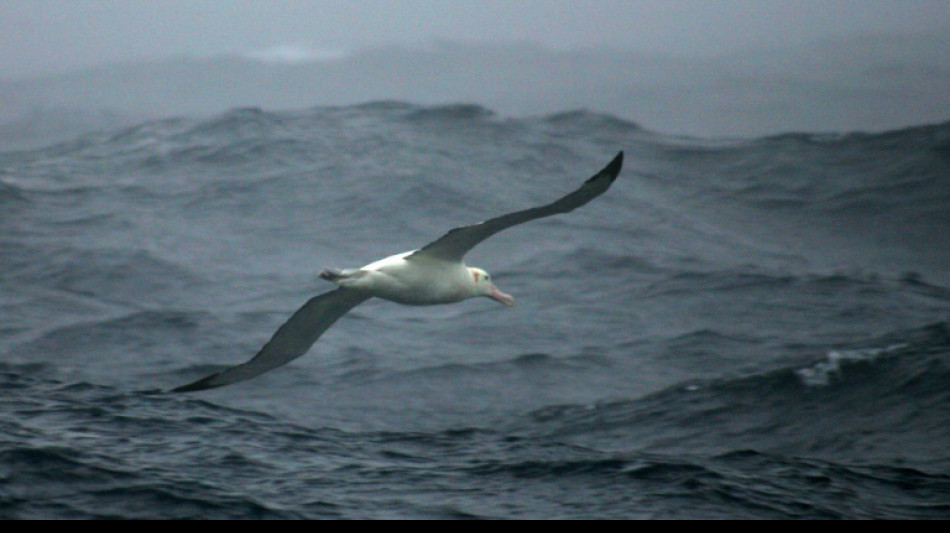
Shy male albatrosses prefer divorce to confrontation: study / Photo: MARCEL MOCHET - AFP/File

Shy male albatrosses prefer divorce to confrontation: study

Most albatrosses mate for life but shy males who avoid confrontation are more likely to get dumped, researchers said Wednesday, adding it was the first time personality had been shown to predict divorce in a wild animal.

Text size:

Wandering albatrosses, which traverse the Southern Hemisphere and have the largest wingspan of any bird at more than three metres (10 feet), are among the most monogamous animals.

They can live for more than 50 years, and while they spend much of that time on the wing, they meet up every two years with the same partner to breed.

Divorce is a "super rare event", occurring around 13 percent of the time, Ruijiao Sun, the lead author of a new study published in the journal Biology Letters, told AFP.

But "if they find that their breeding success is too low with a specific partner they may look for another one," said the PhD student at Woods Hole Oceanographic Institution in the US.

To find out how an individual bird's personality affects their likeliness of getting divorced, the researchers drew on a unique database.

Since 1959, scientists have been tracking a colony of wandering albatrosses on Possession Island, in the southern Indian Ocean's Crozet archipelago.

"We put a stainless ring on the leg with a number," marine biologist and study co-author Stephanie Jenouvrier told AFP.

"Because they're not really scared we can approach very slowly and we can read the number," she added, saying it allowed the team to "reconstruct the entire history of these birds".

Sun said the birds "breed every two years because they take a whole year to rear their chick and it's super energy-consuming, so they take a one-year sabbatical after to recover and they do not spend that time together".

- Shy guys finish last -

Over more than a decade, the researchers measured the boldness of nearly 2,000 birds by observing how they respond to a human approaching their nest.

They found that shyer male albatrosses were up to twice as likely to get divorced than their bolder rivals -- but no difference was found in females.

"We show for the first time the link between personality and divorce in a wild species, thanks to probably the best dataset in the world," Sun said.

Wandering albatrosses have "elaborate courtship processes", the study said, as the birds raise up their wings, squawk and generally dance around.

Sometimes during the process, a pushy outsider male couple tries to cut in. That is when the shyer males avoid confrontation -- and accept divorce.

However there are other factors affecting divorce rates, the researchers said.

There are more male than female albatrosses, because females tend to forage in areas where they are more likely to get caught up in fishing lines.

The surplus of males means that females quickly find a new mate, but it can take males more than four years, the study found.

Also, "individuals that are in a long-term relationship are less likely to divorce than the ones that are new to each other," Jenouvrier said.

Last year research indicated that climate change could also be driving albatrosses to divorce, as the birds have to travel farther to find decreasing numbers of fish.

(T.Renner--BBZ)