Berliner Boersenzeitung - Eager beaver: dams improve quality of river water hit by climate change

EUR -
AED 4.204786
AFN 72.131522
ALL 95.999785
AMD 432.40092
ANG 2.049533
AOA 1049.907549
ARS 1600.516512
AUD 1.633909
AWG 2.060887
AZN 1.943184
BAM 1.955796
BBD 2.309895
BDT 140.729685
BGN 1.957052
BHD 0.433001
BIF 3404.692377
BMD 1.144937
BND 1.467597
BOB 7.924982
BRL 6.10469
BSD 1.146897
BTN 105.862225
BWP 15.628033
BYN 3.393492
BYR 22440.773758
BZD 2.306495
CAD 1.569761
CDF 2584.123556
CHF 0.90381
CLF 0.026697
CLP 1054.13247
CNY 7.896174
CNH 7.904373
COP 4228.895119
CRC 539.601148
CUC 1.144937
CUP 30.340842
CVE 110.265235
CZK 24.466209
DJF 204.229543
DKK 7.471896
DOP 70.46015
DZD 153.144657
EGP 60.431974
ERN 17.174062
ETB 179.018681
FJD 2.551715
FKP 0.860737
GBP 0.863673
GEL 3.12551
GGP 0.860737
GHS 12.454972
GIP 0.860737
GMD 84.152708
GNF 10054.767863
GTQ 8.795019
GYD 239.939463
HKD 8.963452
HNL 30.358065
HRK 7.534712
HTG 150.375066
HUF 392.446831
IDR 19449.052236
ILS 3.600072
IMP 0.860737
INR 105.821702
IQD 1502.403197
IRR 1513292.432889
ISK 144.20515
JEP 0.860737
JMD 179.950383
JOD 0.811718
JPY 182.703386
KES 148.337757
KGS 100.124438
KHR 4598.96962
KMF 493.468258
KPW 1030.44363
KRW 1715.448554
KWD 0.351988
KYD 0.955702
KZT 561.461195
LAK 24574.94498
LBP 102700.170069
LKR 356.927642
LRD 209.870447
LSL 19.262157
LTL 3.380703
LVL 0.692561
LYD 7.317984
MAD 10.801676
MDL 20.006955
MGA 4762.010134
MKD 61.639593
MMK 2403.69357
MNT 4086.255615
MOP 9.24532
MRU 45.885897
MUR 53.251062
MVR 17.689468
MWK 1988.604232
MXN 20.439555
MYR 4.503092
MZN 73.172957
NAD 19.262241
NGN 1589.046972
NIO 42.20009
NOK 11.164686
NPR 169.37936
NZD 1.970105
OMR 0.443929
PAB 1.146797
PEN 3.954991
PGK 5.014989
PHP 68.684226
PKR 320.228483
PLN 4.271887
PYG 7398.983435
QAR 4.169009
RON 5.095425
RSD 117.37025
RUB 92.411407
RWF 1673.603562
SAR 4.29649
SBD 9.218713
SCR 17.510961
SDG 688.107329
SEK 10.803727
SGD 1.467125
SHP 0.859
SLE 28.107741
SLL 24008.777972
SOS 654.301392
SRD 42.990121
STD 23697.893319
STN 24.499945
SVC 10.035021
SYP 126.544188
SZL 19.255957
THB 37.130895
TJS 10.992623
TMT 4.007281
TND 3.391707
TOP 2.756734
TRY 50.576236
TTD 7.778017
TWD 36.716884
TZS 2982.257478
UAH 50.575008
UGX 4311.990346
USD 1.144937
UYU 46.070098
UZS 13847.908522
VES 506.869099
VND 30103.267553
VUV 135.392596
WST 3.13165
XAF 655.958396
XAG 0.014405
XAU 0.000229
XCD 3.094251
XCG 2.066904
XDR 0.815802
XOF 655.955531
XPF 119.331742
YER 273.125117
ZAR 19.293513
ZMK 10305.812598
ZMW 22.32295
ZWL 368.669387
  • RBGPF

    0.1000

    82.5

    +0.12%

  • RELX

    -0.0400

    34.14

    -0.12%

  • NGG

    0.0900

    90.9

    +0.1%

  • BCC

    0.3800

    70

    +0.54%

  • RYCEF

    -1.1300

    16.12

    -7.01%

  • BCE

    -0.1100

    25.57

    -0.43%

  • GSK

    -0.8900

    53.39

    -1.67%

  • CMSC

    -0.1500

    22.99

    -0.65%

  • CMSD

    -0.1100

    22.99

    -0.48%

  • JRI

    -0.2300

    12.59

    -1.83%

  • RIO

    -2.8700

    87.83

    -3.27%

  • AZN

    -2.6000

    189.9

    -1.37%

  • VOD

    0.1000

    14.41

    +0.69%

  • BTI

    0.0400

    59.93

    +0.07%

  • BP

    0.5100

    42.67

    +1.2%

Eager beaver: dams improve quality of river water hit by climate change
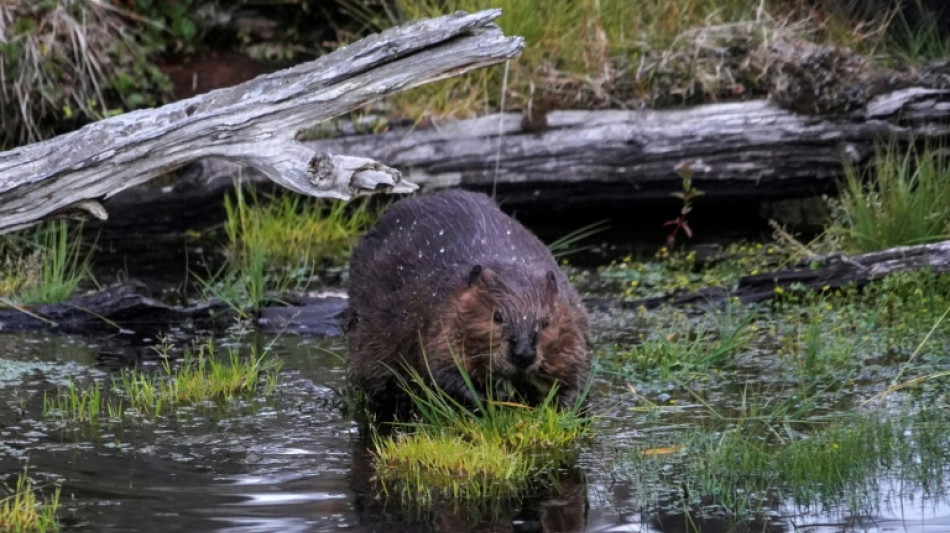
Eager beaver: dams improve quality of river water hit by climate change / Photo: PABLO COZZAGLIO - AFP

Eager beaver: dams improve quality of river water hit by climate change

Hotter, drier weather means beaver populations are spreading in the western United States, and their dams are helping to mitigate the negative impacts of climate change on river water quality, according to a new study on Tuesday.

Text size:

The findings -- discovered almost by accident -- offered a "rare bright spot" in an otherwise bleak landscape of climate change news, the lead author told AFP.

Stanford University scientists and colleagues conducted the research over three years on the East River, a main tributary of the Colorado River in the US state of Colorado.

It has long been known that beaver dams can improve the quality of river water by filtering out contaminants.

But what came as a surprise is what the Stanford team described as a virtuous climate change-induced "feedback" loop.

It works like this: hotter, drier spells linked to a warming world often reduce water quality, mainly because less water leads to a higher concentration of contaminants such as nitrate, a form of nitrogen.

At the same time, a changing climate has increased the range of industrious buck-toothed beavers, and widened the impact of their dams, thus helping to dilute the negative impact of global warming.

"In building more dams, they mitigate that degradation in water quality that's caused by climate change," lead author Christian Dewey told AFP.

When the beavers' dams raise water levels upstream, water is diverted into surrounding soils and secondary waterways, collectively called a riparian zone.

"These zones act like filters, straining out excess nutrients and contaminants before water re-enters the main channel downstream," according to a press release about the study, published in Nature Communications.

- 'Rare bright spot' -

The same contaminants -- potentially harmful to humans, animals or plants in river water -- are thus dispersed with little or no negative impact in soils.

This is good news in the area where the research was conducted, as the Colorado River provides drinking water and supports livelihoods for some 40 million people, according to the US government.

Nitrogen in particular promotes algae overgrowth, which starves water of oxygen needed to support diverse animal life and a healthy ecosystem.

The study found that the benefits provided by the beaver dams improved water quality in both high- and low-water conditions linked to climate change -- whether hot and dry spells, or heavy rainfall and snowmelt.

In both cases, "the beaver dam pushed more water and nitrate into surrounding soil than did either seasonal extreme, leading to vastly more removal of nitrate", Dewey said.

He said he did not set out to study beaver dams initially, but one cropped up on the river he was testing for seasonal changes in hydrology.

"It was incredibly lucky," he said.

He cautioned that the feedback dynamic may be unique to the particular conditions in western United States, and thus may not be found elsewhere.

But the findings are still "a rare bright spot in climate news", and perhaps an example of nature restoring balance.

"We push too far, and then (there's) sort of a swinging back in the other direction, at least in the case of beavers."

(B.Hartmann--BBZ)