Berliner Boersenzeitung - Climate change fuelled rains behind deadly Nigeria floods: study

EUR -
AED 4.353775
AFN 77.651281
ALL 96.591272
AMD 443.056226
ANG 2.122154
AOA 1087.110488
ARS 1700.603942
AUD 1.711542
AWG 2.135692
AZN 2.017903
BAM 1.955615
BBD 2.363796
BDT 143.566421
BGN 1.990907
BHD 0.446969
BIF 3475.871245
BMD 1.185508
BND 1.501158
BOB 8.110267
BRL 6.327414
BSD 1.173594
BTN 107.731356
BWP 16.279529
BYN 3.322514
BYR 23235.954299
BZD 2.360397
CAD 1.621704
CDF 2584.407062
CHF 0.920667
CLF 0.025863
CLP 1021.19817
CNY 8.267252
CNH 8.242208
COP 4320.678282
CRC 580.847512
CUC 1.185508
CUP 31.415959
CVE 110.255037
CZK 24.262245
DJF 209.001114
DKK 7.468284
DOP 73.943318
DZD 153.313409
EGP 55.754551
ERN 17.782618
ETB 182.81528
FJD 2.622284
FKP 0.870137
GBP 0.867194
GEL 3.189324
GGP 0.870137
GHS 12.792844
GIP 0.870137
GMD 86.541891
GNF 10280.114402
GTQ 9.00811
GYD 245.547811
HKD 9.243648
HNL 30.958202
HRK 7.534607
HTG 153.925441
HUF 381.81712
IDR 19872.668465
ILS 3.716958
IMP 0.870137
INR 108.567651
IQD 1537.561059
IRR 49939.519312
ISK 145.793457
JEP 0.870137
JMD 184.743306
JOD 0.840529
JPY 182.432472
KES 151.270002
KGS 103.672192
KHR 4723.553237
KMF 497.913012
KPW 1066.977853
KRW 1708.352647
KWD 0.363738
KYD 0.978112
KZT 590.819103
LAK 25362.815077
LBP 105100.245961
LKR 363.598677
LRD 217.113971
LSL 18.943068
LTL 3.500496
LVL 0.717102
LYD 7.467325
MAD 10.750329
MDL 19.975279
MGA 5309.520209
MKD 61.615794
MMK 2489.48933
MNT 4227.601955
MOP 9.426548
MRU 46.922958
MUR 53.964287
MVR 18.316262
MWK 2035.116098
MXN 20.59251
MYR 4.704686
MZN 75.765859
NAD 18.943068
NGN 1673.557874
NIO 43.18628
NOK 11.562466
NPR 172.371424
NZD 1.984564
OMR 0.455848
PAB 1.173694
PEN 3.937344
PGK 5.019568
PHP 69.915281
PKR 328.385626
PLN 4.205998
PYG 7848.290795
QAR 4.278913
RON 5.096975
RSD 117.410313
RUB 90.081094
RWF 1711.745319
SAR 4.445717
SBD 9.630605
SCR 17.384702
SDG 713.087647
SEK 10.58398
SGD 1.50419
SHP 0.889438
SLE 28.922903
SLL 24859.506462
SOS 669.539498
SRD 45.192723
STD 24537.619428
STN 24.49789
SVC 10.269072
SYP 13111.213103
SZL 18.938289
THB 36.826634
TJS 10.973377
TMT 4.149278
TND 3.416662
TOP 2.854418
TRY 51.425668
TTD 7.972313
TWD 37.364245
TZS 3026.013534
UAH 50.605727
UGX 4148.625112
USD 1.185508
UYU 44.445046
UZS 14244.893008
VES 417.613423
VND 31045.487409
VUV 141.983286
WST 3.266772
XAF 655.89773
XAG 0.010813
XAU 0.000233
XCD 3.203895
XCG 2.115209
XDR 0.815726
XOF 655.89773
XPF 119.331742
YER 282.503601
ZAR 18.992428
ZMK 10670.990146
ZMW 23.025016
ZWL 381.733051
  • SCS

    0.0200

    16.14

    +0.12%

  • RBGPF

    -0.8100

    83.23

    -0.97%

  • CMSC

    0.1000

    23.75

    +0.42%

  • BCC

    -1.1800

    84.33

    -1.4%

  • CMSD

    0.0900

    24.13

    +0.37%

  • JRI

    0.0100

    13.68

    +0.07%

  • RYCEF

    0.3000

    17.12

    +1.75%

  • RIO

    3.1300

    90.43

    +3.46%

  • NGG

    1.3200

    81.5

    +1.62%

  • VOD

    0.2300

    14.17

    +1.62%

  • BCE

    0.4900

    25.2

    +1.94%

  • RELX

    0.0600

    39.9

    +0.15%

  • GSK

    0.5000

    49.15

    +1.02%

  • AZN

    1.2600

    92.95

    +1.36%

  • BTI

    0.9400

    59.16

    +1.59%

  • BP

    1.1000

    36.53

    +3.01%

Climate change fuelled rains behind deadly Nigeria floods: study
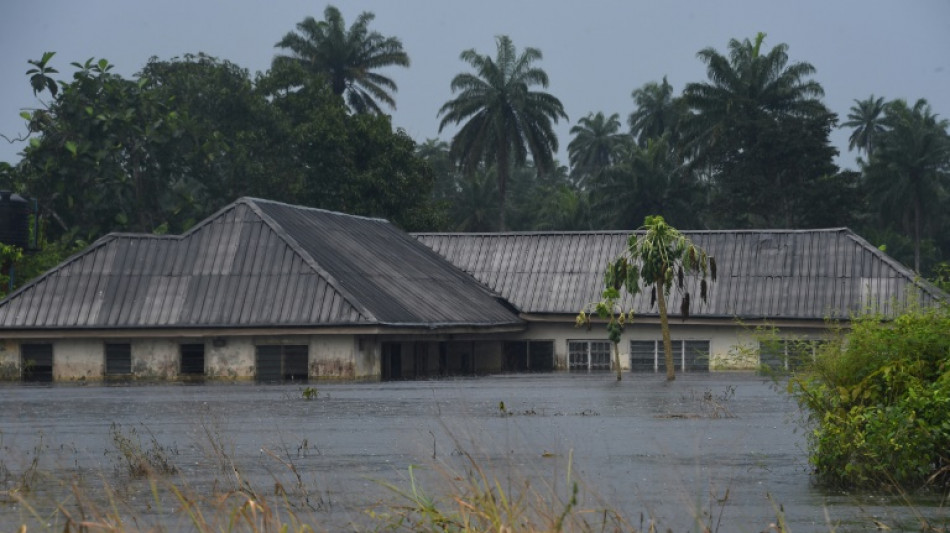
Climate change fuelled rains behind deadly Nigeria floods: study / Photo: PIUS UTOMI EKPEI - AFP

Climate change fuelled rains behind deadly Nigeria floods: study

Heavy rains behind floods that killed over 600 people in Nigeria this year were about 80 times likelier because of human-induced climate change, scientists reported Wednesday.

Text size:

The floods mainly struck Nigeria but also Niger, Chad and neighbouring countries, displacing over 1.4 million people and devastating homes and farmland in a region already vulnerable to food insecurity.

Researchers from the World Weather Attribution (WWA) consortium said in a study that the floods -- among the deadliest on record in the region -- were directly linked to human activity that is exacerbating climate change.

They matched long-term data on climate -- which shows the planet has warmed by about 1.2 degrees Celsius (2.2 degrees Fahrenheit) since 1800 as carbon emissions have risen -- against weather events.

The heavy rainfall that sparked the floods was 80 times likelier because of "human-caused climate change," according to their findings.

In addition, "this year's rainy season was 20 percent wetter than it would have been without the influence of climate change," they said.

"The influence of climate change means the prolonged rain that led to the floods is no longer a rare event," the study found.

"The above-average rain over the wet season now has approximately a one in 10 chance of happening each year; without human activities it would have been an extremely rare event."

Over 600 people were killed in Nigeria alone because of the floods from June to October this year, and nearly 200 in Niger and 22 in Chad.

- 'Real and present problem' -

The report comes as COP27 climate talks are underway in Egypt's Sharm el-Sheikh, where developing nations are demanding rich polluters pay for climate-change linked calamities.

Africa is home to some of the countries least responsible for carbon emissions but hardest hit by an onslaught of weather extremes, with the Horn of Africa currently in the grips of a severe drought.

"This is a real and present problem, and it's particularly the poorest countries that are getting hit very hard. So it's clear that solutions are needed," Maarten van Aalst, director of the Red Cross Red Crescent Climate Centre, said at a WWA press conference.

In a separate WWA study also released Wednesday, researchers examined a 2021 drought that reduced crop production in Mali, Burkina Faso, Niger, Nigeria and Chad that contributed to a food crisis this year.

The study failed to find concrete climate change links, because of "a lack of reliable weather station data", but showed "that even small shifts in rainfall can have major effects in the region".

It added that high global food prices deepened the crisis, along with the Russian invasion of Ukraine which disrupted deliveries of key fertilisers to Africa.

The WWA publishes rapid-response reports following extreme climate events.

Their studies are not peer-reviewed, a process that can take months, but are widely backed by scientists.

(G.Gruner--BBZ)