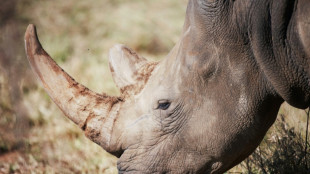
Back from the brink: the migratory species on the road to recovery / Photo: CARL DE SOUZA - AFP

While a landmark new report on the world's threatened migratory species is a catalogue of decline and destruction, the handful of animals staging a comeback shows improvement is possible -- if humans change their ways.
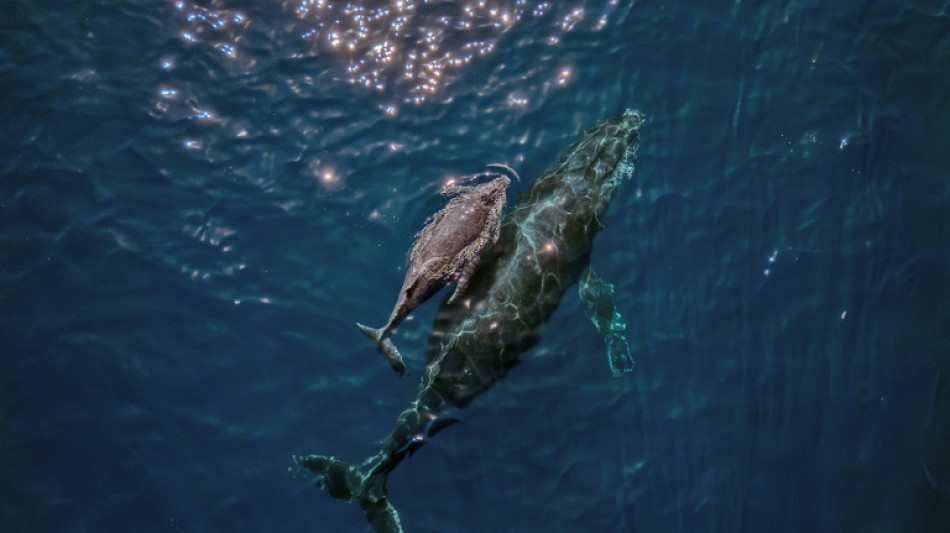
From the majestic humpback whale launching into the air from the waves, or the thousands of snub-nosed saiga antelope fanning across the steppes of Central Asia. These sights would have been barely possible without the concerted conservation efforts that have helped these species rebuild populations.
The State of the World's Migratory Species assessment, published Monday, found that animals, fish, birds and reptiles listed for protection under the UN Convention on the Conservation of Migratory Species of Wild Animals (CMS) were seeing declines across the world.
Around 70 of the threatened species saw their conservation status worsen between 1988 and 2020.
But 14 have shown an improvement, it found. Here are some of those recovering species:
- Humpback whales -
For hundreds of years, whalers from across the planet hunted humpback whales for their oil, meat, and baleen -- their feeding filtration system.
According to the International Union for Conservation of Nature (IUCN) they were targeted by early hunters in their wintering areas near the West Indies and Cape Verde, then near their summer feeding grounds from the 1860s, especially off Iceland and Norway. In the Pacific they were hunted particularly by Japanese whalers.
By 1986, the IUCN had listed the species as globally endangered.
International restrictions on commercial whaling allowed the humpback whale population to rebound and today, more than 80,000 mature individuals navigate throughout the world's oceans.
While some subpopulations have now recovered more than 90 percent of their pre-whaling numbers, the CMS report said other smaller groupings like the humpbacks in the Arabian Sea, were still endangered.
Continuing threats include from fishing gear, underwater noise pollution, and collisions with ships.
- Vicuna -
Vicunas, a llama-like creature that roams wild in parts of Argentina, Bolivia, Ecuador, Chile, Peru, is one of the few undomesticated animals sought for its wool.
Illegal poaching brought vicunas to the brink of extinction.
Numbers are now increasing thanks to legal protection from hunting, an international trade ban and education initiatives and the vicuna conservation status has changed from near threatened to least concern.
But threats from poaching for the illegal market, habitat encroachment and climate change remain.
- Lesser Kestrel -
The lessekestrel was once one of the most abundant small, migratory birds of prey that could befound from Spain to southern Russia to China.
The use of pesticides, especially DDT from the 1940s to 1970s, poisoned the birds directly and caused a drastic reduction in prey.
Habitat loss from urbanisation and agricultural intensification also caused severe population declines throughout Europe.
Since the 1980s, targeted conservation efforts -- like providing artificial nests, restoring breeding colonies, and releasing captive-bred birds into the wild -- have helped boost populations in southwestern Europe.
- Saiga Antelope -
National and international conservation efforts helped bring the Saiga Antelope back from the brink of extinction.
The revival of Kazakhstan's steppe and wetland habitats, projects to reintroduce native species and efforts to work with local communities to address overexploitation all played a role in their recovery.
Its population in Kazakhstan rebounded from a perilous low of 50,000 individuals in 2006, to over 1.3 million in 2022.
The species has now partially resumed migration into Uzbekistan.
- Black-Faced Spoonbill -
The black-faced spoonbill is a migratory seabird found in North and South Korea, China, Russia, Japan, Vietnam, Cambodia, Thailand, and the Philippines.
These white wading birds travel along a restricted migration route for breeding and wintering.
Their habitat has come under threat from growing human populations and agricultural and industrial development, while the birds face pesticide pollution, hunting, and the collection of eggs from nesting sites.
But legal protections, the designation of breeding sites as seabird sanctuaries and wetland restoration projects have all helped to improve the species' status from critically endangered to endangered.
(Y.Berger--BBZ)