Berliner Boersenzeitung - Indonesia floods were 'extinction level' for rare orangutans

EUR -
AED 4.31146
AFN 77.552815
ALL 96.490006
AMD 447.387397
ANG 2.1015
AOA 1076.545647
ARS 1686.460724
AUD 1.760602
AWG 2.116111
AZN 1.99315
BAM 1.95662
BBD 2.360179
BDT 143.199982
BGN 1.956637
BHD 0.442544
BIF 3463.35069
BMD 1.173987
BND 1.515741
BOB 8.097392
BRL 6.345873
BSD 1.171786
BTN 105.771304
BWP 16.540858
BYN 3.43814
BYR 23010.14023
BZD 2.356777
CAD 1.616715
CDF 2623.86079
CHF 0.932964
CLF 0.02736
CLP 1073.317806
CNY 8.286057
CNH 8.278702
COP 4464.965093
CRC 583.546915
CUC 1.173987
CUP 31.110649
CVE 110.311206
CZK 24.201973
DJF 208.666515
DKK 7.469115
DOP 75.041752
DZD 152.174529
EGP 55.805107
ERN 17.609801
ETB 182.47371
FJD 2.66706
FKP 0.874416
GBP 0.876262
GEL 3.169235
GGP 0.874416
GHS 13.452635
GIP 0.874416
GMD 85.700954
GNF 10192.269224
GTQ 8.974759
GYD 245.122674
HKD 9.137837
HNL 30.851054
HRK 7.535468
HTG 153.462974
HUF 382.616951
IDR 19524.690979
ILS 3.759816
IMP 0.874416
INR 106.058551
IQD 1535.042982
IRR 49436.581934
ISK 148.204435
JEP 0.874416
JMD 187.737838
JOD 0.832368
JPY 182.800889
KES 151.11573
KGS 102.665441
KHR 4690.944912
KMF 493.074524
KPW 1056.583646
KRW 1729.94575
KWD 0.360027
KYD 0.976509
KZT 610.165579
LAK 25415.645822
LBP 104936.154484
LKR 362.38179
LRD 206.826633
LSL 19.845112
LTL 3.466477
LVL 0.710133
LYD 6.364639
MAD 10.779015
MDL 19.956359
MGA 5197.154791
MKD 61.561122
MMK 2465.687013
MNT 4164.573128
MOP 9.392234
MRU 46.451655
MUR 53.909635
MVR 18.090815
MWK 2031.942463
MXN 21.162074
MYR 4.804542
MZN 75.011046
NAD 19.845112
NGN 1701.552826
NIO 43.118061
NOK 11.81033
NPR 169.234608
NZD 2.018902
OMR 0.451397
PAB 1.171791
PEN 3.949454
PGK 4.972061
PHP 69.293982
PKR 329.571844
PLN 4.22215
PYG 8008.320328
QAR 4.270789
RON 5.091231
RSD 117.392861
RUB 93.000534
RWF 1705.607162
SAR 4.405546
SBD 9.662606
SCR 16.594891
SDG 706.148212
SEK 10.862781
SGD 1.515406
SHP 0.880794
SLE 28.293557
SLL 24617.912895
SOS 668.477157
SRD 45.301212
STD 24299.155382
STN 24.510162
SVC 10.253295
SYP 12982.392397
SZL 19.839226
THB 37.168443
TJS 10.804126
TMT 4.108954
TND 3.435839
TOP 2.826678
TRY 50.121365
TTD 7.952331
TWD 36.617932
TZS 2887.993286
UAH 49.462107
UGX 4166.74532
USD 1.173987
UYU 46.139326
UZS 14085.900144
VES 310.795223
VND 30885.243326
VUV 142.623146
WST 3.268316
XAF 656.229079
XAG 0.018394
XAU 0.000274
XCD 3.172758
XCG 2.111885
XDR 0.816138
XOF 656.229079
XPF 119.331742
YER 279.84908
ZAR 19.778131
ZMK 10567.290561
ZMW 26.864138
ZWL 378.023253
  • SCS

    0.0200

    16.14

    +0.12%

  • RBGPF

    0.0000

    81.17

    0%

  • JRI

    0.0000

    13.72

    0%

  • BCC

    -0.7500

    76.26

    -0.98%

  • NGG

    0.0500

    74.69

    +0.07%

  • RELX

    0.2000

    40.28

    +0.5%

  • CMSC

    0.1300

    23.43

    +0.55%

  • GSK

    0.4700

    48.88

    +0.96%

  • BCE

    0.2100

    23.4

    +0.9%

  • AZN

    -1.2200

    90.29

    -1.35%

  • RIO

    0.5000

    76.74

    +0.65%

  • RYCEF

    -0.1000

    14.64

    -0.68%

  • CMSD

    0.1200

    23.4

    +0.51%

  • BP

    -0.3500

    35.53

    -0.99%

  • BTI

    -0.3900

    58.37

    -0.67%

  • VOD

    -0.0200

    12.54

    -0.16%

Indonesia floods were 'extinction level' for rare orangutans
Indonesia floods were 'extinction level' for rare orangutans / Photo: YT Hariono - AFP

Indonesia floods were 'extinction level' for rare orangutans

Indonesia's deadly flooding was an "extinction-level disturbance" for the world's rarest great ape, the tapanuli orangutan, causing catastrophic damage to its habitat and survival prospects, scientists warned on Friday.

Text size:

Only scientifically classified as a species in 2017, tapanulis are incredibly rare, with fewer than 800 left in the wild, confined to a small range in part of Indonesia's Sumatra.

One dead suspected tapanuli orangutan has already been found in the region, conservationists told AFP.

"The loss of even a single orangutan is a devastating blow to the survival of the species," said Panut Hadisiswoyo, founder and chairman of the Orangutan Information Centre in Indonesia.

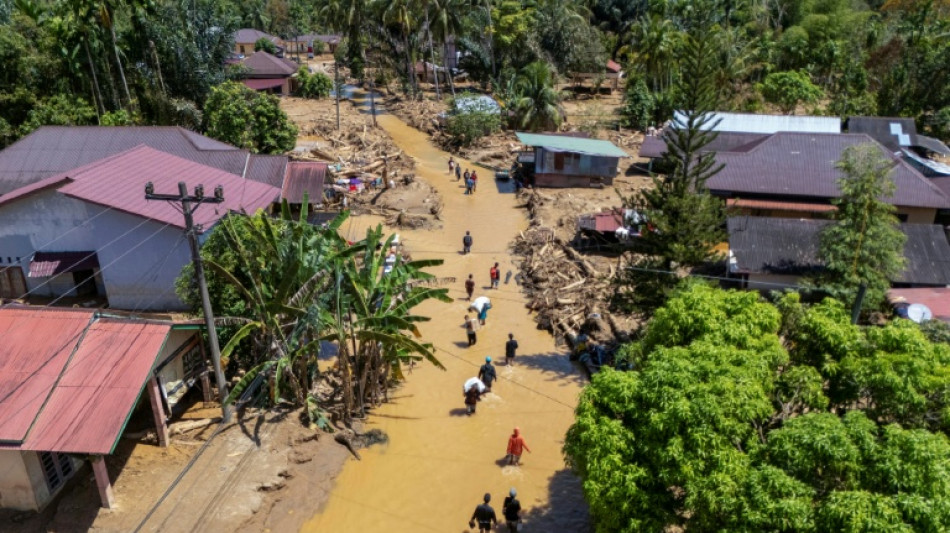
And analysis of satellite imagery combined with knowledge of the tapanuli's range suggests that the flooding which killed nearly 1,000 people last month may also have devastated wildlife in the Batang Toru region.

The scientists focused on the so-called West Block, the most densely populated of three known tapanuli habitats, and home to an estimated 581 tapanulis before the disaster.

There, "we think that between six and 11 percent of orangutans were likely killed," said Erik Meijaard, a longtime orangutan conservationist.

"Any kind of adult mortality that exceeds one percent, you're driving the species to extinction, irrespective of how big the population is at the start," he told AFP.

But tapanulis have such a small population and range to begin with that they are especially vulnerable, he added.

Satellite imagery shows massive gashes in the mountainous landscape, some of which extend for more than a kilometre and are nearly 100 metres wide, Meijaard said.

The tide of mud, trees and water toppling down hillsides would have carried away everything in its path, including other wildlife like elephants.

David Gaveau, a remote sensing expert and founder of conservation start-up The Tree Map, said he was flabbergasted by the before-and-after comparison of the region.

"I have never seen anything like this before during my 20 years of monitoring deforestation in Indonesia with satellites," he told AFP.

The devastation means remaining tapanulis will be even more vulnerable, with sources of food and shelter now washed away.

Over nine percent of the West Block habitat may have been destroyed, the group of scientists estimated.

In a draft paper shared with AFP and set to be published as a pre-print in coming days, they warned the flooding represents an "extinction-level disturbance" for tapanulis.

They are urging an immediate halt to development in the region that will damage remaining habitat, expanded protected areas, a detailed survey of the affected area and orangutan populations and work to restore lowland forests.

The highland homes currently inhabited by tapanulis are not their preferred habitat, but it is where remaining orangutans have been pushed by development elsewhere.

Panut said the region had become eerily quiet after the landslides.

"This fragile and sensitive habitat in West Block must be fully protected by halting all habitat-damaging development," he told AFP.

(S.G.Stein--BBZ)