RIO
0.0900

In the days following a fragile ceasefire in early October 2025, the Gaza Strip – already devastated by two years of war – has been shaken by a wave of internecine violence. The militant group that has ruled the enclave for nearly two decades has responded to the power vacuum left by Israel’s withdrawal by turning its guns on rival militias and local clans. What began as an attempt to re‑establish order in lawless streets has degenerated into summary executions, sieges and pitched battles that many residents say risk pushing Gaza to the brink of civil war.
From ceasefire to crackdown
A United States‑brokered truce between Israel and the rulers of Gaza took effect in early October, ending a bloody two‑year conflict and leading to a prisoner‑hostage exchange. The agreement envisaged the group’s disarmament and the handover of civilian administration to a Palestinian technocratic committee under international supervision. Yet just days after the ceasefire, militants re‑emerged from their tunnels, freed the last living Israeli hostages and deployed thousands of fighters in uniform across Gaza’s ruined streets. Security officials say they killed thirty‑two members of a clan‑affiliated gang in Gaza City that they accuse of looting aid and collaborating with Israel, while losing six of their own men. A widely circulated video showed masked gunmen ordering seven blindfolded men to kneel before shooting them; bystanders shouted religious slogans and denounced the victims as traitors. The group later confirmed that the executions were real and justified them as punishment for treason.
Officials sympathetic to the crackdown argue that the militants simply stepped into the vacuum created when Israeli forces targeted and dismantled the local police during the war. As the regular security apparatus collapsed, powerful families and armed factions – some reportedly receiving arms or cash from Israel – seized control of neighbourhoods, hijacked aid convoys and terrorised residents. According to Gaza’s truckers’ union, gangs “looted aid and killed people under the protection of the occupation”. Israeli sources acknowledge providing support to anti‑militant clans such as the Popular Forces led by Yasser Abu Shabab, though they deny involvement in theft. The result has been a patchwork of competing militias vying for influence in a landscape strewn with debris.
Sieges and summary executions
The militant rulers have sought to present their campaign as a restoration of law and order. Their newly formed Sahem (Arrow) unit comprises intelligence and enforcement personnel tasked with dismantling armed gangs and seizing weapons. In several neighbourhoods their fighters have directed traffic, appointed temporary administrators and offered an amnesty: anyone accused of collaboration who had not shed blood could surrender their arms and have their record expunged. Officials say more than seventy gang members have taken advantage of the offer and that over fifty “gang hubs” have been dismantled. Videos released by the group’s internal media arm depict uniformed officers patrolling markets and reassuring residents that a “merciful hand” awaits those who repent.
Behind this veneer of due process lies a brutal reality. On the first day of the ceasefire, fighters surrounded the Doghmush family compound in Gaza City and laid siege for three days. Members of the Doghmush clan, one of Gaza’s most powerful families, were accused of murdering a journalist and a militant commander and of looting humanitarian aid. When seven men on Hamas’ wanted list refused to surrender, security forces stormed the neighbourhood and killed more than fifteen people. Witnesses described troops going door to door, verifying identities and torturing detainees; some victims had fingernails ripped out. Rights groups such as Al Mezan and the Palestinian Independent Commission for Human Rights have condemned these extrajudicial killings.
Similar scenes unfolded in Khan Younis, where fighters targeted the Majadla clan after accusing them of murdering two resistance fighters. Local reports say the Israeli army intervened during the shoot‑out, killing seven militants. The militia later claimed to have killed Ahmad Tarabin, the right‑hand man of Yasser Abu Shabab, and to have attacked gangs led by Rami Hillis in Gaza City. In separate operations the Sahem unit publicly executed three men it accused of collaborating with Israel. Palestinian analyst Reham Owda says these actions are designed not only to punish collaborators but to demonstrate that the group’s security officers should be part of any future governing body.
Clans, militias and the spectre of civil war
The violence has exposed deep fissures within Gaza’s social fabric. The Doghmush, Hilles and Majadla families have longstanding feuds with Hamas dating back to the movement’s takeover of the Strip in 2007. Many of these clans maintain their own armed wings and have at times aligned with Fatah or the Palestinian Authority. During the recent war they took advantage of the chaos to settle scores and, according to multiple reports, to cooperate with Israeli forces. Saleh Aljafarawi, a 28‑year‑old journalist who gained prominence for his war coverage, was shot dead while reporting on fighting between Hamas and the Doghmush clan; his body, still wearing a press jacket, was later recovered from a truck. Residents who fled the gunfire told reporters they were “running from their own people” rather than Israeli bombardment.
The risk of wider civil strife grew when a new militia calling itself “The People’s Army – Forces of Northern Gaza” released a video declaring that it had taken control of parts of northern Gaza. Nine masked men, armed with rifles and seated around a table, pledged to rebuild the area and provide security but warned Hamas to stay away. The group’s statement promised “decisive force” against any attempt by Hamas to enter its territory and proclaimed that “the era of your tyranny has ended”. The emergence of this militia, coupled with ongoing clashes with established clans, has prompted fears that the Palestinian territory could descend into outright civil war.
In addition to the People’s Army, militias led by Hussam al‑Astal in Khan Younis and Yasser Abu Shabab in Rafah continue to defy Hamas. These groups reportedly receive weapons from Israel and have recruited hundreds of fighters, paying attractive salaries. According to a security official quoted in local reports, Hamas had killed Abu Shabab’s lieutenant and was working to eliminate him. Abu Shabab has denied collaboration and vowed to resist. Sheikh Husni al‑Mughni, head of Gaza’s Higher Committee for Tribal Affairs, insists that the clans support the crackdown and that justice has been served, but many families now demand weapons to defend themselves. Human rights advocates warn that such dynamics could ignite a cycle of revenge killings.
Political implications
The internal conflict has reverberated across Palestinian politics. The Palestinian Authority, which administers parts of the West Bank, condemned what it described as “horrible crimes” and “vile terrorism” in Gaza. Officials in Ramallah argue that the violence undermines efforts to unify Palestinian institutions under a single law and weapon. They accuse Hamas of bombarding clan houses with rockets and rocket‑propelled grenades in an attempt to “break the backbone of clans”. At least nineteen Doghmush members and eight Hamas fighters were killed in one confrontation, according to internal ministry sources.
The United States, which brokered the ceasefire and proposed a 20‑point peace plan for Gaza, has offered mixed signals. On his way to the Middle East, President Donald Trump told reporters that Hamas had been granted a temporary green light to police Gaza. “They do want to stop the problems, and they’ve been open about it, and we gave them approval for a period of time,” he said. He later compared the crackdown to his own fight against violent gangs and said that killing gang members did not bother him. Nonetheless, he reiterated that Hamas must disarm and warned that if it refuses, it will be disarmed “quickly and perhaps violently”.
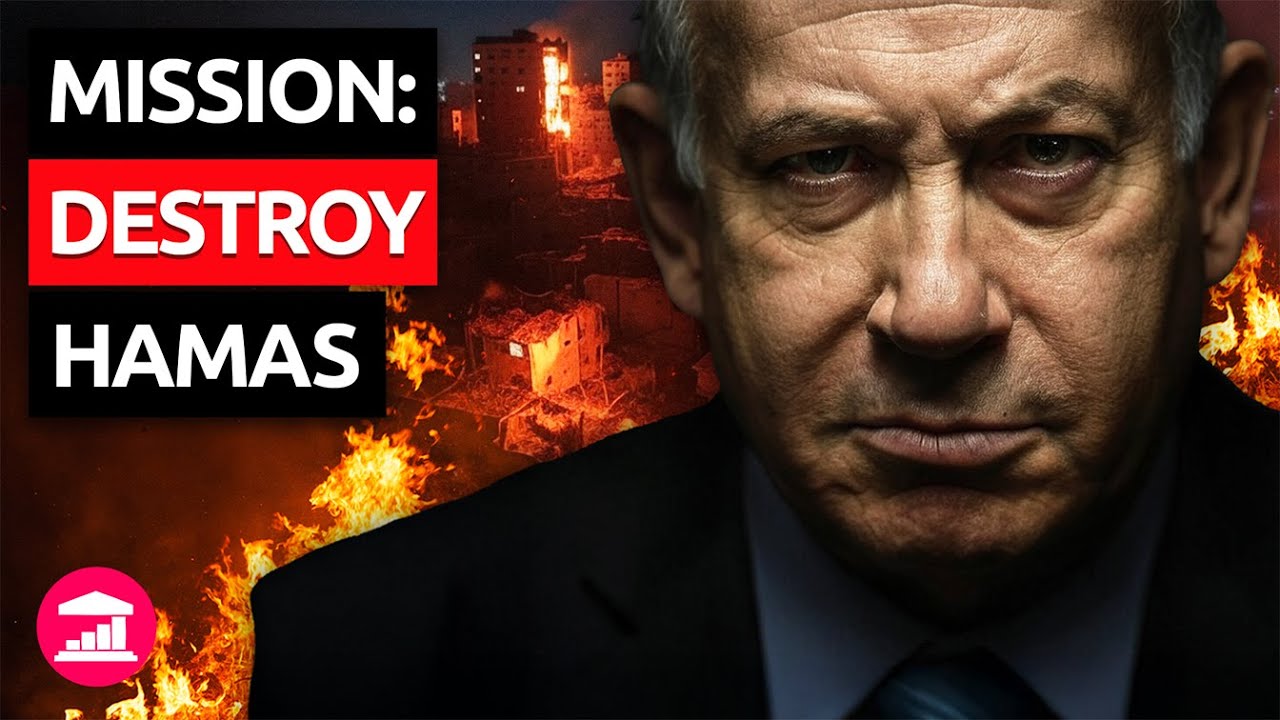
Israeli leaders, meanwhile, insist that the war is not over until Hamas is dismantled. Prime Minister Benjamin Netanyahu has acknowledged arming clans opposed to Hamas, and Israeli forces remain in control of parts of northern Gaza and Rafah. Observers say the internal violence may provide Israel and its allies with leverage to force a demilitarisation deal. However, the sight of militants executing alleged collaborators in public squares has also drawn international criticism and could complicate the formation of a new governing authority.
A fragile truce in jeopardy
The ceasefire that began with the release of Israeli hostages may yet collapse under the weight of Gaza’s internal wars. In addition to the Doghmush confrontation, reports have surfaced of clashes with the Majadla and Hilles clans, as well as targeted assassinations of suspected collaborators. In one weekend alone, at least twenty‑seven people, including a journalist and a son of a senior Hamas official, were killed in battles between Hamas and the Dughmush clan. Another report put the clan’s casualties at fifty‑two, with twelve militants killed, including the son of senior official Bassem Naim; witnesses said fighters used ambulances to storm the neighbourhood.
Despite the bloodshed, some residents welcome the return of uniformed officers to the streets. A medic from Jabaliya refugee camp told reporters that seeing police again provided a sense of normalcy after months of anarchy. Others fear the crackdown has unleashed forces beyond anyone’s control. In social media posts, some Gaza residents argue that the gangs targeted by Hamas were “more dangerous than the occupation” itself and that swift justice was necessary. Critics counter that the extrajudicial killings violate international law and risk fuelling cycles of revenge.
The outcome may hinge on whether the rival clans and newly formed militias decide to accept the amnesty or continue to fight. The interior ministry has set a deadline for suspects to surrender, warning that anyone who fails to do so will face arrest and prosecution. Hossam al‑Astal, a militia leader with ties to Israel, has already rejected the ultimatum, calling the fighters “rats” and urging them to repent before it is too late. As the deadline approaches, many Gazans brace for further bloodletting.
Conclusion
Gaza is teetering on the edge. What was intended as a pause in the war with Israel has exposed the territory’s underlying fractures: feuding clans, armed gangs, foreign proxies and a ruling movement determined to hold onto its weapons. The current campaign may succeed in dismantling some militias and restoring a measure of order, but at the cost of deepening social rifts and undermining prospects for a peaceful transition. Unless a credible, inclusive security arrangement emerges – one that curbs the power of rival gangs and ensures accountability for all – the threat of civil war will continue to loom over the battered enclave.