Berliner Boersenzeitung - Pacific ire at Australia's backing for fossil fuels

EUR -
AED 4.216052
AFN 72.892209
ALL 94.586319
AMD 422.576526
ANG 2.05509
AOA 1053.714468
ARS 1682.097008
AUD 1.637428
AWG 2.068976
AZN 1.955879
BAM 1.957875
BBD 2.31115
BDT 140.849293
BGN 1.940855
BHD 0.432758
BIF 3426.292405
BMD 1.147837
BND 1.48147
BOB 7.929439
BRL 5.913196
BSD 1.147516
BTN 108.17183
BWP 15.594121
BYN 3.18838
BYR 22497.59837
BZD 2.307756
CAD 1.625739
CDF 2617.067981
CHF 0.926318
CLF 0.02632
CLP 1035.877119
CNY 7.7704
CNH 7.786608
COP 3963.11265
CRC 520.55176
CUC 1.147837
CUP 30.417671
CVE 110.655923
CZK 24.209142
DJF 203.993981
DKK 7.479882
DOP 67.267686
DZD 153.330859
EGP 57.376325
ERN 17.21755
ETB 181.788676
FJD 2.565994
FKP 0.867664
GBP 0.86747
GEL 3.036074
GGP 0.867664
GHS 12.97498
GIP 0.867664
GMD 83.792484
GNF 10075.140626
GTQ 8.753278
GYD 240.035472
HKD 8.993702
HNL 30.651644
HRK 7.53693
HTG 149.888875
HUF 352.179686
IDR 20461.96746
ILS 3.393698
IMP 0.867664
INR 108.327142
IQD 1503.666014
IRR 1578275.396263
ISK 144.088378
JEP 0.867664
JMD 181.312182
JOD 0.813862
JPY 185.151836
KES 148.610853
KGS 100.378756
KHR 4605.698922
KMF 487.830979
KPW 1033.053388
KRW 1754.640937
KWD 0.353557
KYD 0.956189
KZT 559.978915
LAK 25286.841834
LBP 102788.772545
LKR 382.965925
LRD 209.078884
LSL 18.599281
LTL 3.389264
LVL 0.694315
LYD 7.317504
MAD 10.611795
MDL 20.263949
MGA 4820.914334
MKD 61.628914
MMK 2409.909684
MNT 4108.765473
MOP 9.26412
MRU 46.005728
MUR 54.603024
MVR 17.745989
MWK 1992.644823
MXN 19.909461
MYR 4.749638
MZN 73.351043
NAD 18.599232
NGN 1561.563327
NIO 42.022732
NOK 11.133905
NPR 173.079456
NZD 2.00111
OMR 0.441897
PAB 1.147521
PEN 3.884323
PGK 5.036421
PHP 69.692629
PKR 319.447188
PLN 4.262779
PYG 7046.530372
QAR 4.178704
RON 5.243437
RSD 117.274899
RUB 83.910586
RWF 1680.432858
SAR 4.302368
SBD 9.253198
SCR 15.706149
SDG 689.280129
SEK 11.000297
SGD 1.483469
SHP 0.856976
SLE 28.409383
SLL 24069.564871
SOS 655.99285
SRD 42.931965
STD 23757.901214
STN 24.563704
SVC 10.040643
SYP 126.872793
SZL 18.599142
THB 37.752771
TJS 10.642827
TMT 4.028907
TND 3.342214
TOP 2.763716
TRY 53.302669
TTD 7.781282
TWD 36.403683
TZS 3019.941056
UAH 51.549039
UGX 4176.426811
USD 1.147837
UYU 45.878629
UZS 13779.779385
VES 684.15243
VND 30211.060668
VUV 136.185431
WST 3.158622
XAF 656.653021
XAG 0.017698
XAU 0.000276
XCD 3.102086
XCG 2.067992
XDR 0.80773
XOF 648.528089
XPF 119.331742
YER 273.902564
ZAR 18.92213
ZMK 10331.911382
ZMW 20.568892
ZWL 369.602933
  • CMSC

    0.0500

    22.37

    +0.22%

  • RELX

    -0.8300

    31.18

    -2.66%

  • CMSD

    0.0000

    22.29

    0%

  • BCC

    3.8500

    74.66

    +5.16%

  • RBGPF

    -0.5300

    60.61

    -0.87%

  • NGG

    -1.2400

    79.44

    -1.56%

  • RIO

    -2.5900

    100.08

    -2.59%

  • GSK

    -1.4800

    50.67

    -2.92%

  • BCE

    0.0000

    23.28

    0%

  • JRI

    0.0500

    12.67

    +0.39%

  • AZN

    -2.9600

    174.93

    -1.69%

  • VOD

    -0.2300

    14.3

    -1.61%

  • RYCEF

    -0.0300

    18.4

    -0.16%

  • BTI

    -0.5800

    58.91

    -0.98%

  • BP

    -1.0400

    39.1

    -2.66%

Pacific ire at Australia's backing for fossil fuels
Pacific ire at Australia's backing for fossil fuels / Photo: Hilaire Bule - AFP/File

Pacific ire at Australia's backing for fossil fuels

Pacific Islands expressed dismay on Thursday at Australia's subsidies for fossil fuels, flagging climate concerns as a point of friction between the neighbouring nations.

Text size:

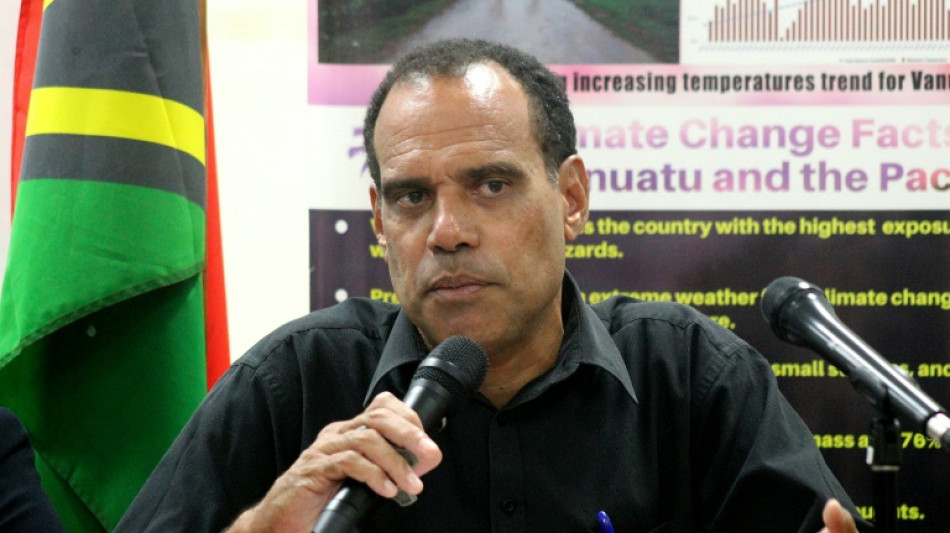
Two Pacific ministers appeared in a joint livestream to condemn Australia's long and continuing enthusiasm for coal and gas projects.

Vanuatu's Climate Change Minister Ralph Regenvanu welcomedAustralia's pledge last year to transition towards renewable energy but said it must stop funding climate-damaging projects.

"We are very disappointed to see that Australia continues to subsidise fossil fuel projects," Regenvanu told The Australia Institute, a Canberra-based think tank.

"We need money in the renewable energy sector. That's where the future of our economies and our societies lies -- not in the fossil fuel industry."

Regenvanu questioned why Canberra continues to pump "billions of dollars into the fossil fuel industry, which we in the Pacific have agreed, including Australia, is the greatest threat to our security".

Vanuatu is a small archipelago and, like many Pacific Island nations, is threatened by rising sea levels.

Speaking alongside Regenvanu, Tuvalu's Finance Minister Seve Paeniu said Pacific nations are currently weighing a commitment to make the region fossil-free.

"The idea is to stop any further expansion of fossil fuel" and to eliminate consumption of coal, oil and natural gases, Paeniu said.

"It's a matter of our security and our survival."

Tuvalu, midway between Hawaii and Australia, is one of the smallest nations in the world, made up of less than 26 square kilometres (10 square miles) and shrinking fast.

"Our land is constantly being eaten away," Paeniu said. "And we know that fossil fuel is the cause of climate change."

- 'One step forwards' -

Australia has pledged that 82 percent of its electricity will come from renewable sources by 2030. The current figure is around 30 percent.

But it is one of the world's largest coal and gas exporters and a series of governments have resisted pressure to scale back the industries.

The centre-left Labor government approved a new coal mine last month, sparking anger from environmental groups.

Australia and its allies, including the United States, are currently locked in a battle with China for influence across the Pacific.

Australia's relationship with fossil fuels is a constant irritant.

Regenvanu described Australia as Vanuatu's greatest trade partner but said there are tensions in the relationship over climate change.

He accused Australia of "not recognising the main security threat to the Pacific".

Vanuatu is still under a state of emergency after being battered this year by an "unprecedented event of two Category Four cyclones within a few days", Regenvanu said.

He estimates fixing the damage will cost more than 40 percent of Vanuatu's gross domestic product, which the International Monetary Fund puts at around US$1 billion.

"It's like you take one step forwards and two backwards in terms of economic development," Regenvanu said.

"We're not seeing the emissions reduction that we need to see happen."

(S.G.Stein--BBZ)