Berliner Boersenzeitung - Climate change supercharged this summer's record heat: study

EUR -
AED 4.206905
AFN 71.589866
ALL 95.627825
AMD 433.346952
ANG 2.050608
AOA 1050.436762
ARS 1598.48234
AUD 1.626239
AWG 2.063359
AZN 1.95061
BAM 1.945237
BBD 2.3149
BDT 141.034193
BGN 1.957564
BHD 0.432596
BIF 3411.899127
BMD 1.145515
BND 1.465206
BOB 7.941876
BRL 6.0135
BSD 1.149324
BTN 105.875104
BWP 15.493398
BYN 3.388486
BYR 22452.092461
BZD 2.311618
CAD 1.565203
CDF 2494.931712
CHF 0.902775
CLF 0.026459
CLP 1044.74356
CNY 7.868571
CNH 7.902896
COP 4241.12008
CRC 541.744173
CUC 1.145515
CUP 30.356145
CVE 109.669501
CZK 24.450958
DJF 204.675942
DKK 7.472262
DOP 70.206942
DZD 151.785302
EGP 60.067711
ERN 17.182724
ETB 179.402573
FJD 2.542819
FKP 0.85466
GBP 0.863267
GEL 3.110036
GGP 0.85466
GHS 12.453379
GIP 0.85466
GMD 83.622845
GNF 10076.023902
GTQ 8.813145
GYD 240.464293
HKD 8.96677
HNL 30.423871
HRK 7.534736
HTG 150.54728
HUF 392.343435
IDR 19425.642039
ILS 3.595663
IMP 0.85466
INR 105.86511
IQD 1505.724007
IRR 1514112.985193
ISK 144.403808
JEP 0.85466
JMD 179.887724
JOD 0.812159
JPY 182.484538
KES 148.058096
KGS 100.175676
KHR 4612.851814
KMF 490.280442
KPW 1031.001455
KRW 1713.135972
KWD 0.351868
KYD 0.957799
KZT 562.605088
LAK 24623.403846
LBP 102926.863934
LKR 357.341218
LRD 210.337878
LSL 18.987482
LTL 3.382408
LVL 0.692911
LYD 7.33607
MAD 10.771113
MDL 19.958539
MGA 4763.986277
MKD 61.713955
MMK 2405.604459
MNT 4089.652192
MOP 9.264763
MRU 45.675787
MUR 52.705547
MVR 17.709765
MWK 1993.01714
MXN 20.49911
MYR 4.509923
MZN 73.19785
NAD 18.9874
NGN 1591.7964
NIO 42.29921
NOK 11.167967
NPR 169.395019
NZD 1.96741
OMR 0.440409
PAB 1.149359
PEN 3.933143
PGK 4.957019
PHP 68.317375
PKR 321.070695
PLN 4.269821
PYG 7441.495674
QAR 4.190446
RON 5.095279
RSD 117.416399
RUB 92.238199
RWF 1680.324596
SAR 4.298653
SBD 9.223297
SCR 15.949562
SDG 688.453919
SEK 10.77122
SGD 1.466379
SHP 0.859433
SLE 28.179556
SLL 24020.895685
SOS 655.719447
SRD 42.803884
STD 23709.846089
STN 24.367368
SVC 10.057389
SYP 127.011646
SZL 18.992293
THB 36.96007
TJS 11.016879
TMT 4.020757
TND 3.379151
TOP 2.758125
TRY 50.620651
TTD 7.799648
TWD 36.607792
TZS 2995.345058
UAH 50.89091
UGX 4302.636935
USD 1.145515
UYU 45.960438
UZS 13948.261761
VES 504.501324
VND 30125.324163
VUV 137.001435
WST 3.109413
XAF 652.394603
XAG 0.01383
XAU 0.000225
XCD 3.095811
XCG 2.071452
XDR 0.81137
XOF 652.405931
XPF 119.331742
YER 273.262413
ZAR 19.293152
ZMK 10311.029579
ZMW 22.326476
ZWL 368.855337
  • CMSC

    -0.1000

    23.14

    -0.43%

  • CMSD

    -0.0500

    23.1

    -0.22%

  • BCC

    -2.2800

    69.62

    -3.27%

  • NGG

    1.1200

    90.81

    +1.23%

  • AZN

    -0.8100

    192.5

    -0.42%

  • BCE

    -0.2100

    25.68

    -0.82%

  • GSK

    -0.8700

    54.28

    -1.6%

  • RBGPF

    0.1000

    82.5

    +0.12%

  • BP

    0.6000

    42.16

    +1.42%

  • RIO

    -1.3800

    90.7

    -1.52%

  • BTI

    0.7300

    59.89

    +1.22%

  • JRI

    -0.0300

    12.82

    -0.23%

  • RYCEF

    -0.1000

    17.25

    -0.58%

  • VOD

    -0.0900

    14.31

    -0.63%

  • RELX

    -0.5800

    34.18

    -1.7%

Climate change supercharged this summer's record heat: study
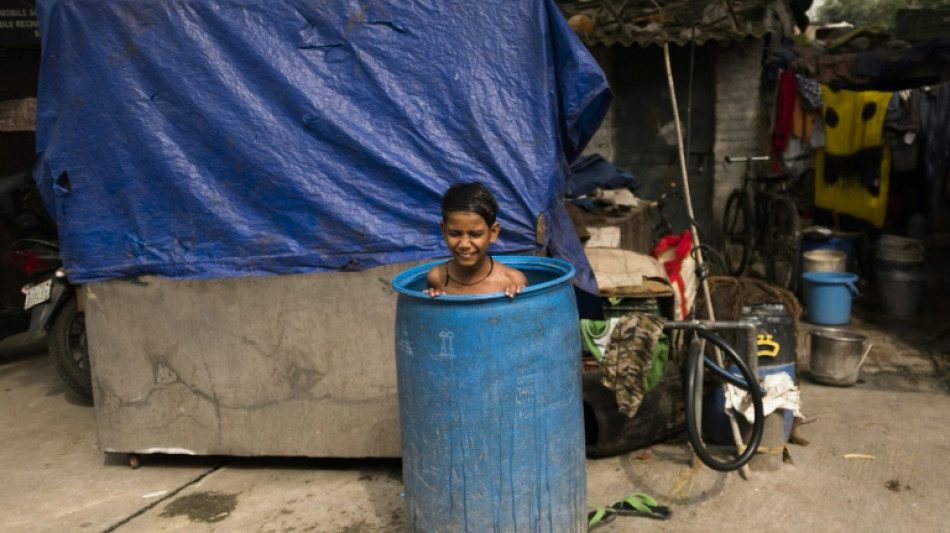
Climate change supercharged this summer's record heat: study / Photo: Xavier GALIANA - AFP/File

Climate change supercharged this summer's record heat: study

Record-shattering temperatures that impacted billions of people in the northern hemisphere this summer were given a massive boost by human-caused climate change, an analysis showed Thursday.

Text size:

The new paper by the nonprofit Climate Central group examined the period from June to August 2023, finding that greenhouse gas emissions pumped into the atmosphere since the start of the industrial era made the heat waves that baked Asia, Africa, Europe and North America far more likely.

Nearly half of the global population -- more than 3.8 billion people -- were exposed to 30 or more days of extreme heat worsened by climate change, while at least 1.5 billion people lived through such temperatures every day over those three months.

"Virtually no one on Earth escaped the influence of global warming during the past three months," said Andrew Pershing, Climate Central's vice president for science.

"In every country we could analyze, including the southern hemisphere where this is the coolest time of year, we saw temperatures that would be difficult -- and in some cases nearly impossible -- without human-caused climate change. Carbon pollution is clearly responsible for this season's record-setting heat."

The analysis relied on peer-reviewed methods to determine the likelihood of daily temperatures in each country of the world with and without today's levels of carbon pollution.

A similar approach has allowed scientists to identify the climate influence, or "fingerprint," of extreme weather events, including recently the fire prone weather conditions that led to this year's wildfires in Quebec.

Climate Central has developed a Climate Shift Index (CSI) that ranges from -5 to 5, with positive levels indicating temperatures that are becoming more likely due to climate change.

A CSI of level 0 means climate change had no detectable influence, while level 3 indicates it made the odds of recording a specific temperature in a given time and place three times greater.

According to the team's calculations, 48 percent of the world experienced 30 days during June-August with a CSI level of 3 or higher, while 1.5 billion people had such heat over the whole summer.

"There really is this divide between the countries that have been the most responsible for climate change for the pollution that is driving the heat that we're experiencing right now," said Pershing.

The world's least-developed nations and small island states, he said, are experiencing heat that is three to four times more climate-supercharged than G20 countries with the largest economies.

Global exposure meanwhile peaked on August 16, 2023, when 4.2 billion people worldwide experienced climate-caused extreme heat.

"A big part of what we're trying to do with this analysis, is to really come up with ways to try to localize that climate, that experience that individuals are having with climate change," said Pershing.

(K.Lüdke--BBZ)