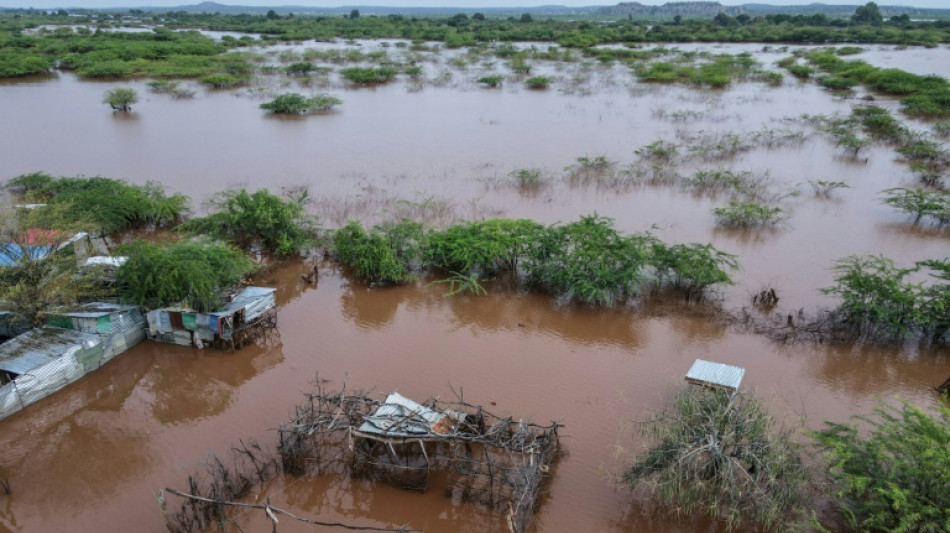
Disease stalks Somali district ravaged by floods / Photo: Hassan Ali Elmi - AFP

The floodwaters in the southwestern Somali district of Dolow may have started to recede -- for now -- but distraught families who have lost their homes, their livelihoods in the muddy deluge are now at risk of potentially fatal disease.
Shukri Abdi Osman, a 34-year-old mother of three, is sheltering in a camp for the displaced in Dolow with her children, among around 700 families forced to flee as flash floods engulfed many parts of town.
"I have never seen such devastating floods before, everything happened quickly. When we realised the water was coming it was too late to collect all our belongings. We left our houses at midnight and all we were able to grab was our children," she told AFP.
As the family breadwinner, Osman said she thought she had a bright future, with plans to expand her flourishing fruit and vegetable kiosk in the Garbolow neighbourhood of Dolow, which lies on the Juba River near the Ethiopia border.
"But I ended up here in this IDP settlement hopelessly waiting for the situation to change. My business is gone, my property is destroyed, and my house engulfed in water," she said, as she struggled to light firewood to cook a meal for her children.
- 'Leaking septic tanks' -
And now disease is posing a threat to her family.
"The toilets were destroyed and even the tap water is now mixed with the dirty flood water which includes leaking septic tanks," she said.
"The situation is very tough now in this camp with my daughter feeling unwell, she might have already contracted malaria and typhoid."
Somalia's government has declared a state of emergency over what the United Nations has called "once-in-a-century" flooding, with almost 100 lives lost across the country and 700,000 people made homeless.
Torrential rains linked to the El Nino weather phenomenon have lashed the Horn of Africa on the heels of the worst drought in 40 years that drove millions to the brink of famine in Somalia.
It is considered one of the most vulnerable countries to climate change, locked in a vicious cycle of drought and floods.
But is particularly ill-equipped to cope with the crisis as it battles deep poverty and a deadly Islamist insurgency.
In one of the worst El Nino episodes, in late 1997 and early 1998, at least 1,800 people died in Somalia alone when the Juba River burst its banks.
The latest floods have washed away homes, schools, farmland, roads and bridges, leaving many without shelter, food or clean drinking water.
- 'Children covered in mosquito bites' -
Mohamed Dahir, water and sanitation officer with US charity Mercy Corps, told AFP that humanitarian agencies are now concerned about those vulnerable to disease.
"The possibility for malaria outbreak is high due to the mosquitos, and there are also concerns about watery diarrhoea breaking out due to the possible contamination of the water system."
"We still don't know exactly the level of contamination but what we have seen is the leaked septic tanks and destroyed toilets of the affected neighbourhood which contaminate the water wells."
The UN humanitarian agency OCHA said in an update last week that 33 districts of Somalia had been deluged, with a significant increase in cases of Acute Watery Diarrhoea (AWD) or cholera and a rise in malaria cases.
It said there were concerns that contaminated stagnant water around schools poses a "serious risk" of waterborne diseases for school children.
Sadia Sharif Hassan, a 40-year-old mother of seven, sits in a makeshift shelter in a Dolow IDP camp, begging her neighbour for a container so she can fetch water.
"The most important thing is to save the lives of our children," she told AFP, saying the family barely had enough food to eat each day.
"The mosquitos are relentless and several of my children are already feeling unwell, they are suffering from fever... all their bodies are covered with bites now."
- 'Ran away with our lives' -
In Garboolow, 70-year-old Owliyo Mohamed Abdirahman almost slipped and fell in the mud as she tried to rescue belongings from her damaged corrugated metal home but found everything had been swept away.
“This is what is left of my house in which I lived with my son who is sick now, his children and his wife," she said in despair. "We ran away with our lives and carried nothing else."
She and her family are having to rely on the kindness of well-wishers who have provided food and clothing.
Somalia has been locked in an endless cycle of drought and floods.
In one of the worst El Nino episodes, in late 1997 and early 1998, at least 1,800 people died when the Juba River burst its banks.
Garboolow commissioner Mursal Mohamed Adan said the authorities are waiting anxiously for help from aid agencies.
"God knows better what is next, but we are still concerned if rains continue to cause more flooding it will only make the situation worse."
(O.Joost--BBZ)