Oranges wither, cows go hungry in drought-hit Sicily / Photo: Alberto PIZZOLI - AFP

Marilina Barreca has two grim options: feed her cows tainted fodder or set them to graze on barren hillsides as Sicily battles a crop-devastating drought which is sucking reservoirs dry.
Regional authorities in the southern Italian island declared a state of emergency earlier this month, after the winter rains hoped for following last year's punishingly hot summer failed.
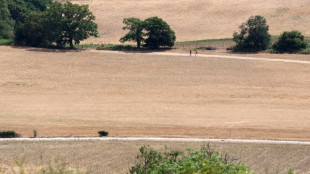
"The situation is tragic," Barreca told AFP as she looked out over the Madonie Mountains, where her cows range free in pastures once rich with tufted grasses, but where there is little now for grazing.
The circular feeder at the top of one rise holds hay -- but it is of such poor quality the cows will not eat it.
Sicily is not alone. Drought has struck across the Western Mediterranean, with severe impacts on northern Africa, parts of Spain and other areas of Italy, including Sardinia.
Experts say climate change driven by human activity is boosting the intensity and frequency of extreme weather events, such as heatwaves and droughts -- but also heavy rain.
Storms swept across the island during the hay-making period in April and May, damaging the fodder and turning it into a breeding ground for poisonous toxins.
Since then, it has barely rained.
- 'Almost total aridity' -
Barreca, 47, who runs the farm with her sister, is spending almost 3,000 euros ($3,255) extra a month on fodder just to keep her 150 cows alive.
The poor quality hay means the animals struggle to get the necessary nutrients and energy, producing around 17 or 18 litres a day of milk, compared to their usual 27 to 30 litres.
Barreca, who is also a vet, says she knows of cows which have been poisoned by mouldy fodder on other farms and "cannot get pregnant, abort calves, end up at the slaughterhouse or die outright".
"We need to import good quality fodder, but the costs are absolutely prohibitive," she said.
Sicily -- which set a European heat record in 2021, at 48.8 degrees Celsius (119.8 degrees Fahrenheit) -- has experienced eight months of "almost total aridity", according to the ANBI Observatory on Water Resources.
The region's agrometeorology service said the second half of 2023 was the driest in over 100 years, and a couple of days of recent rainfall had little to no impact.
With no chance to replenish its reservoirs, Sicily has been forced to ration water in dozens of towns, and farmers say wheat fields, citrus orchards, olive groves and vineyards have all been affected.
- Withered fruit -
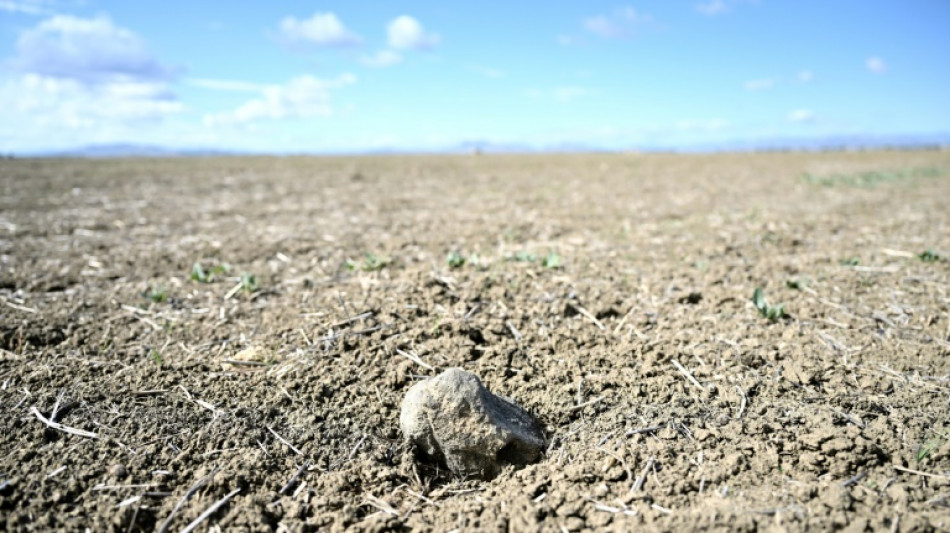
Vito Amantia, 67, crumbles dusty clods of earth between his hands as he searches in vain for seeds sown at the end of November, "which should have produced wheat 50 centimetres high by now".
Large sections of a regional water pipe lie next to his land, still unconnected years after works began.
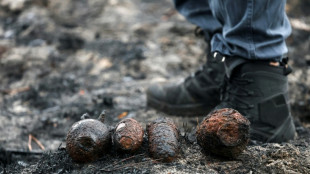
At Amantia's orange grove, in the usually mineral-rich soil near the Etna volcano, the fruit on the trees is much smaller than usual, or has withered on the branch.
He is one of few farmers with a private well -- but high electricity costs mean he has to limit water.
"I'm nearly 70 years old, I don't remember ever seeing anything like this, or hearing that my father or grandfather experienced similar," he said.
Amantia, who is a local representative for the Coldiretti national farmers' association, said around 30 percent of citrus producers in the Catania region risked closure.
Droughts in Sicily are set to be increasingly frequent, as are heavy rains and heatwaves, according to Andrea Toreti, coordinator of the Copernicus European and Global Drought Observatories.
"What is really of concern is that our forecast for the coming three months for the Mediterranean shows much higher temperatures than usual," he told AFP.
"And we know these temperatures exacerbate and amplify the effects of the drought," he said.
- Desertification -
Some 70 percent of Sicilian territory is at risk of desertification, not only due to long periods without rain, but also to uncontrolled urbanisation and the waste of water, ANBI says.
The island has destroyed 95 percent of its wetlands in the past 150 years through drainage for conversion to urban or farm land, despite the key role the areas play in preventing drought.
The region now plans to use purified waste water to help struggling farmers, but environmental groups warn many water treatment plants on the island are not in line with EU regulations.
And a vast amount of the water that could go to homes or farms is simply lost: over 52 percent of water in the Sicilian network leaks out through ageing and poorly maintained pipes.
"Sicily's been asleep for 30 years. This drought is what neglect looks like", Amantia said.
(L.Kaufmann--BBZ)