Berliner Boersenzeitung - No 'human era' in Earth's geological history, scientists say

EUR -
AED 4.212081
AFN 72.244796
ALL 96.326254
AMD 432.939206
ANG 2.052753
AOA 1051.557417
ARS 1599.517618
AUD 1.640773
AWG 2.064125
AZN 1.954004
BAM 1.956365
BBD 2.310275
BDT 140.770644
BGN 1.960126
BHD 0.433925
BIF 3410.393136
BMD 1.146736
BND 1.468043
BOB 7.927289
BRL 6.112796
BSD 1.147086
BTN 105.893959
BWP 15.632718
BYN 3.394524
BYR 22476.027392
BZD 2.307196
CAD 1.583586
CDF 2588.183773
CHF 0.912745
CLF 0.026638
CLP 1051.798264
CNY 7.908585
CNH 7.921286
COP 4250.297051
CRC 539.68758
CUC 1.146736
CUP 30.388506
CVE 110.947169
CZK 24.575006
DJF 203.798389
DKK 7.505507
DOP 70.811404
DZD 152.098534
EGP 59.873831
ERN 17.201041
ETB 180.095353
FJD 2.555735
FKP 0.858942
GBP 0.866311
GEL 3.131037
GGP 0.858942
GHS 12.482268
GIP 0.858942
GMD 84.289519
GNF 10068.34329
GTQ 8.796427
GYD 240.009297
HKD 8.980033
HNL 30.469223
HRK 7.568004
HTG 150.425399
HUF 394.179508
IDR 19448.701448
ILS 3.605729
IMP 0.858942
INR 106.193324
IQD 1501.650912
IRR 1515669.760861
ISK 144.837141
JEP 0.858942
JMD 180.001186
JOD 0.813081
JPY 183.185402
KES 148.250483
KGS 100.281732
KHR 4609.879489
KMF 494.243657
KPW 1031.923687
KRW 1723.372775
KWD 0.352542
KYD 0.955984
KZT 561.629503
LAK 24580.28852
LBP 102690.217388
LKR 356.987932
LRD 210.139826
LSL 19.36881
LTL 3.386014
LVL 0.69365
LYD 7.316613
MAD 10.822326
MDL 20.012953
MGA 4764.688857
MKD 61.623505
MMK 2407.22186
MNT 4094.133909
MOP 9.248091
MRU 45.989896
MUR 53.33513
MVR 17.717506
MWK 1991.880986
MXN 20.584147
MYR 4.516425
MZN 73.288336
NAD 19.368805
NGN 1588.807126
NIO 42.108581
NOK 11.176343
NPR 169.430135
NZD 1.985003
OMR 0.44189
PAB 1.147146
PEN 3.95667
PGK 4.950747
PHP 68.334433
PKR 320.226483
PLN 4.298483
PYG 7401.233734
QAR 4.17842
RON 5.117429
RSD 116.646423
RUB 91.632507
RWF 1673.087957
SAR 4.303407
SBD 9.233195
SCR 17.42629
SDG 689.18878
SEK 10.871865
SGD 1.469661
SHP 0.860349
SLE 28.152796
SLL 24046.494883
SOS 655.363876
SRD 43.05769
STD 23735.121842
STN 24.826836
SVC 10.037898
SYP 128.017476
SZL 19.368796
THB 37.131738
TJS 10.995775
TMT 4.013576
TND 3.384062
TOP 2.761065
TRY 50.670488
TTD 7.780348
TWD 36.918714
TZS 2992.804645
UAH 50.591272
UGX 4313.245342
USD 1.146736
UYU 46.083908
UZS 13892.708131
VES 507.665371
VND 30152.278788
VUV 136.416071
WST 3.197489
XAF 656.155031
XAG 0.014239
XAU 0.000228
XCD 3.099112
XCG 2.067524
XDR 0.812234
XOF 655.363797
XPF 119.331742
YER 273.554311
ZAR 19.360235
ZMK 10322.005017
ZMW 22.329447
ZWL 369.248554
  • RBGPF

    0.1000

    82.5

    +0.12%

  • CMSD

    -0.1100

    22.99

    -0.48%

  • JRI

    -0.2300

    12.59

    -1.83%

  • BCE

    -0.1100

    25.57

    -0.43%

  • BCC

    0.3800

    70

    +0.54%

  • CMSC

    -0.1500

    22.99

    -0.65%

  • RELX

    -0.0400

    34.14

    -0.12%

  • NGG

    0.0900

    90.9

    +0.1%

  • GSK

    -0.8900

    53.39

    -1.67%

  • RIO

    -2.8700

    87.83

    -3.27%

  • VOD

    0.1000

    14.41

    +0.69%

  • AZN

    -2.6000

    189.9

    -1.37%

  • BTI

    0.0400

    59.93

    +0.07%

  • RYCEF

    -0.4000

    16.55

    -2.42%

  • BP

    0.5100

    42.67

    +1.2%

No 'human era' in Earth's geological history, scientists say
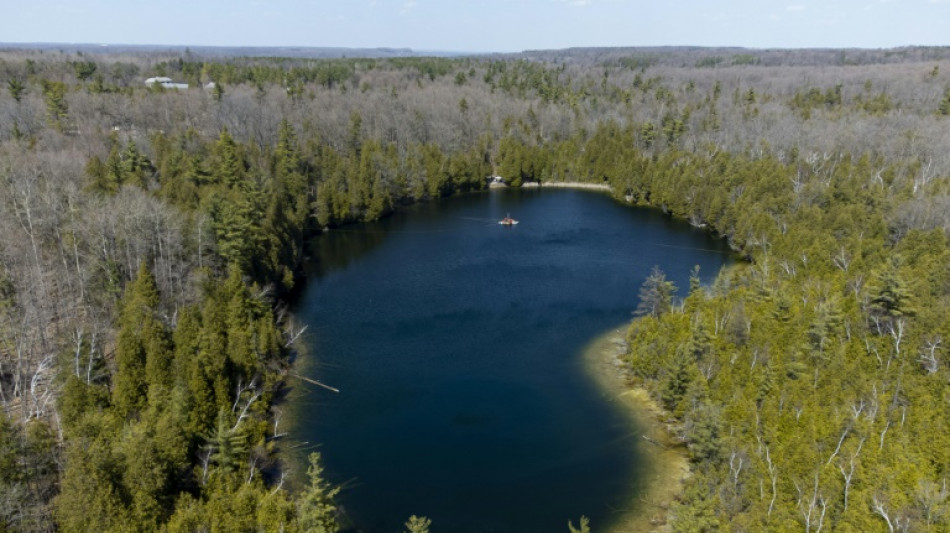
No 'human era' in Earth's geological history, scientists say / Photo: Peter POWER - AFP

No 'human era' in Earth's geological history, scientists say

A top panel of geologists has decided not to grant the 'human age' its own distinct place in Earth's geological timeline after disagreeing over when exactly our era might have begun.

Text size:

After 15 years of deliberation, a team of scientists made the case that humankind has so fundamentally altered the natural world that a new phase of Earth's existence -- a new epoch -- has already begun.

Soaring greenhouse gases, the spread of microplastics, decimation of other species, and fallout from nuclear tests -- all were submitted as evidence that the world entered the Anthropocene, or era of humans, in the mid-20th century.

But the proposal was rejected in a contentious vote that has been upheld by the International Union of Geological Sciences, the field's governing body said in a statement published on its website on Thursday.

The decision "to reject the proposal for an Anthropocene Epoch as a formal unit of the Geologic Time Scale is approved", it said.

There is no avenue for appeal, though some involved in the voting committee have raised allegations over the conduct of the ballot and a perceived lack of due process.

The union denied these assertions and called the outcome "a decisive rejection of the Anthropocene proposal" by the field's pre-eminent experts.

There were four votes in favour, 12 against and three abstentions, it added.

Despite this, the Anthropocene would endure as a widely used term: "It will remain an invaluable descriptor of human impact on the Earth system," the union said.

- 'Missed opportunity' -

In 2009 scientists began an enquiry that ultimately concluded that the Holocene epoch -- which began 11,700 years ago as the last ice age ended -- gave way to the Anthropocene around 1950.

They gathered a trove of evidence to show this, including traces of radioactive material found in the layered sediment of lakes, the global upheaval of plants and animals, and omnipresent "forever chemicals".

But opponents argued mankind had been reshaping the planet long before the 1950s, pointing to defining moments like the advent of farming and the industrial revolution.

Martin Head, who was part of the team that advocated for the Anthropocene, said there was "a myriad of geological signals" and lamented the way the process was handled.

"I feel this has been a missed opportunity to recognise and endorse a simple reality, that our planet left its natural functioning state in the mid-20th century," Head, a professor of earth sciences at Brock University in Canada, told AFP.

There was no disagreement that 'the age of man' had resulted in profound planetary changes, said Erle Ellis, an environmental scientist critical of the Anthropocene proposal.

But scientists weren't convinced this impact represented an epoch, no less one that definitively began only seven decades ago, said Ellis, professor of geography and environmental systems at the University of Maryland.

"The truth is, there was never a need for a firm boundary. It just wasn't the critical thing," he told AFP earlier this month after the proposal was first voted down.

(K.Müller--BBZ)