Berliner Boersenzeitung - 'Human-induced' climate change behind deadly Sahel heatwave: study

EUR -
AED 4.301156
AFN 72.601323
ALL 95.426204
AMD 431.661594
ANG 2.096607
AOA 1074.966542
ARS 1625.345213
AUD 1.613565
AWG 2.109242
AZN 1.972853
BAM 1.955254
BBD 2.358482
BDT 143.739859
BGN 1.955456
BHD 0.441756
BIF 3484.274768
BMD 1.170988
BND 1.490171
BOB 8.091982
BRL 5.769923
BSD 1.170993
BTN 112.009764
BWP 15.775066
BYN 3.262961
BYR 22951.364632
BZD 2.355123
CAD 1.604617
CDF 2605.448961
CHF 0.916062
CLF 0.026462
CLP 1041.617562
CNY 7.953465
CNH 7.947782
COP 4466.967891
CRC 533.060243
CUC 1.170988
CUP 31.031182
CVE 110.236098
CZK 24.332486
DJF 208.527109
DKK 7.472215
DOP 68.920753
DZD 155.060396
EGP 61.970481
ERN 17.56482
ETB 182.841505
FJD 2.559604
FKP 0.865605
GBP 0.866355
GEL 3.126342
GGP 0.865605
GHS 13.27369
GIP 0.865605
GMD 86.063612
GNF 10274.13086
GTQ 8.933505
GYD 244.987861
HKD 9.169954
HNL 31.140304
HRK 7.533783
HTG 152.932516
HUF 358.060608
IDR 20504.760872
ILS 3.408389
IMP 0.865605
INR 112.020283
IQD 1533.971625
IRR 1536336.244201
ISK 143.610339
JEP 0.865605
JMD 185.192748
JOD 0.830242
JPY 184.836922
KES 151.233361
KGS 102.40256
KHR 4697.808451
KMF 491.814758
KPW 1053.908866
KRW 1745.205967
KWD 0.360968
KYD 0.975857
KZT 549.601825
LAK 25662.710082
LBP 104862.650463
LKR 380.040361
LRD 214.296561
LSL 19.280516
LTL 3.457623
LVL 0.708319
LYD 7.415707
MAD 10.734082
MDL 20.082992
MGA 4862.808128
MKD 61.635947
MMK 2458.236249
MNT 4191.755618
MOP 9.445944
MRU 46.808728
MUR 54.813722
MVR 18.032835
MWK 2030.784913
MXN 20.141777
MYR 4.602567
MZN 74.837549
NAD 19.280516
NGN 1604.991758
NIO 43.087967
NOK 10.746153
NPR 179.222307
NZD 1.973828
OMR 0.450241
PAB 1.171013
PEN 4.014679
PGK 5.1754
PHP 71.957799
PKR 326.205876
PLN 4.249163
PYG 7161.000228
QAR 4.269181
RON 5.209375
RSD 117.376348
RUB 86.037989
RWF 1717.271765
SAR 4.399954
SBD 9.401873
SCR 16.396972
SDG 703.171687
SEK 10.913901
SGD 1.490217
SHP 0.874261
SLE 28.835575
SLL 24555.035151
SOS 669.233114
SRD 43.553759
STD 24237.087207
STN 24.493578
SVC 10.246139
SYP 129.486637
SZL 19.273276
THB 37.925375
TJS 10.966319
TMT 4.098458
TND 3.411347
TOP 2.819458
TRY 53.182322
TTD 7.944917
TWD 36.913636
TZS 3041.817172
UAH 51.493281
UGX 4390.848811
USD 1.170988
UYU 46.517804
UZS 14222.271218
VES 590.509993
VND 30853.191598
VUV 138.151844
WST 3.164874
XAF 655.790666
XAG 0.013229
XAU 0.00025
XCD 3.164654
XCG 2.110393
XDR 0.813801
XOF 655.754275
XPF 119.331742
YER 279.455807
ZAR 19.232893
ZMK 10540.304397
ZMW 22.102488
ZWL 377.057655
  • CMSC

    -0.0400

    23.07

    -0.17%

  • BCC

    -1.6600

    66.27

    -2.5%

  • NGG

    -0.4550

    86.785

    -0.52%

  • BCE

    -0.1230

    24.347

    -0.51%

  • BTI

    1.4300

    65.07

    +2.2%

  • GSK

    -0.0250

    50.875

    -0.05%

  • AZN

    2.2750

    186.815

    +1.22%

  • RIO

    2.4800

    111.98

    +2.21%

  • CMSD

    -0.0400

    23.56

    -0.17%

  • BP

    -0.4350

    43.965

    -0.99%

  • JRI

    -0.0360

    13.104

    -0.27%

  • RBGPF

    0.0000

    61

    0%

  • RYCEF

    -0.0800

    16

    -0.5%

  • VOD

    0.4450

    15.54

    +2.86%

  • RELX

    -1.1500

    31.62

    -3.64%

'Human-induced' climate change behind deadly Sahel heatwave: study
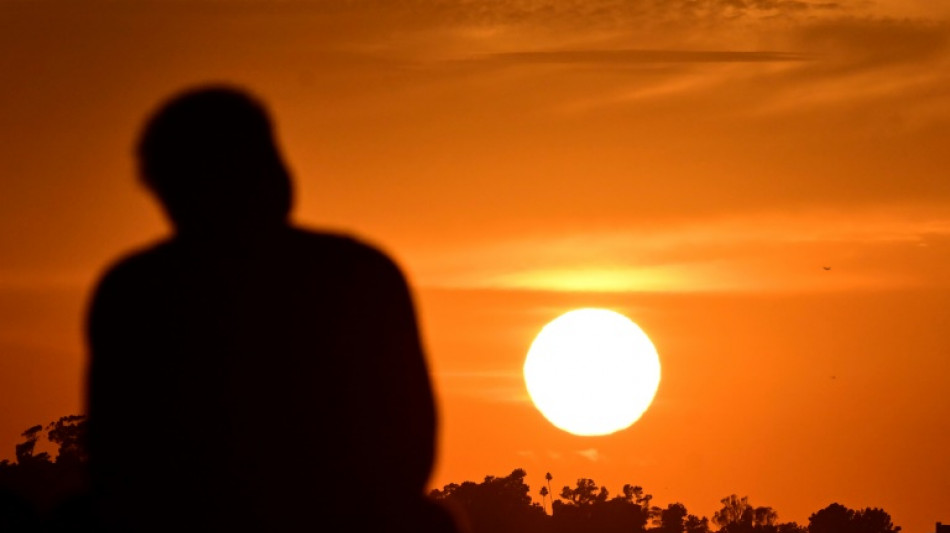
'Human-induced' climate change behind deadly Sahel heatwave: study / Photo: Frederic J. BROWN - AFP

'Human-induced' climate change behind deadly Sahel heatwave: study

The deadly heatwave that hit Africa's Sahel region in early April would not have occurred without human-induced climate change, according to a study by the World Weather Attribution (WWA) group published Thursday.

Text size:

The West African nations of Mali and Burkina Faso experienced an exceptional heatwave from April 1 until April 5, with soaring temperatures above 45 degrees Celsius (113 degrees Fahrenheit) triggering many deaths.

Observations and climate models used by researchers at the WWA showed that "heatwaves with the magnitude observed in March and April 2024 in the region would have been impossible to occur without the global warming of 1.2C to date", which scientists attribute to human-induced climate change.

While periods of high temperatures are common in the Sahel at this time of year, the report said that the April heatwave would have been 1.4C cooler "if humans had not warmed the planet by burning fossil fuels".

It added that the five days of extreme heat was a once-in-a-200-year event, but that "these trends will continue with future warming".

The length and severity of the extreme heat led to an increase in the number of deaths and hospitalisations in the two countries, despite their populations being acclimatised to high temperatures, the WWA said.

- Deaths in heatwave -

A lack of data in the affected countries made it impossible to know the exact number of deaths, the WWA said, adding there were likely hundreds, if not thousands, of other heat-related casualties.

"From April 1 to 4, we saw an increase in the use of services," Djibo Mahamane Diango, head of anaesthesia at Gabriel Toure hospital in the capital Bamako, told reporters on April 5.

He said the hospital had seen the arrival of 102 bodies -- more than half of them people aged over 60 -- during the first four days of this month.

That compares with 130 for the whole of the month of April the previous year, he added.

The April heatwave in Mali -- where the temperature spiked at 48.5 degrees Celsius -- and neighbouring Burkina Faso coincided with the holy month of Ramadan when Muslims fast from dawn until dusk.

It also came during power outages which restricted the use of fans and air conditioning and affected health services.

The national blood transfusion centre in Bamako had called on medical centres to suspend any non-essential transfusions because of daily power shutdowns lasting more than 12 hours a day.

Mali often suffers from electricity cuts partly due to the state of disrepair of its power stations.

Countries in the Sahel region have had to contend with drought since the 1970s, as well as periods of intense rainfall from the 1990s.

The dwindling availability of water and pasture, compounded by the development of agricultural land, has disrupted the lives of pastoral populations and encouraged the emergence of armed groups that have extended their hold over vast swathes of territory in Mali, Burkina Faso and Niger.

(K.Lüdke--BBZ)