Extreme early-summer heatwave peaks in western US / Photo: MARIO TAMA - GETTY IMAGES NORTH AMERICA/AFP/File

An extreme early-summer heatwave was expected to peak Thursday across much of the western United States, where millions were scrambling to cope with the sudden sharp rise in temperatures.
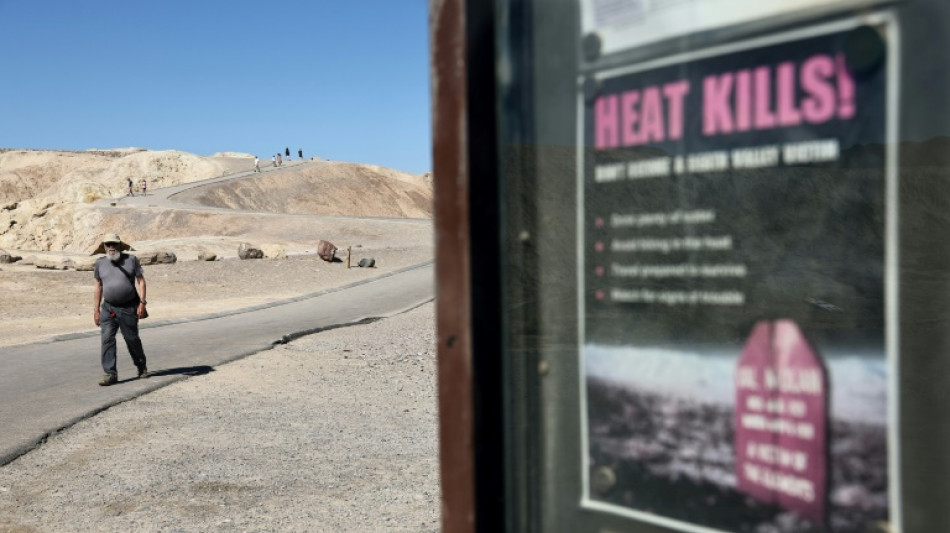
Las Vegas was baking in 111 degrees Fahrenheit (44 degrees Celsius) heat, while in the Death Valley desert the mercury was expected to shoot past 120F, due to an oppressive high-pressure weather system smothering the region.
"Widespread high and low temperature records are likely to be tied or broken between California, Nevada and Arizona today," said the National Weather Service, in a bulletin.
Experts warn the unseasonably scorching temperatures could signal the start of a brutal summer.
Dangerously hot temperatures in Las Vegas have been running 10-15 degrees above average, and an excessive heat advisory was extended into Saturday.
Cooling stations have been opened in the desert gambling metropolis, and some events including a farmers' market have been forced to move indoors to escape the furnace.
"One of the things with it being so hot so quickly is we really haven't had an opportunity to acclimate to the heat," Glen Simpson, senior director at Community Ambulance, told Las Vegas-based ABC affiliate Channel 13.
"Locals just aren't used to it, even though they may have grown up here, spending every summer out here, their bodies haven't acclimated to that."
California's Central Valley -- a sprawling region, known mainly for its vast agriculture -- was also "of particular concern" on Thursday, federal officials said.
"Little to no overnight relief from the heat will affect those without effective cooling and/or adequate hydration," said the NWS.
While temperatures should cool slightly in coming days, the heatwave is expected to expand north into Oregon and Washington on Friday and Saturday.
But densely populated coastal areas including Los Angeles appear to have been spared the worst of the heat.
A blanket of cool clouds from the Pacific Ocean -- known locally as "June gloom" -- restricted temperatures in the nation's second-largest city to a balmy 79F Thursday.
- Worse to come -
The ridge of high pressure has swept in from Mexico, which has been withering under a punishing heatwave.
Late last month Mexico City -- which sits 7,350 feet (2,240 meters) above sea level and has traditionally enjoyed a temperate climate -- logged its highest ever temperatures.
Officials say dozens of people have died in repeated heatwaves that have scorched the country, with hundreds of others sickened.
Experts say there could be worse to come.
This year is on course to be "the warmest year in history," Francisco Estrada, coordinator of the Climate Change Research Program at the National Autonomous University of Mexico, has warned.
Human-caused climate change is heating up the planet at an alarming rate, the global scientific community agrees.
Humanity now faces an 80 percent chance that Earth's temperatures will at least temporarily exceed the key 1.5-degree Celsius mark during the next five years, the UN predicted Wednesday.
The report came alongside another by the EU's Copernicus Climate Change Service announcing that last month was the hottest May on record, pointing to human-induced climate change -- and spurring UN chief Antonio Guterres to compare humanity's impact on the world to "the meteor that wiped out the dinosaurs".
Dramatic climate shifts have begun taking a heavy toll worldwide, fuelling extreme weather events, flooding and drought, while glaciers are rapidly melting away and sea levels are rising.
The year 2023 was the hottest on record, according to the European Union's climate monitor, Copernicus.
And 2024 is not shaping up to be any better, with Pakistan, India and China already walloped by extreme temperatures.
(G.Gruner--BBZ)