Restoring nature, 'adaptation' helped limit Storm Boris impact / Photo: Alex HALADA - AFP

The restoration of a creek in Vienna reduced the impact of flooding caused by Storm Boris, authorities say, one of many projects experts believe helped central Europe endure the deluge better than in previous years.
Flooding unleashed by the storm burst dams and devastated entire villages in central Europe, killing at least two dozen people in Austria, the Czech Republic, Poland and Romania.
The torrential rains that caused the flooding were "the heaviest ever recorded" in the region, according to the World Weather Attribution (WWA) network of scientists, inundating homes and farmland.
But despite record rainfall, fewer people died during Storm Boris than in previous major European floods in 1997 and 2002, when more than 100 and 200 people lost their lives respectively, the WWA said in a report published Wednesday.
"We have seen investment for adaptation and mitigation in the affected countries after the events of 1997 and 2002," said Federica Remondi, a flood specialist at reinsurance giant Swiss Re.
"Without those adaptation measures the overall impact and losses might have been even worse," she added, calling for continued efforts despite resources being restrained in some countries.
- Prevented 'greater damage' -
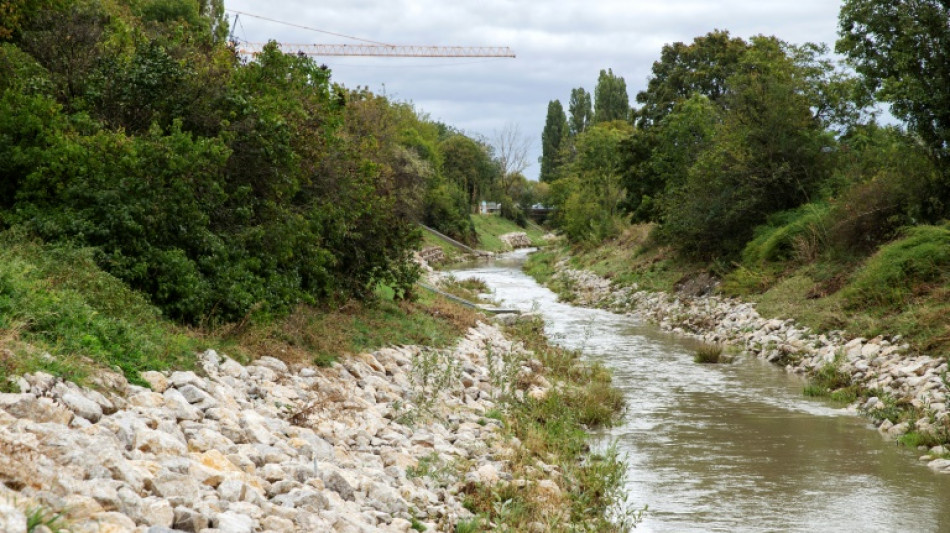
In Austria's capital Vienna, where no deaths were reported, officials said efforts to restore damaged ecosystems helped offset the impact of the floods, including at Liesing creek on the outskirts of the city.
Workers have removed and knocked down the narrow concrete banks which line the waterway, where water levels rose during the flood by more than three metres to a 100-year-high.
Without the restoration, heavy rainfall "would have led to greater damage", city official Josef Gottschall told AFP.
He dismissed criticism that the project -- which is projected to run until 2027 with a total cost of about 135 million euros ($151 million) -- was too costly and had a limited impact, saying that sums cannot be weighed up against "loss of life and damage".
According to experts, the construction of retention basins -- artificial ponds that collect storm water -- also played a role in lessening the impact of floods in the region, while early warning systems have become more effective.
- Climate costs 'accelerating' -
In the Czech Republic, where several people remain missing, flood protection has been beefed up, but is still considered inefficient in places like the village of Troubky, which was hit hard in 1997 and narrowly escaped another disaster.
Experts suggest the recent storm might help accelerate work such as the construction of a dam on the Opava river which was scheduled to begin in 2027 but could be brought forward.
The cost of the disasters remains high, with the European Commission pledging 10 billion euros ($11 billion) in funds for affected countries.
In Austria, insurance companies estimate the total damage from the storm to reach 700 million euros, as economists predict several billions of euros. A similar estimate has been made for the Czech Republic.
Polish Prime Minister Donald Tusk said more than five billion euros, including EU funds, have been earmarked for reconstructing affected areas.
- 'Wake-up call' -
Scientists also warn new infrastructure is needed as climate change worsens the impact of extreme weather events.
Around 80,000 hectares (197,600 acres) of farmland have been affected by the floods and more than 18,000 buildings were damaged or destroyed, with thousands of people forced to evacuate.
Based on historical data, a four-day rainfall event is expected to occur on average about once every 100 to 300 years in today's climate with 1.3 degrees Celsius of warming, WWA said.
Global warming has doubled the likelihood of severe four-day downpours since the pre-industrial era and the costs of climate change are "accelerating", according to the WWA.
The floods are "another wake-up call that our climate is changing rapidly," researcher Hayley Fowler from Newcastle University told AFP.
"Our infrastructure is really not designed to deal with these levels of flooding," she said.
"The evacuation of whole cities, dams bursting and roads turning into rivers are now commonplace around the world. The question is not whether we need to adapt for more of these types of storm, but can we?"
burs-anb-kym/cad/jm
(O.Joost--BBZ)