Berliner Boersenzeitung - Top nature group to unveil new 'red list' of threatened species

EUR -
AED 4.29132
AFN 74.203609
ALL 95.805414
AMD 433.4011
ANG 2.091481
AOA 1072.683853
ARS 1638.188454
AUD 1.635513
AWG 2.106222
AZN 1.985616
BAM 1.953101
BBD 2.353774
BDT 143.421198
BGN 1.949178
BHD 0.440993
BIF 3476.288379
BMD 1.1685
BND 1.49084
BOB 8.105799
BRL 5.801133
BSD 1.16865
BTN 111.08949
BWP 15.864078
BYN 3.305632
BYR 22902.60579
BZD 2.350851
CAD 1.591894
CDF 2706.246758
CHF 0.916396
CLF 0.027083
CLP 1065.929196
CNY 7.981149
CNH 7.986584
COP 4356.694927
CRC 531.363456
CUC 1.1685
CUP 30.965258
CVE 110.598731
CZK 24.400589
DJF 207.665735
DKK 7.472548
DOP 69.678194
DZD 154.723383
EGP 62.546481
ERN 17.527504
ETB 183.542149
FJD 2.573271
FKP 0.860275
GBP 0.863931
GEL 3.137447
GGP 0.860275
GHS 13.081357
GIP 0.860275
GMD 85.886397
GNF 10256.527946
GTQ 8.931861
GYD 244.512118
HKD 9.155872
HNL 31.117461
HRK 7.535193
HTG 152.947888
HUF 364.799928
IDR 20373.386901
ILS 3.452103
IMP 0.860275
INR 111.408203
IQD 1530.735387
IRR 1536577.888516
ISK 143.398483
JEP 0.860275
JMD 184.115578
JOD 0.828489
JPY 183.758944
KES 150.972215
KGS 102.150883
KHR 4688.022868
KMF 491.349122
KPW 1051.650263
KRW 1724.431853
KWD 0.360026
KYD 0.974054
KZT 542.160809
LAK 25663.184483
LBP 104465.362619
LKR 373.460733
LRD 214.565871
LSL 19.666146
LTL 3.450278
LVL 0.706815
LYD 7.402479
MAD 10.80515
MDL 20.122194
MGA 4855.118969
MKD 61.663486
MMK 2453.558203
MNT 4179.346411
MOP 9.430668
MRU 46.681467
MUR 54.860921
MVR 18.059139
MWK 2034.93947
MXN 20.461022
MYR 4.633061
MZN 74.679165
NAD 19.665886
NGN 1601.931692
NIO 42.907309
NOK 10.841901
NPR 177.741105
NZD 1.989903
OMR 0.449285
PAB 1.168885
PEN 4.096709
PGK 5.062529
PHP 72.106988
PKR 325.719728
PLN 4.256204
PYG 7265.959457
QAR 4.256826
RON 5.190447
RSD 117.422683
RUB 87.636497
RWF 1706.594681
SAR 4.384441
SBD 9.378229
SCR 15.60968
SDG 701.689458
SEK 10.869375
SGD 1.492529
SHP 0.872403
SLE 28.803202
SLL 24502.862465
SOS 667.79835
SRD 43.767328
STD 24185.596923
STN 24.713781
SVC 10.227823
SYP 129.148477
SZL 19.665661
THB 38.292338
TJS 10.940881
TMT 4.095594
TND 3.371707
TOP 2.813468
TRY 52.838293
TTD 7.939029
TWD 36.968998
TZS 3049.786129
UAH 51.502231
UGX 4386.05699
USD 1.1685
UYU 47.074949
UZS 14019.666522
VES 571.329748
VND 30758.433277
VUV 138.793042
WST 3.172698
XAF 655.05181
XAG 0.015991
XAU 0.000257
XCD 3.157931
XCG 2.106689
XDR 0.812844
XOF 652.608671
XPF 119.331742
YER 278.833394
ZAR 19.63285
ZMK 10517.907557
ZMW 21.887754
ZWL 376.256618
  • RYCEF

    -0.0200

    16.33

    -0.12%

  • RBGPF

    1.6000

    64.7

    +2.47%

  • GSK

    -0.7100

    50.9

    -1.39%

  • BCE

    -0.0300

    23.93

    -0.13%

  • CMSC

    -0.0100

    22.87

    -0.04%

  • BP

    0.5300

    46.94

    +1.13%

  • NGG

    -0.9800

    87.5

    -1.12%

  • BTI

    -0.3600

    58.35

    -0.62%

  • RIO

    -1.9500

    98.63

    -1.98%

  • VOD

    -0.1000

    16.05

    -0.62%

  • CMSD

    -0.0300

    23.25

    -0.13%

  • JRI

    -0.0500

    12.93

    -0.39%

  • BCC

    -3.8000

    74.33

    -5.11%

  • RELX

    0.0100

    36.36

    +0.03%

  • AZN

    -1.2800

    183.46

    -0.7%

Top nature group to unveil new 'red list' of threatened species
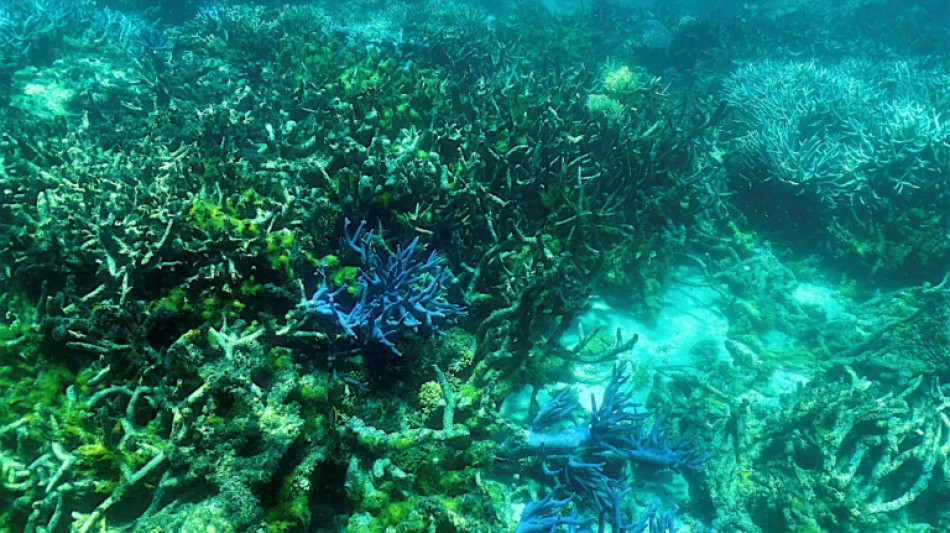
Top nature group to unveil new 'red list' of threatened species / Photo: Glenn NICHOLLS - AFP

Top nature group to unveil new 'red list' of threatened species

The world's top conservation body is holding its world congress starting Thursday in the Emirati capital Abu Dhabi and will unveil its updated "red list" of threatened species.

Text size:

The International Union for Conservation of Nature (IUCN), whose decisions help set the global agenda on environmental protection, will on Friday publish its list ranking at-risk plant and animal species from "least concern" to "extinct".

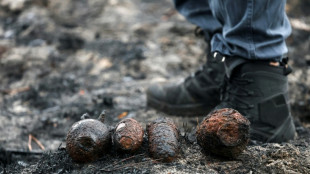
The congress, held every four years, sheds light on the dire state of the world's biodiversity. An increasing number of animals suffer from the destruction of their natural habitat, climate change, and water, air and soil pollution.

According to the United Nations's expert scientific panel on biodiversity (IPBES), biodiversity has declined every decade in the past 30 to 50 years.

The IUCN congress last convened in the French city of Marseille in 2021.

In an update to its "red list" last year, the IUCN said that out of the 169,420 species studied, a total of 47,187 were classified as threatened -- more than a quarter.

The most impacted species were corals and amphibians, with more than 40 percent of each group under threat.

- 'Urgency' -

"The Congress programme reflects the urgency and ambition of our time," said Shaikha Salem Al Dhaheri, Secretary General of the Environment Agency-Abu Dhabi and IUCN councillor from the West Asia region.

IUCN Director General Grethel Aguilar of Costa Rica said the upcoming announcements "reflect the scale of ambition and the real possibility of delivering the solutions we need to build a planet where people and nature thrive together".

The IUCN congress votes on adopting resolutions.

Though not legally binding, they can "shape the international agenda" and "accelerate" work on treaties under discussion, an IUCN source told AFP, requesting anonymity to discuss the event freely.

- Synthetic biology debate -

The most closely watched vote revolves around two competing motions on synthetic biology -- a controversial technique widely used in the pharmaceutical industry and agribusiness.

It enables scientists to redesign organisms by engineering them to have new abilities.

One motion calls for a moratorium on the technology because "genetic engineering of wild species in natural ecosystems, including in protected areas, is not compatible with the practices, values and principles of nature conservation".

A competing motion argues that synthetic biology could complement conservation efforts, and says IUCN policy "should not be interpreted as supporting or opposing synthetic biology, per se".

Organisers expect 10,000 delegates and 5,000 civil society attendees.

The IUCN congress describes itself as "world's largest and most inclusive nature conservation forum".

Its voting members include government agencies, national and international NGOs, and Indigenous groups.

(Y.Berger--BBZ)