Arctic sees unprecedented heat as climate impacts cascade / Photo: Olivier MORIN - AFP/File

The Arctic has experienced its hottest year since records began, a US science agency announced Tuesday, as climate change triggers cascading impacts from melting glaciers and sea ice to greening landscapes and disruptions to global weather.
Between October 2024 and September 2025, temperatures were 1.60 degrees Celsius above the 1991–2020 mean, the National Oceanic and Atmospheric Administration said in its annual Arctic Report Card, which draws on data going back to 1900.
Co-author Tom Ballinger of the University of Alaska told AFP it was "certainly alarming" to see such rapid warming over so short a timespan, calling the trend "seemingly unprecedented in recent times and maybe back thousands of years."
The year included the Arctic's warmest autumn, second-warmest winter, and third-warmest summer since 1900, the report said.
Driven by human-caused burning of fossil fuels, the Arctic is warming significantly far faster than the global average, with a number of reinforcing feedback loops -- a phenomenon known as "Arctic Amplification."
For example, rising temperatures increase water vapor in the atmosphere, which acts like a blanket absorbing heat and preventing it from escaping into space.
At the same time, the loss of bright, reflective sea ice exposes darker ocean waters that absorb more heat from the Sun.
- Sea-ice retreat -
Springtime -- when Arctic sea ice reaches its annual maximum -- saw the smallest peak in the 47-year satellite record in March 2025.
That's an "immediate issue for polar bears and for seals and for walrus, that they use the ice as a platform for transportation, for hunting, for birthing pups," co-author Walt Meier of the National Snow and Ice Data Center told AFP.
Modeling suggests the Arctic could see its first summer with virtually no sea ice by 2040 or even sooner.
The loss of Arctic sea ice also disrupts ocean circulation by injecting freshwater into the North Atlantic through melting ice and increased rainfall.
This makes surface waters less dense and salty, hindering their ability to sink and drive the Atlantic Meridional Overturning Circulation -- including the Gulf Stream -- which help keep Europe's winters milder.
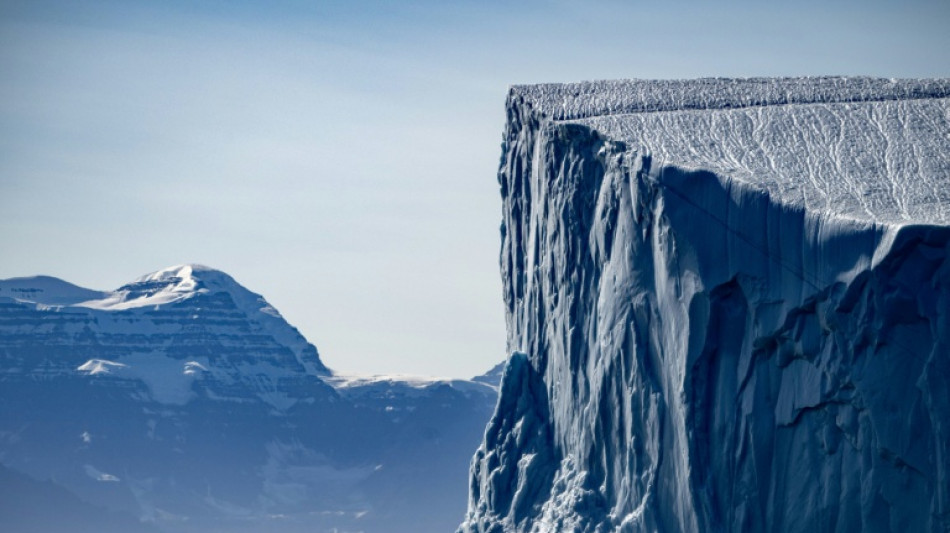
Ongoing melt of the Greenland Ice Sheet also adds freshwater to the North Atlantic Ocean, boosting plankton productivity but also creating mismatches between when food is available and when the species that depend on it are able to feed.
Greenland's land-based ice loss is also a major contributor to global sea-level rise, exacerbating coastal erosion and storm-driven flooding.
- More Arctic blasts -
And as the Arctic warms faster than the rest of the planet, it weakens the temperature contrast that helps keep cold air bottled up near the pole, allowing outbreaks of frigid weather to spill more frequently into lower latitudes, according to some research.
The Arctic's hydrological cycle is also intensifying. The October 2024 - September 2025 period -- also known as the 2024/25 "water year" -- saw record-high spring precipitation and ranked among the five wettest years for other seasons in records going back to 1950.
Warmer, wetter conditions are driving the "borealization," or greening, of large swaths of Arctic tundra. In 2025, circumpolar mean maximum tundra greenness was the third highest in the 26-year modern satellite record, with the five highest values all occurring in the past six years.
Permafrost thaw, meanwhile, is triggering biogeochemical changes, such as the "rusting rivers" phenomenon caused by iron released from thawing soils.
This year's report card used satellite observations to identify more than 200 discolored streams and rivers that appeared visibly orange, degrading water quality through increased acidity and metal concentrations and contributing to the loss of aquatic biodiversity.
(K.Müller--BBZ)