Berliner Boersenzeitung - Storms, warm seas drove sudden drop in Antarctic ice: study

EUR -
AED 4.11646
AFN 71.736469
ALL 90.874166
AMD 403.965056
ANG 2.006149
AOA 1027.85474
ARS 1731.765412
AUD 1.621617
AWG 2.020401
AZN 1.908695
BAM 1.955692
BBD 2.260065
BDT 139.762274
BGN 1.959123
BHD 0.423573
BIF 3353.384716
BMD 1.120888
BND 1.432502
BOB 13.54913
BRL 6.169143
BSD 1.122138
BTN 105.954835
BWP 15.373013
BYN 3.34801
BYR 21969.405587
BZD 2.256755
CAD 1.572768
CDF 2594.855378
CHF 0.915519
CLF 0.027851
CLP 1096.139048
CNY 7.49706
CNH 7.472776
COP 3628.998328
CRC 508.867331
CUC 1.120888
CUP 26.930151
CVE 110.255463
CZK 24.340125
DJF 199.818955
DKK 7.47458
DOP 67.385674
DZD 152.658181
EGP 60.418511
ERN 16.813321
ETB 184.167677
FJD 2.528049
FKP 0.832861
GBP 0.833823
GEL 2.919932
GGP 0.832861
GHS 13.08916
GIP 0.832861
GMD 83.503849
GNF 9939.228903
GTQ 8.575258
GYD 235.104907
HKD 8.785688
HNL 30.159064
HRK 7.587302
HTG 147.060559
HUF 364.436013
IDR 20307.240712
ILS 3.588243
IMP 0.832861
INR 105.905763
IQD 1701.090792
IRR 2119994.957286
ISK 136.79338
JEP 0.832861
JMD 177.978574
JOD 0.794682
JPY 176.933342
KES 145.62542
KGS 98.020871
KHR 4565.747617
KMF 494.311894
KPW 1008.799193
KRW 1525.72473
KWD 0.348125
KYD 0.935136
KZT 504.535359
LAK 25254.266049
LBP 100773.199044
LKR 373.044387
LRD 190.756903
LSL 18.388181
LTL 3.309691
LVL 0.678014
LYD 7.183603
MAD 10.935298
MDL 20.061907
MGA 5087.673377
MKD 61.547363
MMK 2353.691297
MNT 4036.826183
MOP 9.067118
MRU 45.33309
MUR 52.401575
MVR 17.323345
MWK 1945.775083
MXN 21.001185
MYR 4.550019
MZN 71.635344
NAD 18.388837
NGN 1506.686375
NIO 41.296796
NOK 10.432599
NPR 169.531116
NZD 2.010049
OMR 0.430987
PAB 1.122128
PEN 3.865086
PGK 5.111672
PHP 70.655171
PKR 310.345676
PLN 4.403387
PYG 6913.617833
QAR 4.101645
RON 5.335988
RSD 117.649523
RUB 91.353608
RWF 1652.893886
SAR 4.207423
SBD 9.025074
SCR 15.460008
SDG 674.210238
SEK 11.010466
SGD 1.434585
SHP 0.835673
SLE 25.679439
SLL 23504.466687
SOS 641.258832
SRD 42.097225
STD 23200.119367
STN 24.498427
SVC 9.818326
SYP 14573.785945
SZL 18.38182
THB 37.522812
TJS 10.351389
TMT 3.934317
TND 3.343611
TOP 2.698829
TRY 56.222402
TTD 7.599478
TWD 36.9896
TZS 2961.947057
UAH 50.972128
UGX 4538.70862
USD 1.120888
UYU 45.1973
UZS 13390.140367
VES 1001.814937
VND 28700.338268
VUV 134.119962
WST 3.119611
XAF 655.957
XAG 0.021663
XAU 0.000276250222
XCD 3.029256
XCG 2.02227
XDR 0.792526
XOF 655.957
XPF 119.331742
YER 264.72568
ZAR 18.502331
ZMK 10089.322765
ZMW 22.750539
ZWL 360.925492
SSP 6440.080738
MXV 2.36332
  • CMSD

    -0.1200

    19.81

    -0.61%

  • JRI

    0.0000

    10.77

    0%

  • BCC

    -1.8200

    74.15

    -2.45%

  • CMSC

    -0.2228

    19.53

    -1.14%

  • BCE

    0.2000

    20.34

    +0.98%

  • RIO

    0.0100

    94.17

    +0.01%

  • AZN

    -2.7400

    161.47

    -1.7%

  • GSK

    -1.1800

    48.17

    -2.45%

  • RBGPF

    0.0000

    65

    0%

  • NGG

    0.8800

    75.82

    +1.16%

  • RYCEF

    -0.7300

    19.08

    -3.83%

  • BTI

    -0.4500

    54.4

    -0.83%

  • BP

    0.4700

    43.99

    +1.07%

  • RELX

    -0.0600

    33.18

    -0.18%

  • VOD

    -0.1800

    16.15

    -1.11%

Storms, warm seas drove sudden drop in Antarctic ice: study
Storms, warm seas drove sudden drop in Antarctic ice: study / Photo: MARIO TAMA - GETTY IMAGES NORTH AMERICA/AFP

Storms, warm seas drove sudden drop in Antarctic ice: study

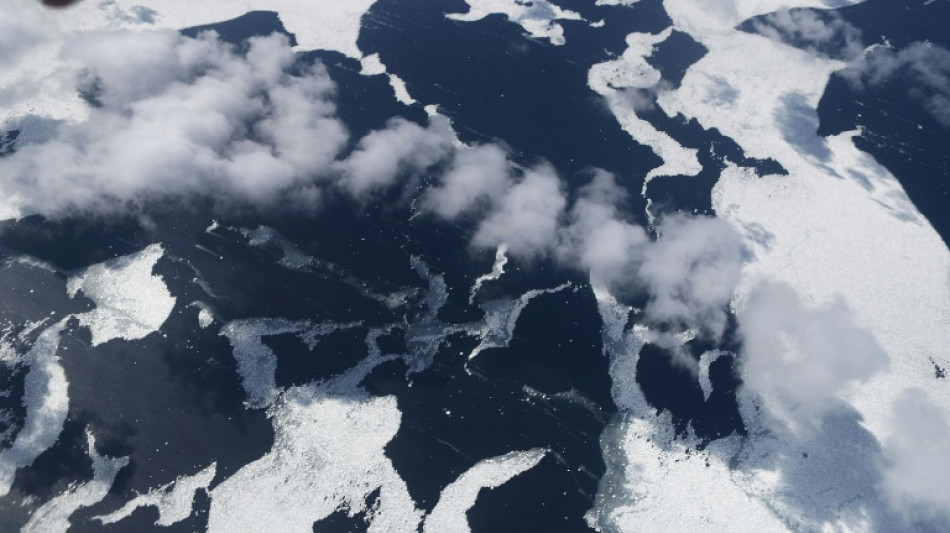
Unusually strong winds and warm ocean water likely drove a rapid plunge in Antarctic sea ice in recent years, scientists said on Wednesday, shedding new light on a puzzling event.

Text size:

While the Arctic sea ice area has been steadily declining, the story has been very different in Antarctica, where coverage hit a record high in 2015 before flipping to a record low only two years later.

Climate models struggled to explain this "unexpected and abrupt decline" of the magnitude witnessed in recent decades, wrote a global team of scientists in new research exploring this anomaly.

Understanding why matters because Antarctic sea ice is critical not just to ocean currents and local ecosystems but the climate, as its reflective surface bounces solar energy back into the atmosphere.

In the journal Nature Climate Change, scientists led by Theo Spira from the University of Gothenburg in Sweden said the rapid loss of sea ice was caused by forces working together rather than any single factor.

In particular, they pointed to a gradual weakening of a layer of cold water beneath the surface that normally protects the sea ice from the warmer depths below.

"During the winter of 2015, storms in the Southern Ocean were unusually strong, reducing the cold-water protective layer effect and resulting in the sustained sea ice loss around Antarctica," Spira said in a statement.

Normally, water of vastly different temperatures and salinity -- such as deep ocean water and sea ice melt -- do not mix well and settle in layers in a process known as stratification.

This natural protection helped sea ice grow to record highs until 2015, when strong winds and powerful storms churned the Southern Ocean.

"The storms in 2015 stirred up the sea and warmer water mixed with the cold-water layer, the protection disappeared and the ice melted at record speed," said Spira, the first author of the study.

He said it was crucial scientists understand these complex factors to better predict how Antarctic sea ice may influence the climate and global weather patterns in future.

(A.Berg--BBZ)