'It is tough': Indonesia battles wildfires, bracing for worse to come / Photo: REINA - AFP

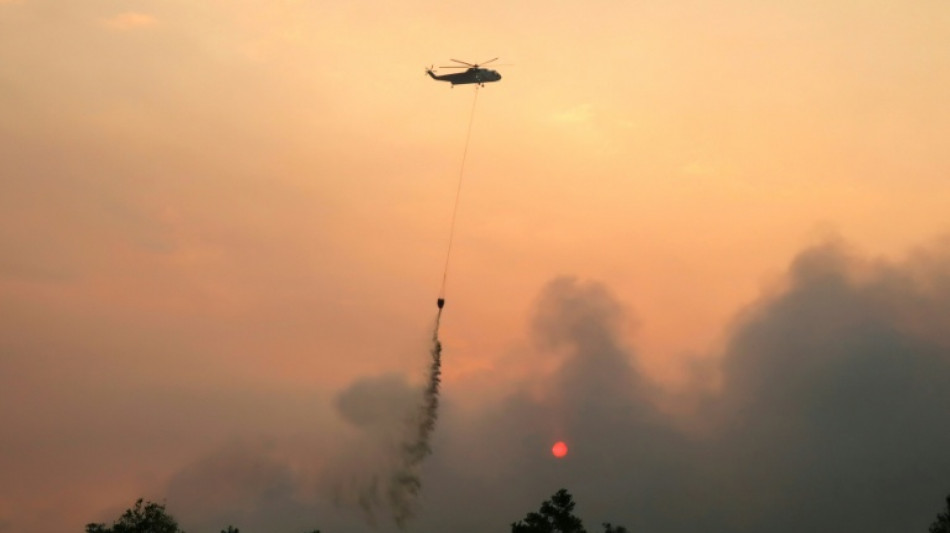
Smog is choking parts of Indonesia's Borneo, home to pristine rainforest and vast plantations, but the worst is yet to come, officials and experts warned Thursday.
Nearly 95,000 hectares of land across Indonesia burned in July alone, the government said this week, as dry conditions driven by a powerful El Nino weather pattern take hold.
The fires have created thick smog that is blanketing areas like Palangkaraya, capital of Indonesia's Central Kalimantan in Borneo.
"It is tough," said forestry ministry official Yudho Shekti Mustiko, adding that all 767 of his colleagues across Borneo were deployed dealing with fires.
"There are no officials on standby in the office," he told AFP
Fires have now burned through over 200,000 hectares since the start of the year, the government said this week -- an area around three times the size of the sprawling capital Jakarta.
But fire season has only just begun.
"We have to maintain our stamina, September, October will be very dry," said Yudho.
The area burned is already larger than during previous El Nino seasons in 2019 and 2023, but has not yet caught up to the country's devastating 2015 losses, during a particularly strong El Nino.
Those blazes burned through millions of hectares and created a regional haze crisis.
- 'Four decades of deforestation' -
This year's fires have already sent smoke into Malaysian Borneo, with six areas of Sarawak state recording "unhealthy" air and residents urged to avoid going out.
In Palangkaraya, the mayor advised people to wear masks and stay indoors. Motorists who ventured out battled through brown haze that reduced visibility.
Volunteer firefighters were deployed, in some cases physically beating down flames with branches, as they struggled to breathe.
"It was certainly difficult," said Deni, one volunteer, on Wednesday.
"My breathing, in particular, couldn't keep up. I usually had to take a five-minute break before going back down to continue extinguishing it."
Forestry Minister Raja Juli Antoni told reporters in Palangkaraya on Wednesday that experts were on standby for cloud seeding operations to quell fires and prevent future ones.
"Should there be even the slightest trace of a cloud suitable for seeding, and provided it is technically feasible to seed it, we will carry out a weather modification operation," he said.
Cloud seeding involves sprinkling silver iodide, salts or other particles into clouds to trigger precipitation, but it requires clouds to work.
El Nino is a naturally occurring climate phenomenon that brings worldwide changes in winds, air pressure and rainfall patterns -- typically experienced as drought in Indonesia.
Experts also point to human factors contributing to the Indonesian fires.
"The scale of the fires burning today is also the legacy of four decades of deforestation, which has turned vast landscapes into degraded tinderboxes," said David Gaveau, founder of deforestation monitoring site Nusantara Atlas.
"Only rain will stop the fires, but that is unlikely before November," he told AFP.
(K.Müller--BBZ)