Waymo raises $16 bn to fuel global robotaxi expansion / Photo: Brandon Bell - GETTY IMAGES NORTH AMERICA/AFP

Self-driving car star Waymo on Monday said it raised $16 billion in a funding round that valued the Alphabet subsidiary at $126 billion.
Waymo co-chief executives Tekedra Mawakana and Dmitri Dolgov touted the massive investment as a sign that the age of large-scale autonomous mobility has arrived.
"This infusion of capital will ensure we are positioned to move forward with unprecedented velocity, while maintaining our industry-leading safety standards," Dolgov and Mawakana said in a blog post.
Waymo's focus is on spreading its robotaxi service throughout the United States and internationally this year, the executives added.
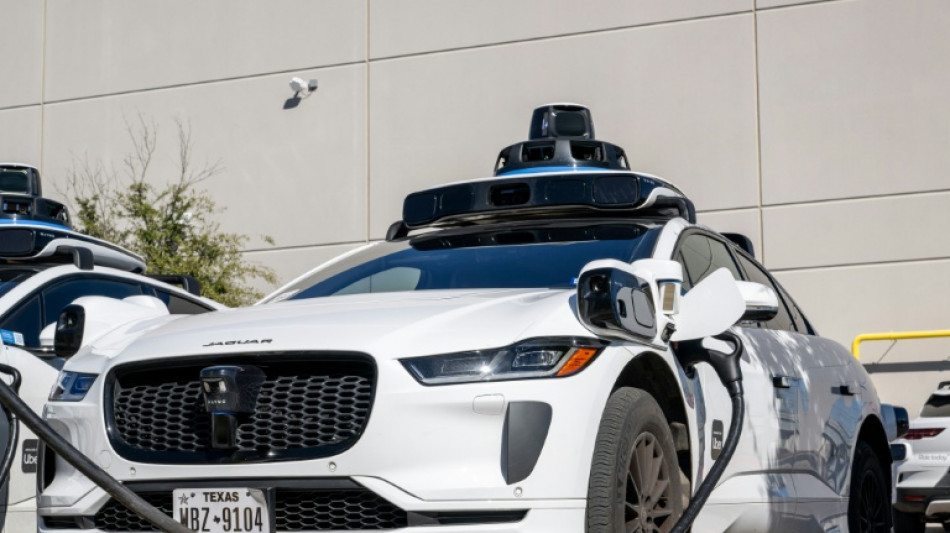
Waymo's white Jaguars, equipped with cameras and sensors, have become a familiar sight on San Francisco and Los Angeles streets.
Its service, available in 10 US cities as of early 2026, aims to expand to about 20 metropolitan areas within a year, including London.
Last year, Waymo more than tripled its annual volume to 15 million rides and now provides more than 400,000 rides weekly in the six major US metropolitan areas where it operates, according to the company.
"We are no longer proving a concept; we are scaling a commercial reality, laying the groundwork for ride-hailing operations in over 20 additional cities in 2026, including Tokyo and London," Dolgov and Mawakana said.
"We have demonstrated that our technology is not just the most advanced manifestation of AI in the physical world, but a vital service that people have come to rely on in their daily lives."
Alphabet took a big part in the recent funding round led by Dragoneer Investment Group, joined by Silicon Valley venture capital titans like Andreessen Horowitz and Sequoia Capital, according to Waymo.
"Waymo has not only taught a car to drive itself, but to do so meaningfully better than any human or competing system, and we believe that lead will endure," Dragoneer partner Jared Middleman said in the blog post.
Letting go of the steering wheel is no longer a fantasy as Waymo's robotaxis in the United States and China's Apollo Go -- which has been growing rapidly over the past year -- demonstrate the reliability of fully autonomous driving, where responsibility lies with the machine and not the human.
Rivals such as Uber are fast emerging. The ride-sharing giant last month unveiled a Lucid robotaxi, aiming to put a fleet of them to work in San Francisco later this year.
(G.Gruner--BBZ)