Myanmar travellers ride the rails as fuel prices rise / Photo: Anthony WALLACE - AFP

Myanmar's ageing railway stations are bustling with life, crowded with passengers as surging fuel prices due to the Mideast war drive commuters to choose trains over costly planes and cars.
On a journey from the country's largest city Yangon to the capital Naypyidaw AFP journalists sat in air-conditioned carriages full of travellers napping and sharing tea, fried rice and instant noodles.
First class adult train tickets cost 19,000 kyats ($4.50), while the cheapest bus fares for the route now start at 35,000 kyats.
At one point on Thursday the train chugged past a queue of trucks waiting for fuel -- the trains themselves run on diesel, with the state railway company maintaining its own stocks.
People dozed on station benches or sat on luggage on platforms as they waited for their trains.
Myanmar has been consumed by a civil war since 2021, when a military coup swept aside Aung San Suu Kyi's democratically elected government, sparking armed resistance to junta rule.
Rail travel is not traditionally the most popular mode of transport in the country, and many trains are older and less comfortable, while much of the network was built under British colonial rule.
But people from rural areas have long relied on affordable railways to journey between cities -- despite occasional attacks by rebel forces targeting trains since 2021.
"The costs are high if we use a car. Also there are not many security checkpoints on the train," said Zeya Ko Ko, 28, a passenger on the Naypyidaw train.
"Buses are also challenging as fuel can run out in some areas due to the fuel crisis."
- First time -
Since the US-Israel war against Iran began nearly a month ago, global fuel prices have soared with international shipping disrupted and fears of shortages, especially in import-reliant Asia.
In Myanmar, prices at the petrol pump have jumped and the junta has instituted fuel-saving measures, including alternate day bans on private vehicles, based on odd- or even-numbered licence plates.
Long queues of cars and motorbikes have formed at petrol stations around the country in the last three weeks.
"We have difficulty travelling for urgent health problems. As private vehicles are being restricted with even-odd numbers, we cannot leave right away when we are sick," said Pearl Hmway, a 53-year-old restaurant owner from Mandalay region, as she waited for for a train home.
A Naypyidaw station official told AFP more people were using trains because of fuel shortages, and extra services had been laid on.
"The government increased the number of scheduled trains because of higher demand," he said, speaking on condition of anonymity as he was not authorised to speak to the media.
Passengers said train tickets were selling out quickly, making booking them online harder.
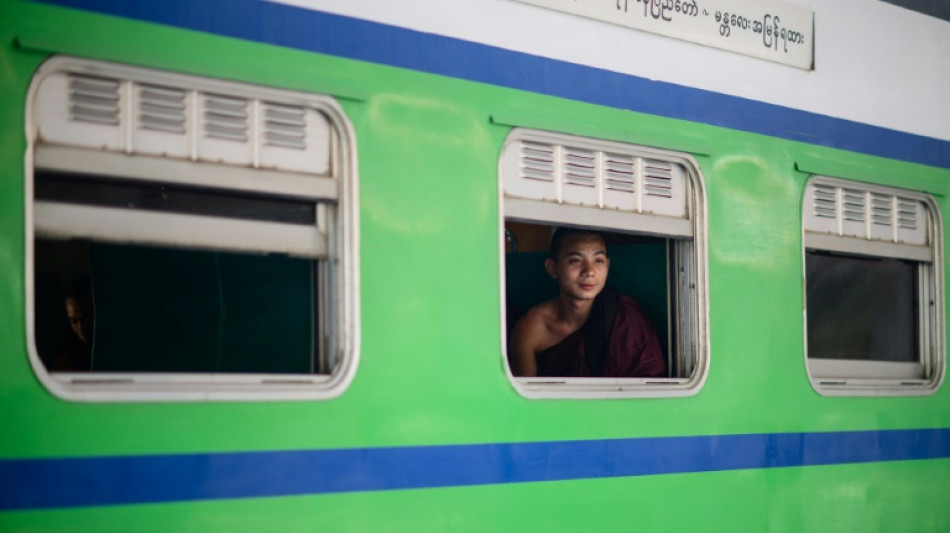
At Naypyidaw station, 26-year-old monk Zanaka said he was taking a train for the first time in his life.
Bus fares had risen alongside fuel prices, making his journey twice as expensive by road as by rail, he explained.
"That's why we are taking the train on the way back," he said.
"The train is faster and there's no need to wait in a queue."
(K.Lüdke--BBZ)