'Stretch our money': Romanians face highest EU inflation / Photo: Daniel MIHAILESCU - AFP

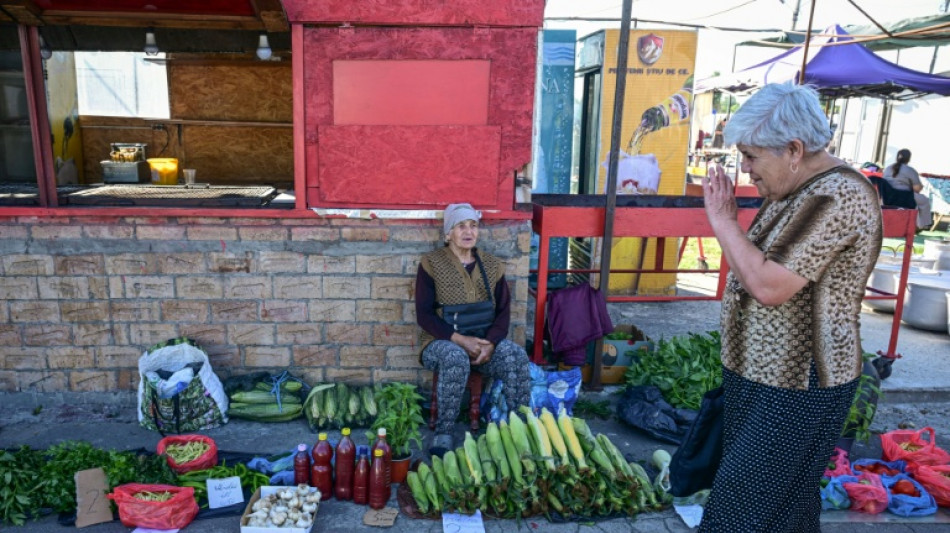
At the weekly market in the southern Romanian town of Calarasi, Florica Vasile goes from vendor to vendor loading her shopping trolley with vegetables the locals say are cheaper than anywhere else in the city.
As the country struggles with the European Union's highest inflation, she and other shoppers complained that rising prices were forcing difficult decisions about what to cut.
"I was supposed to go for a thyroid check-up in January," Vasile, a 56-year-old housewife, told AFP, saying she used the money instead for food and the electricity bill.
"We stretch our money a little more," she added. "Of course I'm worried."
Dumitru Baldovin, a 63-year-old construction worker also at the market, expressed the same caution.
"Instead of two litres of oil, I buy one litre and make it last... We're tightening our belts," he said.
Prices have risen across Europe in the wake of the Middle East war that sent oil and gas costs soaring, but Romania has recorded inflation rates three times higher than the EU average.
The government, which has run the biggest budget deficit in the bloc for years, has created new taxes to tackle the shortfall and removed price caps on electricity.
That led to a 55 percent surge in electricity bills in May from a year earlier, and contributed to real wages falling by almost seven percent that month as salaries did not keep up with inflation that hit 11 percent.
Inflation slipped to 10.4 percent in June and analysts expect it to fall further this year, but is still the highest in the EU.
- 'Thieves' -
Romanians now spend a third of their income on food, compared with just 14 percent in Germany, said Laurian Lungu, president of Consilium Policy Advisors Group, an economic think tank.
Businesses say eroding purchasing power has severely crimped spending in the country of 19 million people, where the average salary is 1,100 euros ($1,300).
Disagreements over austerity measures also led to a collapse of Romania's pro-EU governing coalition in May.
Debate over a new wage law for public-sector workers has exacerbated tensions, leading to a three-day healthcare strike in July on fears that bonuses would be cut.
A new government has yet to be formed in the eastern European nation, where far-right groups have seized on the popular anger.
In Calarasi, many people blame politicians across the political spectrum for failing to rein in inflation.
"They keep taking from the pocket of the regular people to make themselves billionaires," said Marin Zainea, 75, noting that his pension was less than 400 euros a month.
"They are the worst of thieves," Zainea added while selling fruit and vegetables from his own garden for some extra cash.
"I go to a supermarket just to look around," he said. "If I don't have any money, that's what I do -- I look and don't buy anything."
- Full warehouses -
President Nicusor Dan, a pro-European centrist, tried to address people's concerns last weekend after Romania avoided a downgrade of its credit rating by Fitch to "junk", or below investment grade.
"Purchasing power has declined but Romania is stabilising financially, and things will get better," Dan said in a video posted on social media.
This week he signed into law a bill reducing taxes on diesel and capping commercial markups on both diesel and petrol, a bid to keep energy costs in check.
That would be welcome news to Puiu Ilisei, a farmer in the village of Dichiseni, around 20 kilometres (12 miles) east of Calarasi.
Facing rising costs for fuel and feed even as demand for his chickens drops, he recently had to freeze a third of his production for the first time ever.
"The warehouses are full," said Ilisei, who has invested in solar panels to cut down electricity costs while hoping his earnings will soon improve.
"In the end, you have no choice: you have to eat three meals a day," he said. "You don't have to buy a shirt, but you can't go without eating."
(H.Schneide--BBZ)