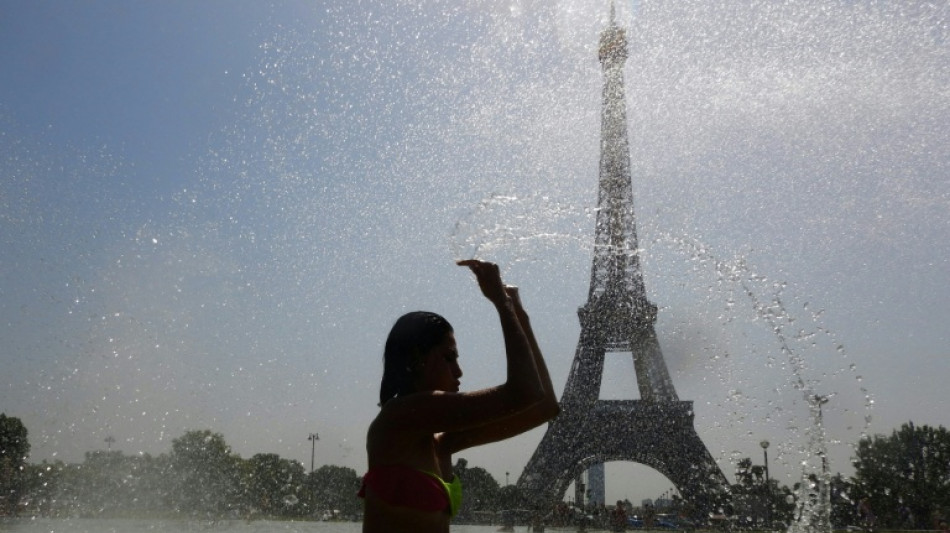
New heatwave disrupts trains, schools in France / Photo: Dominique FAGET - AFP/File

A new heatwave swept across much of France on Thursday, with temperatures forecast to approach 40C later in the week, dozens of trains cancelled and classes suspended.
Although astronomical summer does not begin until Sunday, this is already France's second heatwave of 2026, following an unusually hot spell in May that shattered records across half the country.
A fourth of the country, including Paris, was placed on orange alert, the second-highest, with authorities urging residents to be "very cautious" and drink lots of water.
National weather agency Meteo-France said the heatwave was expected to last into next week, peaking on Sunday or Monday, when temperatures could reach up to 40C in several regions, including the French capital.
Sunday's summer solstice, the longest day of the year, will reinforce the rise in temperatures with extended hours of sunshine.
Mayors across the country, where many school buildings remain poorly equipped to cope with extreme heat, were set to decide whether to suspend classes.
Several schools announced adjustments to class schedules starting Thursday afternoon due to the heatwave, according to academic authorities, unions and documents reviewed by AFP.
In Paris, around 10 middle schools have already modified arrangements for Thursday and Friday.
In the town of Tours in the Loire Valley, mayor Emmanuel Denis said he would not hesitate to close its 58 teaching establishments if it became too hot.
"At 40 degrees, I'll close the schools," he said.
During a heatwave in June last year, around 2,200 schools were closed nationwide.
Rail operator SNCF cancelled 71 long-distance trains between Thursday and Monday to "prevent potential air-conditioning failures linked to very high temperatures".
In Paris, swimming has been permitted since Wednesday, under lifeguard supervision, in the Canal Saint-Martin in the east of the city.
"Take advantage of it, and stay safe in the heat," mayor Emmanuel Gregoire said on X, posting photos of swimmers.
Scientists warn that heatwaves in Europe are becoming more frequent as a result of climate change.
France is experiencing "heatwaves that are increasingly frequent, more widespread and more intense -- a clear sign of climate change," said Matthieu Sorel, a climatologist at Meteo-France.
(K.Müller--BBZ)