Berliner Boersenzeitung - Nations to negotiate terms of plastics treaty in Nairobi

EUR -
AED 4.067465
AFN 71.990312
ALL 90.627335
AMD 404.431297
ANG 1.982267
AOA 1016.726333
ARS 1710.57938
AUD 1.618319
AWG 1.993581
AZN 1.885599
BAM 1.951914
BBD 2.255104
BDT 139.582093
BGN 1.935801
BHD 0.422399
BIF 3349.448824
BMD 1.107545
BND 1.431386
BOB 13.27906
BRL 6.184308
BSD 1.119667
BTN 105.224999
BWP 15.360735
BYN 3.352428
BYR 21707.879833
BZD 2.25182
CAD 1.579387
CDF 2563.966445
CHF 0.922723
CLF 0.02768
CLP 1089.391844
CNY 7.387712
CNH 7.383974
COP 3633.744028
CRC 506.439696
CUC 1.107545
CUP 26.869503
CVE 110.055817
CZK 24.385893
DJF 199.380138
DKK 7.475377
DOP 67.911228
DZD 151.620647
EGP 59.307255
ERN 16.613173
ETB 182.237045
FJD 2.512077
FKP 0.834016
GBP 0.835438
GEL 2.875558
GGP 0.834016
GHS 13.111375
GIP 0.834016
GMD 81.958112
GNF 9919.191373
GTQ 8.555738
GYD 234.619355
HKD 8.687078
HNL 30.096931
HRK 7.496982
HTG 146.761713
HUF 364.725177
IDR 20197.188604
ILS 3.516289
IMP 0.834016
INR 103.903604
IQD 1697.220851
IRR 2111063.625609
ISK 136.60431
JEP 0.834016
JMD 177.702241
JOD 0.785284
JPY 176.954675
KES 143.936361
KGS 96.854353
KHR 4566.34137
KMF 489.534619
KPW 996.790358
KRW 1475.859262
KWD 0.344856
KYD 0.932943
KZT 499.834834
LAK 25202.439053
LBP 100264.926457
LKR 372.104421
LRD 190.338224
LSL 18.356059
LTL 3.270292
LVL 0.669943
LYD 7.177326
MAD 10.922187
MDL 20.12003
MGA 5066.347521
MKD 61.552219
MMK 2325.539036
MNT 3992.592734
MOP 9.04589
MRU 45.167354
MUR 52.242751
MVR 17.054243
MWK 1941.501024
MXN 20.606424
MYR 4.520889
MZN 70.773444
NAD 18.354157
NGN 1490.467247
NIO 41.201874
NOK 10.597665
NPR 168.360757
NZD 1.991039
OMR 0.425858
PAB 1.119697
PEN 3.815503
PGK 5.028465
PHP 70.506385
PKR 307.425688
PLN 4.411466
PYG 6911.831479
QAR 4.081442
RON 5.346007
RSD 117.612262
RUB 91.993569
RWF 1656.551393
SAR 4.177896
SBD 8.960866
SCR 15.436901
SDG 666.186966
SEK 11.057951
SGD 1.423373
SHP 0.829901
SLE 25.365438
SLL 23224.66743
SOS 639.883773
SRD 41.69459
STD 22923.943087
STN 24.453631
SVC 9.796495
SYP 14400.298304
SZL 18.361018
THB 37.422282
TJS 10.289642
TMT 3.876407
TND 3.336957
TOP 2.666702
TRY 55.661878
TTD 7.592883
TWD 36.472
TZS 2944.030377
UAH 50.925177
UGX 4568.419925
USD 1.107545
UYU 45.303891
UZS 13406.308178
VES 997.333655
VND 28442.306534
VUV 132.84321
WST 3.087613
XAF 655.957
XAG 0.021468
XAU 0.000278102224
XCD 2.993196
XCG 2.017683
XDR 0.783092
XOF 655.957
XPF 119.331742
YER 261.939612
ZAR 18.387073
ZMK 9969.292258
ZMW 22.81264
ZWL 356.629003
SSP 6408.834546
MXV 2.315332
  • CMSD

    -0.1200

    19.81

    -0.61%

  • JRI

    0.0000

    10.77

    0%

  • BCC

    -1.8200

    74.15

    -2.45%

  • CMSC

    -0.2228

    19.53

    -1.14%

  • BCE

    0.2000

    20.34

    +0.98%

  • RIO

    0.0100

    94.17

    +0.01%

  • AZN

    -2.7400

    161.47

    -1.7%

  • GSK

    -1.1800

    48.17

    -2.45%

  • RBGPF

    0.0000

    65

    0%

  • NGG

    0.8800

    75.82

    +1.16%

  • RYCEF

    -0.7300

    19.08

    -3.83%

  • BTI

    -0.4500

    54.4

    -0.83%

  • BP

    0.4700

    43.99

    +1.07%

  • RELX

    -0.0600

    33.18

    -0.18%

  • VOD

    -0.1800

    16.15

    -1.11%

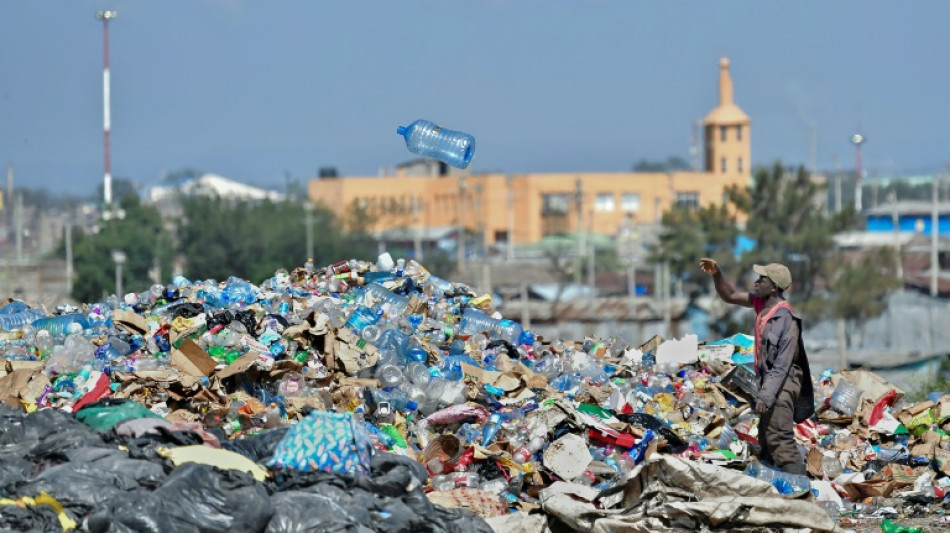
Nations to negotiate terms of plastics treaty in Nairobi
Nations to negotiate terms of plastics treaty in Nairobi / Photo: Tony KARUMBA - AFP/File

Nations to negotiate terms of plastics treaty in Nairobi

The latest negotiations towards a global treaty to combat plastic pollution open in Nairobi on Monday, with tensions expected as nations tussle over what should be included in the pact.

Text size:

Some 175 countries agreed last year to conclude by 2024 a UN treaty to combat the plastic blighting oceans, floating in the atmosphere, and infiltrating the bodies of animals and humans.

While there is broad consensus a treaty is needed, there are very different opinions about what should be in it.

Negotiators have met twice already but the November 13-19 talks are the first to consider a draft text of the treaty published in September and the policy options it contains.

Around 60 so-called "high ambition" nations have called for binding rules to reduce the use and production of plastic, which is made from fossil fuels, a measure supported by many environment groups.

It is not a position shared by many plastic-producing economies, including the United States, which have long preferred to focus on recycling, innovation and better waste management.

The draft presenting the various ways forward will form the basis for the high-stakes deliberations at the UN Environment Programme (UNEP) headquarters in Nairobi.

With more than 2,000 delegates registered, and advocates from environment and plastic groups also in the room, the negotiations are expected to get heated as the details are hammered out.

Hundreds of climate campaigners, waving placards reading "Plastic crisis = climate crisis", on Saturday marched in Nairobi calling for the talks to focus on cutting the amount of plastic produced.

- Call for urgency -

The meeting to debate the future of plastic comes just before crucial climate talks in the oil-rich United Arab Emirates later this month, where discussions over fossil fuels and their planet-heating emissions are due to dominate the agenda.

As in the UN negotiations on climate and biodiversity, financing is a key point of tension in the plastic talks.

Rich economies have historically polluted more -- and for years exported trash for recycling to poorer nations, where it often winds up in the environment.

Some developing nations are concerned about rules that might place too great a burden on their economies.

Environment groups say the strength of the treaty depends on whether governments commit to capping and phasing down plastic production.

Plastic production has doubled in 20 years and in 2019, a total of 460 million tonnes of the stuff was made, according to the OECD.

Despite growing awareness of the problem surrounding plastic, on current trends, production could triple again by 2060 without action.

Around two-thirds of plastic waste is discarded after being used only once or a few times, and less than 10 percent is recycled, with millions of tonnes dumped in the environment or improperly burned.

The Nairobi meeting is the third of five sessions in a fast-tracked process aiming to conclude negotiations next year so the treaty can be adopted by mid-2025.

Campaigners say delegates in Nairobi must make considerable headway to remain on course and warned against time-consuming debates over procedural matters that caused friction at the last talks in Paris in June.

(Y.Yildiz--BBZ)