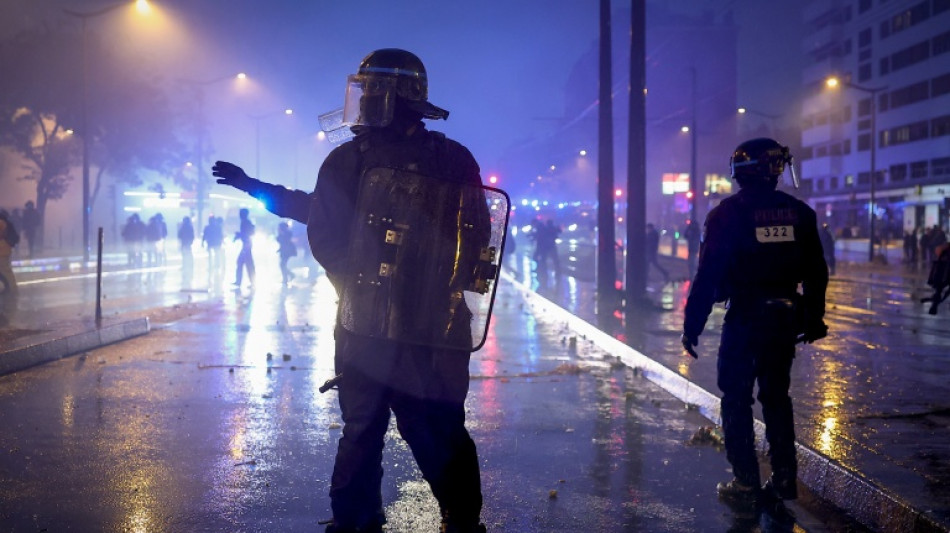
Clashes break out in Paris, other French cities amid fresh protests / Photo: Sameer AL-DOUMY - AFP

Clashes broke out Saturday in Paris and other French cities amid demonstrations held a week after others that degenerated into street violence and prompted a robust security backlash as President Emmanuel Macron seeks to restore order.
Police arrested nearly 1,000 people as officers were confronted with "an extremely elevated level of violence" from black-clad "ultra-left" extremists, Interior Minister Laurent Nunez said.
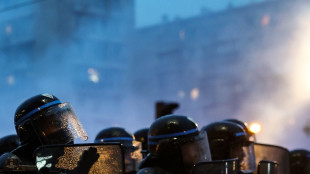
Riot squads fired tear gas at protesters in the capital as well as in Marseille, Lyon, Bordeaux, Lille, Toulouse, Montpellier and Nantes.
Two people were "seriously" injured, Nunez said: one man in Toulouse, who reportedly had fingers blown off, and another person in Clermont-Ferrand. He did not give details of either case.
Authorities had deployed 70,000 security forces across the country for the new marches, which were called to protest the cost of living.
The violence came a week after rioting that saw public buildings vandalised, hundreds of shops looted and 2,700 people arrested, casting a pall over a country that goes to the polls in six months to choose a successor to President Emmanuel Macron after 10 years.
Nunez said Saturday's outcome was more "positive" than a week ago, with more police on the streets acting more rapidly, conducting more pre-demonstration checks and better protecting businesses.
There was nevertheless widespread anger at the government over a protest crackdown viewed as repressive and as an assault on the right to protest.
- Police battle 'rioters' -
Saturday's demonstrations drew between 410,000 and 800,000 people across the country, according to different estimates by authorities and the organising CGT union.
The main Paris march had between 110,000 and 250,000 attendees, according to those sources.
Macron's government has ordered police to prevent protesters reaching city centres, where shops are concentrated, and in Paris and some other cities, partial curfews were imposed in certain urban zones. The French president had ordered non-union demonstrations be banned as "illegitimate".
In Paris, where many shops had boarded up windows to prevent looting, and the Louvre and the Musee d'Orsay museums shut for the day, the main demonstration passed off largely peacefully.
The march had been pushed to the capital's southeast rim under a last-minute order by authorities.
Afterwards, though, clashes broke out as the crowd was dispersing. Nunez said the confrontations lasted two hours and involved "500 rioters" at the back of the march.
AFP journalists saw police charge several times and vigorously use tear gas and batons against some, mostly young, protesters.
"The police started moving towards everyone, telling them to get down and back off. They were just taking people down, you know, beating protesters," one demonstrator bleeding from a baton blow to his face, who gave his first name as David, told AFP.
"I hear the media talking about repression in Iran and China. And now I see that France is doing the same, if not worse," said Victor Lejendre, a 22-year-old student.
He said he was "asking myself a lot of questions about what is going to become of this country", adding that it was "dystopian".
- Ultra-right vs ultra-left -
In the western city of Nantes, thousands of protesters broke through lines of police firing tear gas and a water cannon to reach the city centre, an AFP journalist there witnessed.
In Lyon, police used tear gas to disperse around 1,000 people gathered in the south of the city.
"If they prohibit protests then that means we are heading more and more towards a regime that is fascist, that is dictatorial," said one 20-year-old protester in Lyon, who gave only his first name, Silem.
In the southern cities of Cannes and Montpellier, far-right activists came out onto the streets seeking confrontations with "ultra-left militants", in what authorities said was an unprecedented development.
Meanwhile, the Yellow Vests, who staged disruptive protests against Macron eight years ago, called for more demonstrations on October 31 for "the freedom to protest".
Far-left presidential candidate Jean-Luc Melenchon, who marched in the Paris rally, said Macron "is going to understand that this is going to repeat itself every week".
Several protesters leaving after clashes in Paris taunted officers with a "see you next Saturday".
- Protest against Le Pen's party -
Tensions were heightened by a rally in the city of Orleans by far-right leader Marine Le Pen's National Rally party to kick off her campaign for the presidential election.
Thousands of counter-protesters chanting anti-fascist slogans marched in the city. Police put their number at 13,000 while organisers said twice as many participated.
The unrest across France highlighted the febrile political atmosphere ahead of the vote, in which Le Pen leads in surveys.
Inflation in France, particularly affecting the cost of fuel, has surged since the start of the Middle East war in February.
(F.Schuster--BBZ)