New Governors Face Complex Hurdles to Expand Medicaid Amid Federal Changes

Democratic governors-elect in four states that have resisted full Medicaid expansion won office promising to broaden coverage for low-income residents. However, implementing these promises is complicated by recent federal legislation that eliminated financial bonuses, imposed work mandates, and restricted funding for states with large Medicaid populations.
Democratic governors-elect in Georgia, Kansas, Texas, and Wisconsin are preparing to take office with a shared campaign promise: expanding Medicaid coverage for low-income adults. Yet, the path to fulfilling that pledge is obstructed by significant legislative barriers and recent changes to federal law that have altered the financial and administrative landscape of the program.
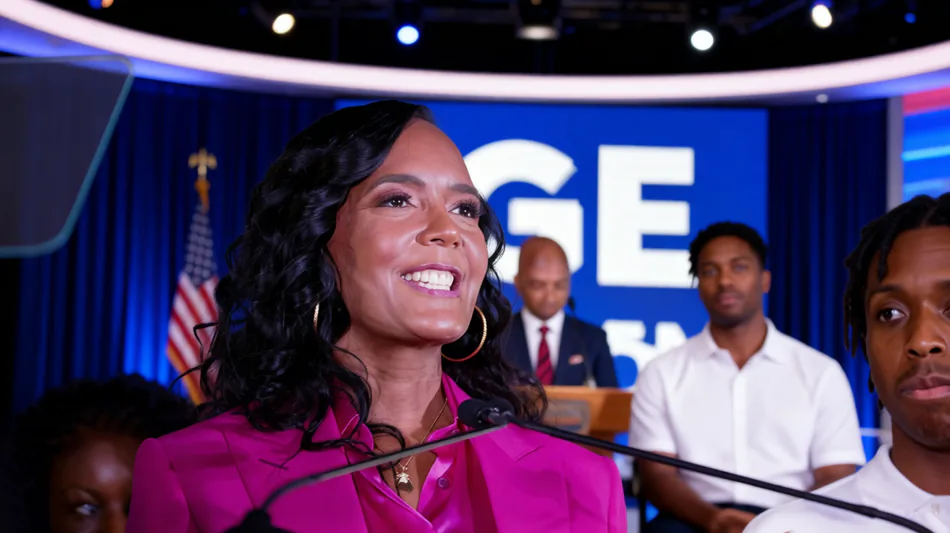
Keisha Lance Bottoms, Georgia’s next governor, highlighted this commitment during her election-night victory speech, addressing a crowd of supporters with a direct appeal to those who had been excluded from the state’s current coverage limits. "This win is for the caregiver who can’t afford healthcare and needs Georgia to finally expand Medicaid," she said.
Bottoms joins a group of newly elected Democratic leaders in states that have historically declined to fully adopt the Medicaid expansion provisions of the Affordable Care Act. Along with her, Cindy Holscher was elected governor of Kansas, Gina Hinojosa won the governorship in Texas, and David Crowley secured victory in Wisconsin. According to 2024 data from KFF, a health information nonprofit, full expansion in these four states could collectively cover more than one million additional people.
However, the political and fiscal context for expansion has shifted dramatically since many of these states last considered the issue. Last year, Congress passed a GOP budget law that eliminated a financial bonus previously available to states for expanding Medicaid. The legislation, known as the One Big Beautiful Bill Act, also imposed work requirements on enrollees and introduced funding restrictions that disproportionately affect states with large Medicaid populations.
"It’s so messy," said Caylee Noggle, president of the Georgia Hospital Association and a former Georgia Medicaid director. "We’re in this real moment where there are benefits and trade-offs to traditional expansion."
The Affordable Care Act originally required states to expand Medicaid eligibility to millions of low-income adults. A 2012 Supreme Court decision rendered that requirement optional for states. Currently, forty states plus Washington, D.C., have expanded Medicaid, with North Carolina being the most recent to do so in 2023. Ten states, including Georgia and Wisconsin, have not fully expanded eligibility, though both have offered limited coverage to some individuals who would qualify under full expansion.
The passage of the One Big Beautiful Bill Act has introduced new constraints. Beyond the elimination of the expansion bonus, the law restricts the amount of federal money states can draw down to support doctors and hospitals that treat a high volume of Medicaid patients. These limits are lower for expansion states than for non-expansion states.
In Wisconsin, these funding restrictions are expected to be a central point of debate among lawmakers. Estimates from the Wisconsin Hospital Association suggest that fully expanding Medicaid could threaten hundreds of millions of dollars in federal funds flowing into the state.
Bobby Peterson, a Madison-based attorney who advises clients on benefit programs, noted that any plan for full expansion in Wisconsin would face significant headwinds, even with Democrats controlling the governor’s office and both branches of the state legislature starting in January. "These are going to be hard conversations," he said.
Governor-elect David Crowley initially embraced full Medicaid expansion early in his campaign but later shifted his focus toward opening the state’s partial expansion program to anyone willing to purchase a plan. Since his victory, his position has moved further away from full expansion. The Crowley campaign did not answer specific questions from KFF Health News regarding which policy he would pursue, with spokesperson Jonathan Fera stating that the governor-elect would share more details about his agenda after his inauguration.
States that expand Medicaid eligibility typically receive a larger federal funding match per enrollee in the expansion pool compared to other individuals in their Medicaid programs. Additionally, having fewer uninsured patients can reduce financial strain on hospitals and other healthcare providers, often winning support for expansion from the hospital industry and rural politicians concerned about facility closures.
Despite these potential benefits, states must find the money to pay their share for the larger group of enrollees while navigating the new federal funding restrictions. "It’s a lot of complicated math," said Lawson Mansell, senior health policy analyst at the Niskanen Center, a think tank focused on free-market policies.
Expansion also requires compliance with new rules from the One Big Beautiful Bill Act mandating that enrollees prove they are working or completing at least 80 hours of other qualifying activities each month. Democratic governors must now grapple with the politics of implementing rules pushed by Republicans, as well as the uncertainty of whether their congressional counterparts may reverse course.
The political landscape in Washington has shifted with Democrats gaining control of Congress following the recent elections. Democrats have pledged to roll back the Medicaid cuts included in the GOP budget law but have not specified how they intend to do so. It remains unclear whether President Donald Trump would support such efforts.
"When states operate in an environment where they’re uncertain about federal policy, that makes it harder for states to legislate," said Brian Blase, president of the right-leaning Paragon Health Institute.
States must also determine how to enact work requirements if they remain in place. In Georgia, administrative hurdles associated with similar work rules made it difficult for people to enroll in the state’s limited expansion program, which is set to expire at the end of the year. Many states that have already expanded Medicaid are currently struggling to implement these rules.
On November 13, the White House allowed states to delay the new work rules, originally scheduled to take effect on January 1, by six months following pushback from various stakeholders.
"Even if a state adopts the expansion, unfortunately, this could result in people still remaining uninsured just because of all these changes that essentially add more red tape," said Edwin Park, a research professor at Georgetown University’s Center for Children and Families.
Enrollment in Affordable Care Act marketplaces has increased significantly in several non-expansion states. In Texas, more than 4 million people selected plans for 2026, according to KFF. Opponents of full Medicaid expansion have long argued against adding more people to the government program rather than keeping them on private Affordable Care Act plans.
Former Democratic U.S. Representative Beto O’Rourke stated that he believes Medicaid expansion will be a priority for Governor-elect Gina Hinojosa, citing her past work in the state legislature and her campaign messaging. "The stories of people she met across the state struggling without healthcare really made an impact on her," O’Rourke said. "It’s clear that this is a priority for her."
However, political realities in Texas present challenges. While Democrats won the governor’s office and a majority in the state House, Republicans retain a majority in the state Senate. John Henderson, president and CEO of the Texas Organization of Rural & Community Hospitals, expressed skepticism that Republican legislators would reverse their long-standing opposition to expanding Medicaid.
"It’s been several sessions since there was even a real attempt at a conversation around Medicaid expansion," Henderson said. "There was an appetite in the House, but never enthusiasm in the Senate."
Full Medicaid expansion has also eluded lawmakers in Kansas, where Cindy Holscher won a close race for governor. She will replace Governor Laura Kelly, a Democrat whose efforts to expand Medicaid were previously stymied. In this month’s elections, Kansas Republicans maintained control of the state Senate and House, but Democrats broke the GOP supermajority in the latter body.
The Holscher campaign did not respond to questions regarding her plans to get Medicaid expansion through two GOP-controlled legislative bodies. However, April Holman, executive director of the nonprofit Alliance for a Healthy Kansas, noted that the additional seats won by Democrats give them more leverage to restart conversations about expansion.
"I’ve been working on this long enough to have seen a number of different Houses of Representatives in Kansas," Holman said. "This is the most encouraging group coming in — in a very long time."
KFF Health News senior correspondent Renuka Rayasam contributed to this report.
(A.Lehmann--BBZ)