Sri Lanka seeks faster green energy shift after oil shocks / Photo: Ishara S. KODIKARA - AFP

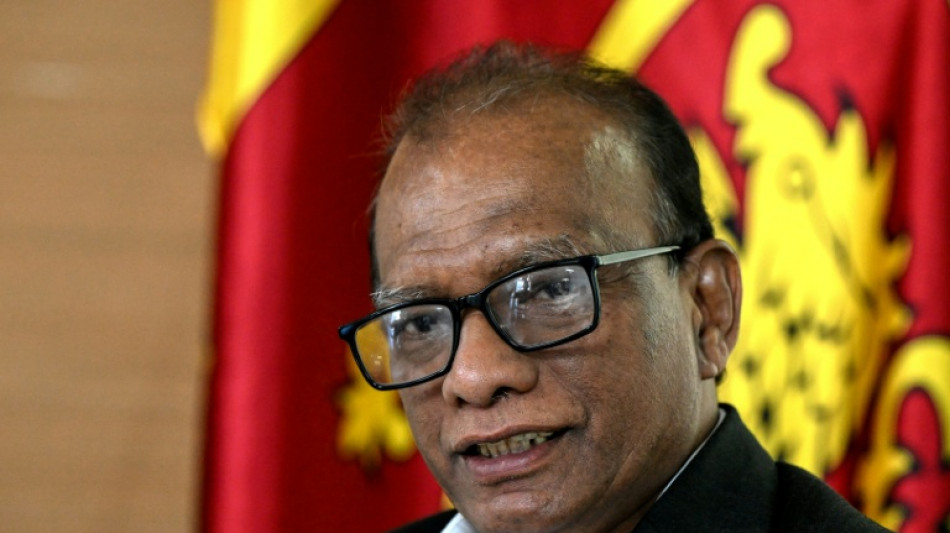
Sri Lanka is determined to accelerate its transition to renewable energy spurred by soaring oil prices, but faces major constraints, its energy minister told AFP.
"There are some wake-up calls... pushing us to move more to renewable energy," Anura Karunathilaka said.
"If we can get as much as possible from renewable energy, that would be our policy in the next few years."
The island nation, which imports all its oil and gas needs, has been hit hard since the US and Israel launched their war on Iran, which in turn choked off the strategically critical Strait of Hormuz.
Sharp increases in fuel, gas and electricity prices, rationing and inflation at its highest in three years have dealt a painful blow to an economy only just recovering from its worst-ever crisis in 2022.
The state and the public have paid a heavy price.
The energy ministry says the government has at times spent up to 30 percent of its foreign exchange reserves in a single month to pay for fossil fuel imports.
Sri Lanka's energy transition targets were set before the war.
By 2030, the country aims to generate 70 percent of its electricity from renewable sources, up from around 60 percent currently, including about 40 percent from hydropower.
- Promise to the people -
"We will probably have to go beyond 70 percent," Karunathilaka said.
But the transition is proving more complicated than expected.
Some communities oppose wind turbines.
The island has enormous potential for wind power -- estimated at 30 gigawatts-- but anger is growing on the northwestern Mannar peninsula, where residents blame turbines operating since 2020 for causing floods, driving fish away and threatening migratory birds.
The minister said he had listened to their concerns.
"We have promised the people of Mannar... that only projects already approved or under construction will go ahead," he said, adding that future wind farms would be built elsewhere.
Another obstacle is technical.
"The problem is the constraint in the transmission lines, availability and also control of the grid, as well as fluctuations in supply and demand," Karunathilaka said.
"From next year onwards, we have planned to enhance our transmission capacity, adding five major transmission network lines."
But that will not be enough.
The success of solar power, particularly the installation of photovoltaic panels on homes and businesses, has created sharp fluctuations in electricity supply, which often exceeds demand during daylight hours.
- Pricing changes -
This month a six-hour blackout struck across the island after the national grid tripped, possibly because solar power generation exceeded consumption.
"Sometimes we have to curtail certain solar power plants to maintain the stability of the system. That is why some people have the perception that the government is not encouraging solar power," Karunathilaka said. "But that is not true."
By 2029, the government hopes to increase its solar power generation capacity to nearly 4,400 megawatts, a 388 percent jump from 2024, he said.
However, he added that the government would have to change how solar electricity was priced.
Under the existing system, private producers can feed electricity into the grid during the day, when generation is at its peak and demand is low, then draw back the same amount for free at night, when electricity is more expensive.
The arrangement is financially unsustainable for a fragile economy, the minister said.
"The additional cost is borne by the state," he said. "We think it is unfair to pass that burden on to the general public, so we will propose a new financial model that is fair to both solar producers and consumers."
The government also plans to expand electricity storage using batteries, Karunathilaka said.
"The system, investment and infrastructure are not yet ready to completely replace coal and naphtha," he warned.
"But... in 10 to 15 years, we will also be reducing naphtha and coal, and we will be able to achieve 90-95 percent renewable energy."
(T.Renner--BBZ)