Berliner Boersenzeitung - Al-Qaida’s growing ambitions

EUR -
AED 4.234162
AFN 75.520719
ALL 93.601185
AMD 421.871235
ANG 2.063555
AOA 1057.24245
ARS 1720.50819
AUD 1.631861
AWG 2.075286
AZN 1.958757
BAM 1.95465
BBD 2.321834
BDT 141.96768
BGN 1.956177
BHD 0.434715
BIF 3447.856524
BMD 1.152936
BND 1.475019
BOB 13.597116
BRL 5.991582
BSD 1.152822
BTN 109.838311
BWP 15.518732
BYN 3.442944
BYR 22597.554879
BZD 2.318556
CAD 1.607119
CDF 2622.929869
CHF 0.937372
CLF 0.026792
CLP 1054.464094
CNY 7.77523
CNH 7.775824
COP 3629.340254
CRC 523.691797
CUC 1.152936
CUP 30.552817
CVE 110.681377
CZK 24.231263
DJF 204.89978
DKK 7.475761
DOP 67.308837
DZD 153.22017
EGP 57.898976
ERN 17.294047
ETB 184.441064
FJD 2.550814
FKP 0.853229
GBP 0.854055
GEL 3.008945
GGP 0.853229
GHS 13.163237
GIP 0.853229
GMD 85.317165
GNF 10119.900208
GTQ 8.795747
GYD 241.230123
HKD 9.046579
HNL 30.985192
HRK 7.535826
HTG 150.789949
HUF 364.476076
IDR 20590.292479
ILS 3.434712
IMP 0.853229
INR 109.926555
IQD 1510.923248
IRR 1584855.300116
ISK 141.995699
JEP 0.853229
JMD 182.504176
JOD 0.817406
JPY 183.68928
KES 149.051317
KGS 100.82421
KHR 4676.310481
KMF 493.456944
KPW 1037.642491
KRW 1630.690189
KWD 0.356419
KYD 0.960726
KZT 536.769445
LAK 26001.617499
LBP 103399.458106
LKR 385.353212
LRD 209.402074
LSL 18.63091
LTL 3.404322
LVL 0.6974
LYD 7.338458
MAD 10.729807
MDL 19.984066
MGA 4966.272299
MKD 61.551238
MMK 2421.093744
MNT 4146.726689
MOP 9.317997
MRU 46.244457
MUR 54.268822
MVR 17.824178
MWK 2002.650688
MXN 19.663331
MYR 4.710444
MZN 73.665386
NAD 18.631039
NGN 1571.994494
NIO 42.4254
NOK 10.942001
NPR 175.73805
NZD 1.967693
OMR 0.443314
PAB 1.152832
PEN 3.873288
PGK 5.078668
PHP 70.611589
PKR 320.296049
PLN 4.305353
PYG 6879.011227
QAR 4.203318
RON 5.234906
RSD 117.338942
RUB 95.57845
RWF 1692.510743
SAR 4.322078
SBD 9.298365
SCR 15.89971
SDG 692.337385
SEK 11.041438
SGD 1.475407
SHP 0.854171
SLE 28.304309
SLL 24176.498606
SOS 658.917496
SRD 43.431291
STD 23863.457231
STN 24.788134
SVC 10.087151
SYP 14990.479632
SZL 18.619683
THB 38.127806
TJS 10.663617
TMT 4.035278
TND 3.386164
TOP 2.775995
TRY 55.084073
TTD 7.818466
TWD 37.145339
TZS 3055.279336
UAH 51.510838
UGX 4276.483203
USD 1.152936
UYU 46.403093
UZS 13786.814399
VES 882.455268
VND 30033.418665
VUV 136.557029
WST 3.147505
XAF 655.5655
XAG 0.017595
XAU 0.000261
XCD 3.115868
XCG 2.077677
XDR 0.815016
XOF 654.868115
XPF 119.331742
YER 273.418516
ZAR 18.602025
ZMK 10377.812955
ZMW 21.696419
ZWL 371.245074
  • CMSD

    -0.0400

    21.59

    -0.19%

  • CMSC

    0.0100

    21.45

    +0.05%

  • RBGPF

    0.0000

    72.16

    0%

  • BCC

    -1.2800

    84.25

    -1.52%

  • JRI

    -0.0200

    12.71

    -0.16%

  • NGG

    0.4100

    80.68

    +0.51%

  • BCE

    -0.2400

    23.13

    -1.04%

  • RYCEF

    0.5500

    21.1

    +2.61%

  • VOD

    0.1900

    16.09

    +1.18%

  • RIO

    0.2300

    101.22

    +0.23%

  • GSK

    -0.6000

    50.3

    -1.19%

  • BTI

    -0.9700

    55.84

    -1.74%

  • BP

    -0.2300

    42.93

    -0.54%

  • AZN

    -0.2500

    158.5

    -0.16%

  • RELX

    -0.8200

    34.55

    -2.37%


Al-Qaida’s growing ambitions


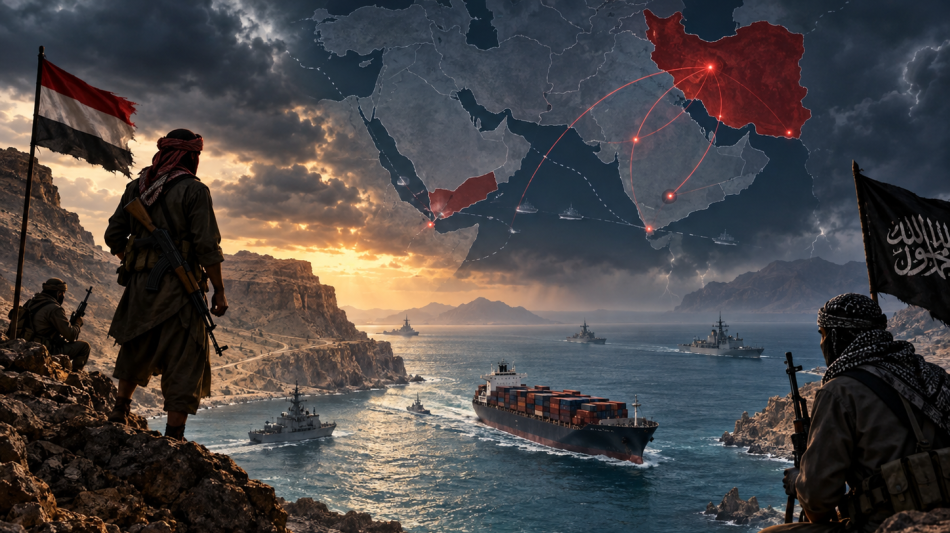
In recent years, Al‑Qaida has quietly restructured and expanded key elements of its network — from training camps and regional affiliates in Afghanistan and beyond, to renewed focus on propaganda and recruitment through modern communications. This resurgence, though still fragmented, increasingly suggests that Al-Qaida is laying groundwork not only for sporadic terror attacks, but for establishing durable footholds which could evolve into de facto zones of control — a development that should alarm European security institutions.

Once seen as largely diminished with the removal of high-profile leadership, Al-Qaida has demonstrated remarkable resilience. Its decentralized “network of networks” model enables local affiliates and loosely connected cells to operate with considerable autonomy, while still drawing ideological coherence and logistical support from the core. This model lowers entry barriers for local militant groups inspired by its ideology — a subtle but potent evolution from the classic “top-down” terror organization.

Moreover, Al-Qaida’s adoption of new technologies complicates detection. Terrorist actors increasingly rely on encrypted platforms, the dark web, and even generative-AI tools to recruit, radicalize and coordinate operations. This digital shift enables remote radicalization and planning, reducing the need for physical sanctuaries — but also masking activities from traditional intelligence and law-enforcement scrutiny.

Regions of instability — such as parts of the Middle East, North Africa, and the Sahel — have become fertile ground for Al-Qaida’s expansion. These zones, often neglected in public discourse, now serve as incubators for networks that may aim to export influence, operatives, or refugees toward Europe. Historical experience shows that even small cells — when radicalized, organized, and motivated — can inflict damage beyond their geographical origins.

For Europe, the threat lies not only in headline-grabbing terror attacks, but in the gradual erosion of security through infiltration, radicalization, sleeper-cells, and covert networks. Should Al-Qaida succeed in consolidating territories or safe havens, the challenge would shift from reactive counterterrorism to a strategic struggle over long-term stability.

Now more than ever, European governments and institutions must treat Al-Qaida as a dynamic, evolving network — not a relic of the past. Proactive, coordinated efforts in intelligence-sharing, deradicalization, monitoring of migration flows, and disruption of online propaganda are crucial. Ignoring the signs of Al-Qaida’s silent reorganization would be a dangerous gamble: the consequences could redefine Europe’s security landscape for decades.